
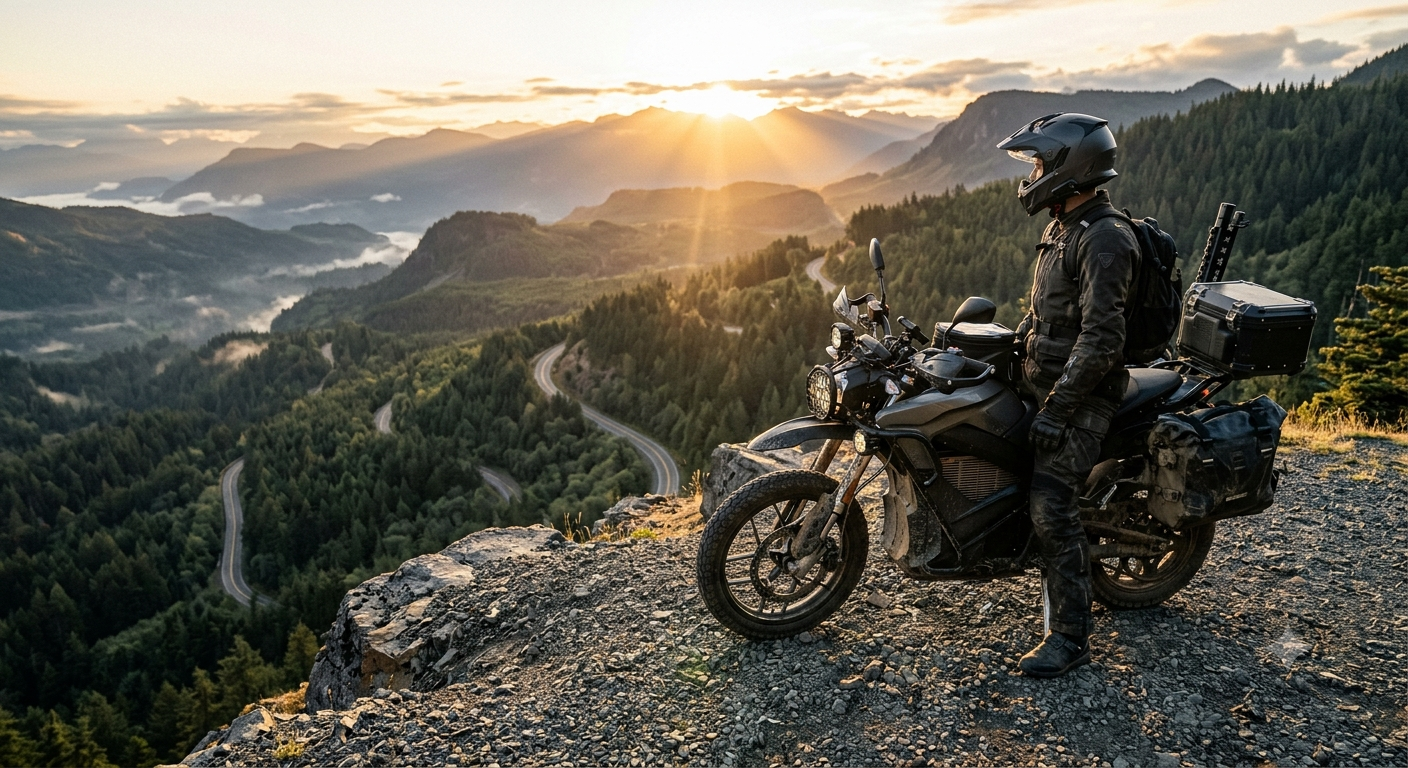
Electric adventure motorcycle range is now good enough for real long-distance exploring, but the reality is more nuanced than marketing promises. If you’re an adventure rider thinking about switching to an electric dual sport motorcycle for multi-day or off-grid touring, read on—you’ll get an evidence-driven guide on practical range, real charging logistics, and proven strategies for 2024.
Key Takeaways
- Modern electric adventure motorcycles can deliver reliable 70–120 mile real-world ranges, but performance varies with pace, terrain, and weather.
- Effective planning and charging strategies—including public Level 2 and backup solar setups—make longer, off-grid trips genuinely possible.
- The top models for 2024—like the Can-Am Origin, LAND Moto District Scrambler, and Zero DS/DSR—balance range, charging speed, and genuine off-road ability.
Table of Contents
Is an Electric Adventure Motorcycle Range Enough for Real-World Long Trips?
Electric adventure motorcycles are evolving rapidly, but can they really cover the distances and rugged terrain that dual-sport and ADV riders seek from gas models? The answer depends on model, route, surface, and your planning style.
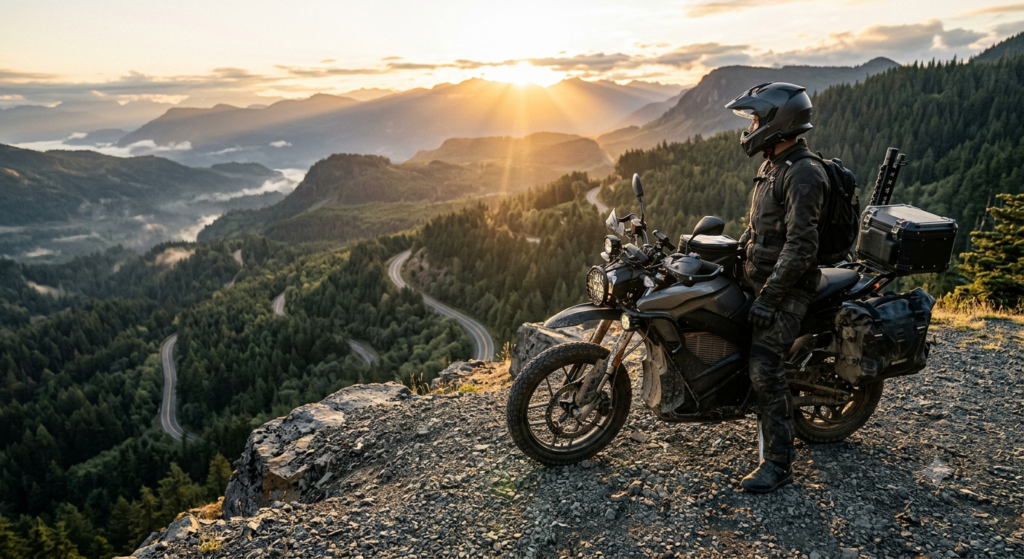
For 2024, the Can-Am Origin stands out with an estimated 115 miles (185 km) of real mixed-use range—combining city and trail segments. The LAND Moto District Scrambler delivers 70–80 miles (110–130 km) and offers unique AC-home charge flexibility. For those needing the longest legs, Zero’s DS/DSR models top the charts, claiming 179 miles (288 km) in city use, dropping to about 100–120 miles in a real mixed scenario with highway or off-road sections.
However, these numbers are benchmarks, not promises. Hard enduro, deep gravel, steady headwinds, cold temps, or heavy gear loads will all impact your results. Real-world riders report 15–30% lower range off-pavement or in tough weather. Ride conservatively in optimal conditions, and it’s realistic to expect 70 to 120 miles between charges for most 2024 electric ADV bikes.
Managing Charging on the Road and Off-Grid: What’s Actually Possible?
Charging is where planning makes or breaks an electric adventure motorcycle range. Here’s how real adventure riders are handling it on both paved and wild routes.
Level 2 public chargers are becoming widely available on highways and in many small towns. The Can-Am Origin will go from 20% to 80% charge in about 50 minutes on Level 2. Zero’s DS/DSR models can reach 95% in about an hour (or 80% in 30 minutes if you find a rarer DC fast charger). The LAND Moto Scrambler, on the other hand, is easy to charge at campgrounds or with a regular AC plug—most riders top up overnight.
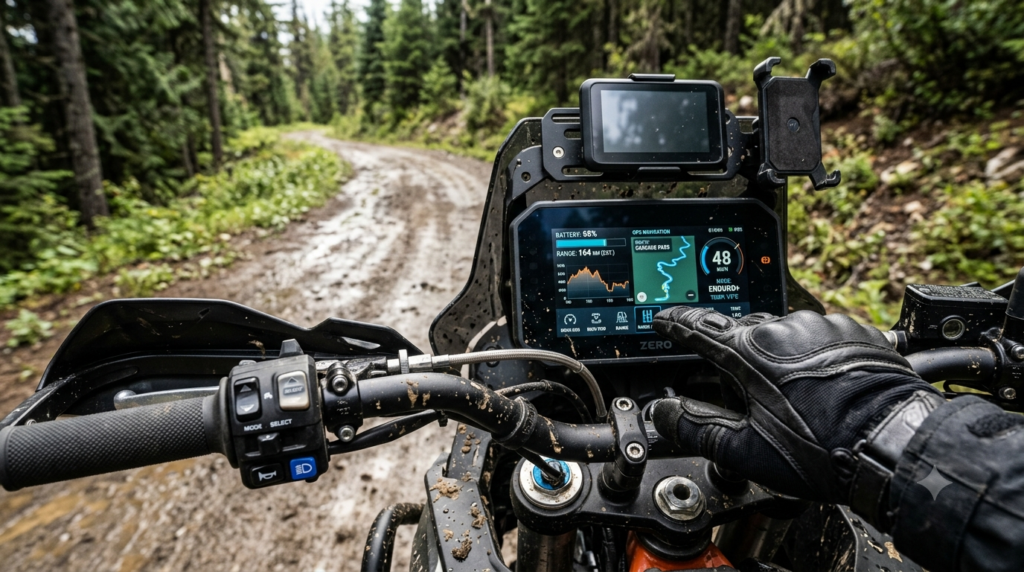
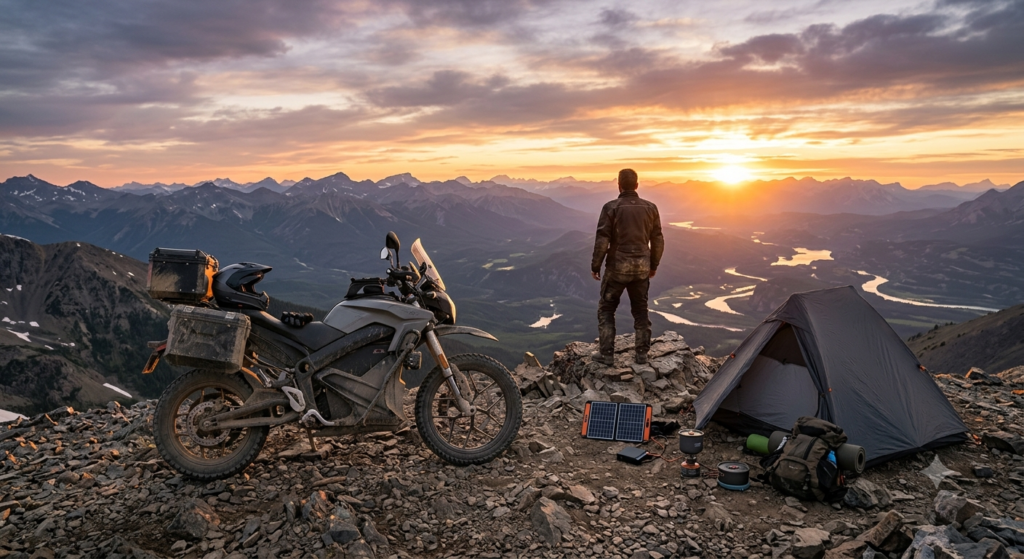
For extended off-road touring, riders supplement these public charging stops with portable setups: solar generators, compact battery packs, or even a dual fuel camping stove (if you want to boil up a recharge meal while topping the bike off via the campsite’s AC). If you carry a 1kWh external battery (weighing about 15 pounds), you can extend your ride by an extra 20–25 miles in a pinch—enough to reach civilization or your support vehicle.
That said, remote outposts, national parks, and off-grid areas are not always friendly to fast charging. Plan conservative segments (30–50 miles is realistic on remote loops) and always have a guaranteed recharge overnight—whether that’s a public station, campground outlet, or solar.
For gear-heavy cold-weather touring, don’t overlook your own energy: a rechargeable heated vest can make overnight charging stops more bearable if your gear gets damp.
From Range Anxiety to Ride Confidence: Real Strategies for Touring by EV Bike
Even with honest range numbers, “range anxiety” still nags at many ADV riders. Here’s how experienced e-moto owners keep that worry at bay—and what problems to expect.
| Pain Point | Common Cause | Real-World Solution |
|---|---|---|
| Unexpected battery drain | Steep terrain, headwind, cold, high speeds | Plan 15–30% range buffer; reduce speed; preheat battery at cold start |
| No charging option at destination | Rural area, broken public charger, bad planning | Always bring backup: compact power pack or solar; call ahead to campgrounds or motels to secure a plug |
| Long recharge wait | Only Level 1 charger available, crowded chargers | Use meal or sleep times for slow charging; use Level 2 preference filters in PlugShare |
| Incompatible connector | Europe/North America standard mismatch | Carry a J–1772 adapter for US bikes; confirm plug type via app ahead of each leg |
| Rider fatigue during long waits or cold nights |
No amenities during charging | Find stations near diners or heated rest stops; use heated vest or hot drink gear for comfort |
One of the biggest pitfalls? Overestimating your ADV loop based on “lab” range. Research shows most actual dual-sport outings are 20–50 mile loops, not marathon rides. Factor in elevation, surface, and if you’re solo—give yourself extra margin by scheduling overnight charges every 60–90 miles.
A helpful hack: most Zero DS/DSR owners keep their rides under 90 miles per day, so they can top up at home or at their base camp. Planning multiple short loops from a central point—with Level 2 charging at the hub—dramatically reduces range anxiety and ensures you can get back on the road each morning.
Don’t ignore personal comfort as a pitfall. Packing ultralight camping gear and a backup power pack keeps both you and your bike going, no matter the elements.
Top Electric Dual Sport/ADV Bikes for 2024: Which Are Actually Adventure-Ready?
If you’re looking for the best electric dual sport motorcycle with true adventure potential in 2024, three standout models consistently prove themselves in real-world rides:
- Can-Am Origin: 115-mile combined range, six riding modes (including off-road), 255mm premium KYB suspension, 20–80% recharge in 50 minutes (Level 2), rugged liquid-cooled battery for tough weather, integrated J-1772 charging for seamless public access. See full specs
- LAND Moto District Scrambler: 70–80 miles mixed range, 1-hour recharge to 95% via Level 2, home AC charging for maximum flexibility, lightweight scrambler build ideal for forest service or fire roads, affordable and camp-friendly. Detailed review here
- Zero DS/DSR: Up to 179 miles city (about 100–120 miles mixed), 95% recharge in 1 hour on Level 2 charger, DC fast-charge option (80% in under 30 minutes), largest battery capacity in the ADV segment, strong on gravel climbs, robust app for route and charge planning. More info and charge guide
All three handle mild to moderate off-road surprisingly well, but for heavier loads, complex weather, or deep sand and mud, expect the range to decrease and plan accordingly.
For even more gear-focused tips, see our guides to adventure motorcycle camping gear, heating solutions for long days, and waterproof Bluetooth comms for solo ADV travel.
If you’re new to ADV riding or want to explore lighter, more beginner-friendly models, check our advice on the best mid-size adventure bikes for new riders.
And when packing for remote rides, you’ll want high-impact items like a quick-release soft pannier kit for easy gear swaps between stages or an ultra-compact portable stove in case charging waits are longer than expected.
Conclusion
The gap between electric and gas adventure bikes is smaller than ever. With the right planning, a realistic understanding of your mix of routes, and an honest respect for battery range, today’s electric adventure motorcycle range can truly support multi-day and even remote tours. Be honest about your daily mileage, invest in portable charging backup, and leverage smart route planning—modern e-ADV bikes innovate, but smart riders make the adventure possible. Ready to electrify your next ride? Explore our gear reviews and range tips, and start planning your next eco-friendly tour today.
FAQ
How far can electric adventure motorcycles go on a single charge?
The most reliable 2024 models offer 70–120 miles real-world range with mixed on and off-road riding, but this drops in cold, on rough terrain, or with heavy loads. City-only riding can nudge higher.
Can I charge an electric dual sport motorcycle at any public station?
Most North American models use the J-1772 connector and work with public Level 2 stations. Always check plug compatibility in the PlugShare app before counting on a charger, and have an adapter if riding overseas.
How do I handle long trips where chargers are scarce?
For remote or off-grid adventures, pair public stations with portable power packs or a foldable solar panel kit. Plan 20–50 mile loops between chargers, and carry all required adapters and cables.
What happens if I run out of battery in the backcountry?
Prevention is key: always build in a 20% “get home” reserve, carry a small emergency battery pack, and have a plan for human-powered extraction if needed. Some riders coordinate with support vehicles on very remote trips.
Are electric adventure bikes suitable for winter or mountain rides?
Yes—with caveats. Cold weather, high elevation, and steep climbs can reduce range by up to 30%. Pre-heat your battery and always aim for conservative stints with charging solutions available at your basecamp.