

Motorcycle overlanding checklist creation is the true make-or-break skill for any serious ADV rider planning a multi-day, self-supported trip. Forget “just toss it all in”—the right list means more comfort, more safety, and fewer headaches along BDRs, TATs, or any big off-pavement mission.
Key Takeaways
- A field-tested motorcycle overlanding checklist saves time, space, and hassle when packing for self-sufficient trips.
- Pack lightweight, multi-purpose gear and always think about access, waterproofing, and emergency scenarios on the trail.
- Keep riding comfort, efficient camp setup, and real-world self-reliance at the core of your planning.
Table of Contents
- Why a Specific Motorcycle Overlanding Checklist Matters
- Essential Riding Gear for Overland Motorcycle Trips
- Common Pitfalls & Advanced Analysis
- Conclusion
- FAQ: Motorcycle Overlanding Checklist
Why a Specific Motorcycle Overlanding Checklist Matters
A solid motorcycle overlanding checklist isn’t just another “to-do list”—it’s your insurance policy for every variable you’ll encounter. Unlike a day ride, multi-day ADV travel changes with elevation, weather, and terrain. You’ll need gear that adapts with you: riding apparel, cold weather and rain solutions, personal shelter and sleep kit, tools, emergency equipment, and organizational tricks that keep you moving, not scrambling after gear. Space is at a premium on your motorbike, so you’ll want to choose gear that packs small and pulls its weight in more ways than one.[source] It’s not about packing more—it’s about packing smarter.
Essential Riding Gear for Overland Motorcycle Trips
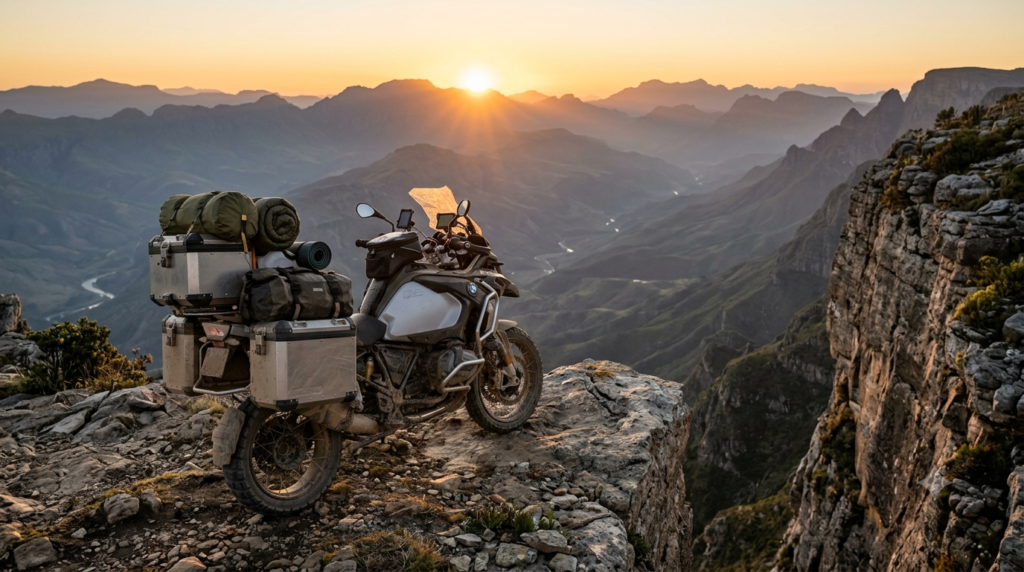
Your adv bike camping setup starts with personal safety and legal compliance. A field-proven setup will keep you safe, dry, and warm—while also staying within packable volume and weight.
- Full-face helmet (with quality goggles if using MX style; consider a motorcycle headset for comms).
- Armored ADV jacket and trousers (CE2 certified impact zones).
- Waterproof shell/rain suit, removable or over-garment.
- Insulated mid-layer: fleece, synthetic, or heated vest (review here).
- Thermal/insulated and waterproof gloves (bring at least two types, one as backup).
- Sturdy ADV boots, gaiters for water crossings if needed.
- Neck tube or balaclava, hi-vis vest (some regions mandate).
- Multiple base-layer shirts, quick-dry underwear, both thin and thick socks.
- Earplugs (consider electronic earmuffs for dual-purpose protection in camp).
Data shows: “A solid multi-day overlanding pack starts with the rider’s essentials: a full-face helmet with goggles, armored jacket and trousers, waterproof shell, insulated fleece or PrimaLoft layer, thermal or waterproof gloves, sturdy boots, neck tube, earplugs, and a hi-vis vest.”
Don’t forget: always bring at least one full set of backup underlayers—and keep them in an ultra-dry zip bag, not a weak stuff sack.
Moto Camping Gear List: Sleep, Shelter, and Setup Wisdom
- Lightweight, freestanding tent with short pole segments (fits in a pannier).
- Durable poly groundsheet or Tyvek sheet that matches your tent’s footprint.
- Inflatable sleeping pad (e.g., Thermarest NeoAir), plus a repair patch kit for it.
- Down or synthetic sleeping bag/quilt rated for the lowest realistic night temps.
- Compact, inflatable pillow and/or a small foam pad for extra comfort.
- Optional: ultralight cot if you sleep poorly on the ground.
- Eye mask and earplugs for roadside or noisy campgrounds.
“The camping core should be a lightweight, freestanding tent… the pole segments are only 15 inches long. And this tent fits in a pannier.”[source]
Packing and Organizing Your ADV Bike for Camping
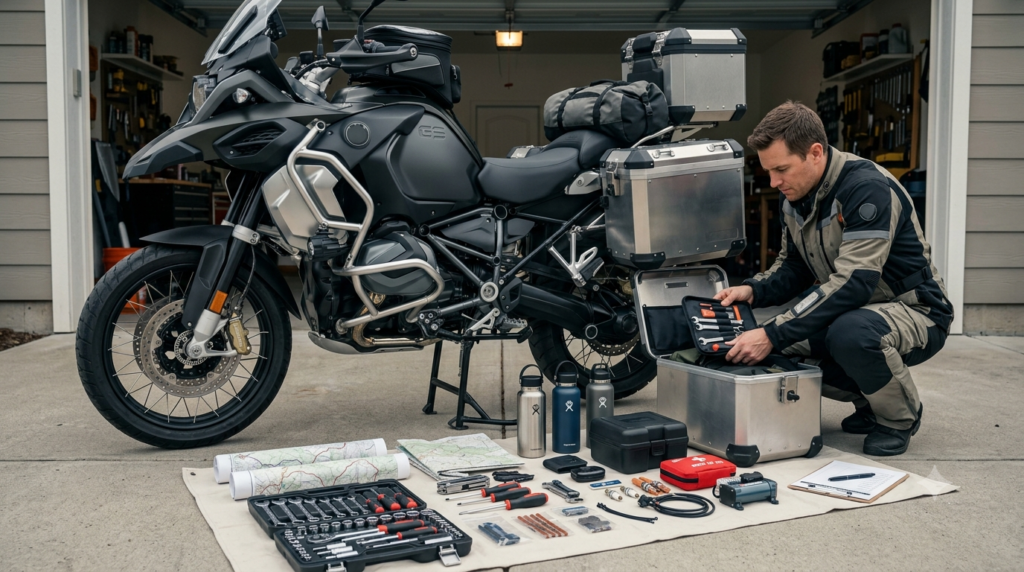
- Choose waterproof panniers or hard cases for main storage (see ADV soft panniers guide).
- A tank bag for documents and items you need while riding.
- All small tools, repair kits, meds, and survival items should go in a dedicated pouch or roll—label them and always stow in the same location.
- Implement a strict “wet/dry” bag system: wet gear (rainwear, soaked boots) never rides with dry camp items.
- Balance the bike for optimal weight: heavy items (tools, water, food) low and central, lighter clothing higher up.
- Bring a side-stand footplate or enlarge your side stand for soft ground (Himalayan 450 mods here).
Proven tip: keep your most often-used gear (water bottles, snacks, map, first aid, bug spray) near the top of your luggage or in quick-access pockets.
Cooking, Water, and Food Solutions for Motorcycling Overland
- Mini gas stove, e.g., Gas One dual-fuel stove, or MSR Pocket Rocket. Bring fuel canister and adaptor.
- Small pot/pan (titanium or hard-anodized mind weight); spork or short-handled camp spoon.
- Small cutting board, salt/pepper/spice mini containers (film canisters work well).
- Freeze-dried meals, instant rice or noodles, jerky, calorie-dense bars—easy to cook and store.
- 2L minimum water bag plus a 4L backup bladder; water purification filters or treatment tabs.
- Insulated mug or metal cup for coffee, soup, or hot drinks.
- Utensil wipes and a small mesh bag to dry your gear post-use.
“Cooking gear includes a mini gas stove (MSR Pocket Rocket 2 or similar)… a 2-L water bag plus a larger 4-L hydration bladder, plus water‑purification tablets or a filter.”
If in bug season or tick territory, use a long-lasting mosquito repellent: see this field review.
Tools, Emergency, and Personal Hygiene: Self-Reliance on the Road
- Comprehensive, bike-specific tool roll (combine OEM kit with quality aftermarket tools).
- CO₂ inflator or compact mini air pump; tire levers and bead breaker if using tubes.
- Spare 18-inch inner tube fits both front and rear wheels as a last-ditch spare (for most ADV/touring bikes).
- Assorted duct tape, zip ties, small bit driver set.
- Paracord or robust rope, small multitool, headlamp with extra batteries.
- Well-stocked first aid kit; electrolyte powder for dehydration risk.
- Mini spade or parashovel, TP in a zip bag, wet wipes, compact towel, bug spray, sunscreen.
“Tool and maintenance items are a bike-specific toolkit…, a CO₂ or mini air pump, duct tape, zip ties, spare 18-inch inner tube, tire levers… a mini spade or parashovel, and a latrine kit.”
For women’s-specific gear, see solo female travel gear.
Electronics, Safety, and Nighttime Comfort: The Details That Matter
- Satellite communicator or GPS messenger (e.g., Garmin InReach for remote travels—doubles as emergency beacon).
- USB battery pack (10,000mAh or greater) and multi-charger cord set.
- Headlamp, backup flashlight, and a compact LED lantern for camp.
- Phone mount for the handlebars, waterproof case (phone navigation guide).
- Backups of licenses, insurance, medical info (store as digital scans and paper).
- Store electronics in a padded pouch inside a waterproof/dustproof bag.
“Electronics and safety gear should cover a satellite communicator or GPS messenger… a headlamp with extra batteries… a compact multi-charger or USB power bank.”[source]
Pro Tips for Quick & Safe Motorcycle Tent Setup
- Always place your tent at least 6 feet from the bike and uphill if possible.
- Park so the side-stand points away from the tent. If the bike tips, it won’t hit your shelter.
- Create a simple “kickstand puck” using cut-up plastic or wood if you don’t have a wider footplate welded on.
- Use the motorcycle for extra wind protection—park it upwind of the tent when possible.
- Stake out the tent mesh and fly separately for rapid packing or sudden rain setups.
“Park your motorcycle so it’s leaning away from your tent so that if it falls over it won’t crash into your tent… weld a wider footplate onto your side stand to help… in soft ground.”[source]
Advanced Analysis & Common Pitfalls
Real ADV riders know there are a few ways even the best motorcycle overlanding checklist can go sideways. Here’s what can catch you out and how to troubleshoot:
| Pitfall | Why It Happens | How to Prevent or Fix |
|---|---|---|
| Overpacking Gear | FOMO, “just in case” mentality | Audit every item; remove duplicates or anything not used in two prior trips |
| Mismatched Luggage (Soft vs Hard) | Poor waterproofing, uneven bike balance | Test-pack loaded bike; use compression bags for soft luggage and keep weight centered |
| Wet or Ruined Clothing/Sleep Kit | Poor waterproofing, cheap zips or stuff sacks | Store critical dry items in heavy-duty liners or roll-top dry bags |
| Toolkit Gaps or Unused Tools | Generic or incomplete toolkits | Customize toolkit after every breakdown/repair and re-test at home |
| Running Low on Water/Fuel | Overestimating range, remote routes | Carry backup water/fuel as collapsible bottles; monitor consumption on previous rides |
| Battery & Electronics Dead | Cheap power bank, no redundancy | Bring high-capacity bank and secondary USB charger, test all before leaving |
| Small Repair Items Forgotten | Poor checklist habits, last-minute packing | Use a printout or digital moto camping gear list as your final cross-check |
| Poor Tent Setup Site | Tiredness at camp, rushing setup | Spend 5 extra minutes scouting for flat, sheltered ground; test side stand stability before unpacking |
Conclusion
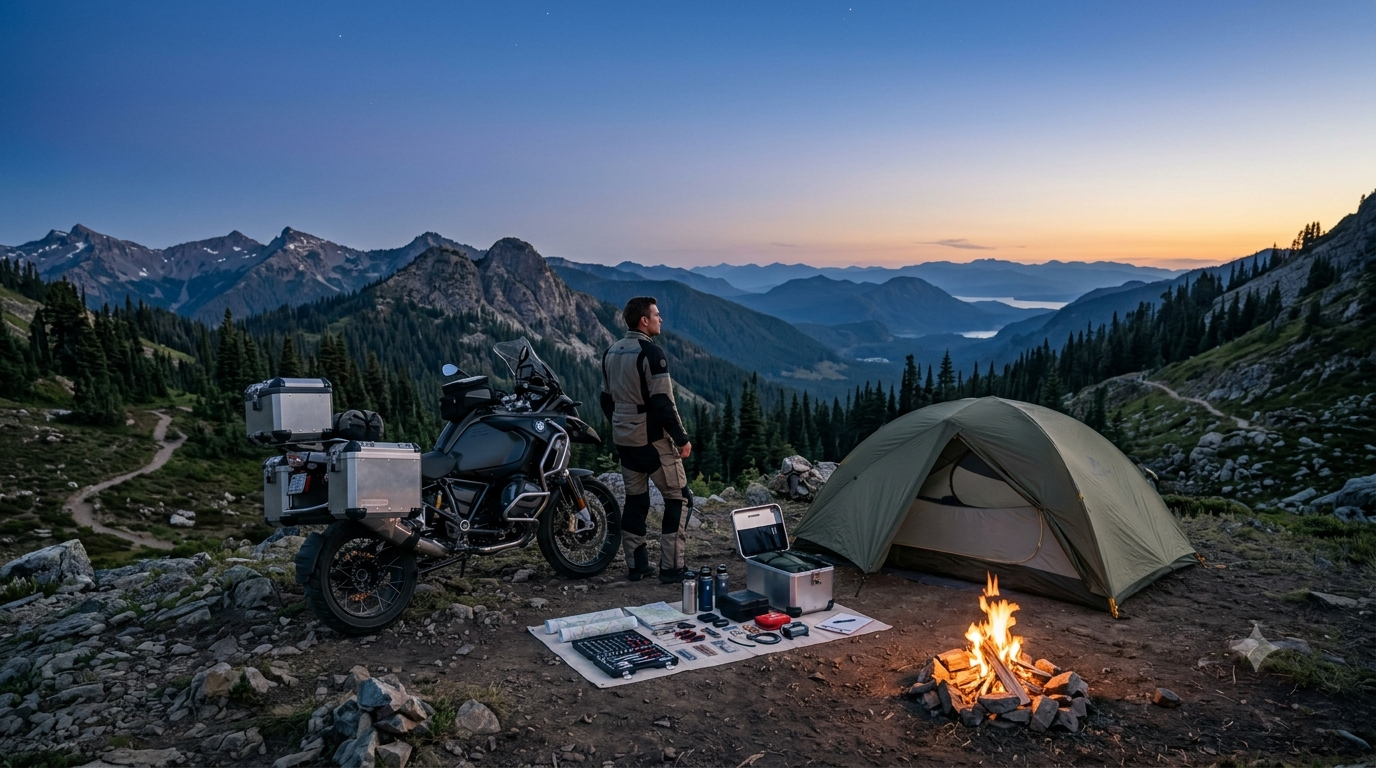
If you want to actually enjoy your trip—not just survive it—a carefully packed motorcycle overlanding checklist is non-negotiable. Review your kit before every ride, adapt to new conditions, and always prioritize reliability, packability, and preparedness over chasing “ultralight.” Make it a habit, not just a one-time prep, and you’ll find that you’re prepared for whatever the backcountry throws at you. Download your own checklist and start prepping for your next adventure now.
Ready to put your motorcycle overlanding checklist to the test? Dive into our detailed gear reviews, compare setups, and share your own field-proven tips below.
FAQ: Motorcycle Overlanding Checklist
What are the top five essentials on any motorcycle overlanding checklist?
Helmet and full riding protection, reliable shelter (tent or bivy), sleep system (pad and bag/quilt), water purification, and a toolkit tailored to your bike. Backup clothing and compact power bank are also key.
Soft or hard panniers—which are better for motorcycle overlanding?
Soft panniers are lighter and more forgiving in crashes; hard panniers offer security and durability. Ultimately, your route, gear, and crash risk will decide. More tips in our ADV soft panniers guide.
How do I keep my sleep kit dry and functional in heavy rain?
Double-bag your sleeping bag and clothes in robust roll-top dry bags. Always inspect the tent for leaks before leaving and use a groundsheet.
What’s the best way to pack tools for field repairs?
Customize your tool roll based on your bike—include only what fits your hardware. Store them low and central. See our tire repair kit review for tire-specific tools.
Can electronics survive off-road riding and river crossings?
If stored in padded, waterproof zip bags inside the panniers (never tank bags for deep crossings), quality electronics will last. External power banks with rubber caps boost reliability even when muddy.
—