

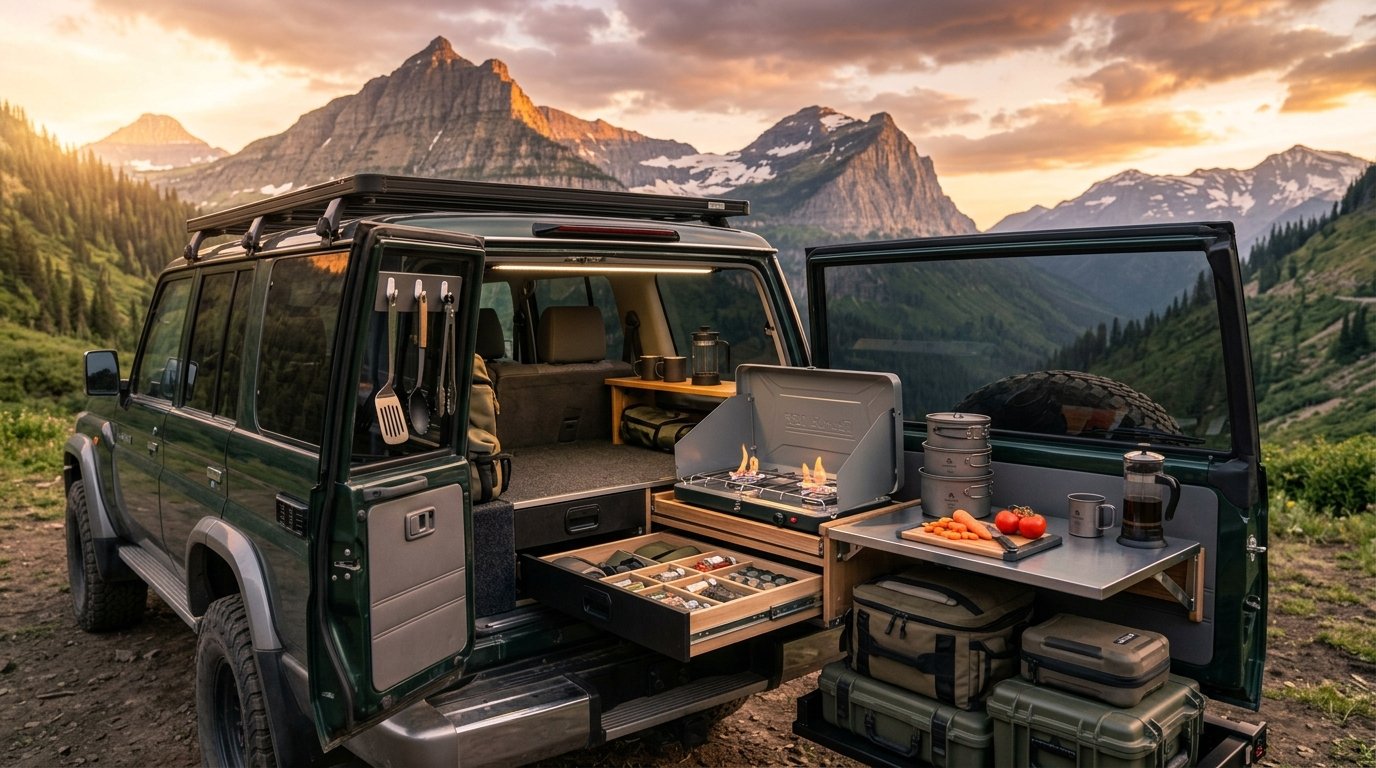
Compact overland kitchen setup solutions have transformed how urban travelers and van lifers cook on the road, making it possible to have a full-featured kitchen that fits even the smallest SUVs, vans, or bike trailers.
Key Takeaways
- Modern compact overland kitchen setups are lightweight, modular, and can be installed fast with no permanent changes to your vehicle.
- The best systems maximize storage and prep space, avoid scattered gear bins, and are built for weather resistance and repeated use.
- Top picks like Kusa 28, Nomad Kitchen Nano, VOZ Kit, Teraglide BOX, and Tryhomy can fit behind small rear seats, in trunks, or on bike trailers.
Table of Contents
- Why Compact Overland Kitchen Setups are a Game Changer for Small Vehicles
- What to Look for in a Foldable Camp Kitchen for Vehicle Travel
- Top Compact Camp Kitchen Systems in 2024: Real-World Product Spotlights
- Pro Tips for Maximizing a Van Life Kitchen Setup in Small Spaces
- Choosing the Best Compact Kitchen for Your Vehicle (Buyer’s Decision Guide)
- FAQ
Why Compact Overland Kitchen Setups are a Game Changer for Small Vehicles
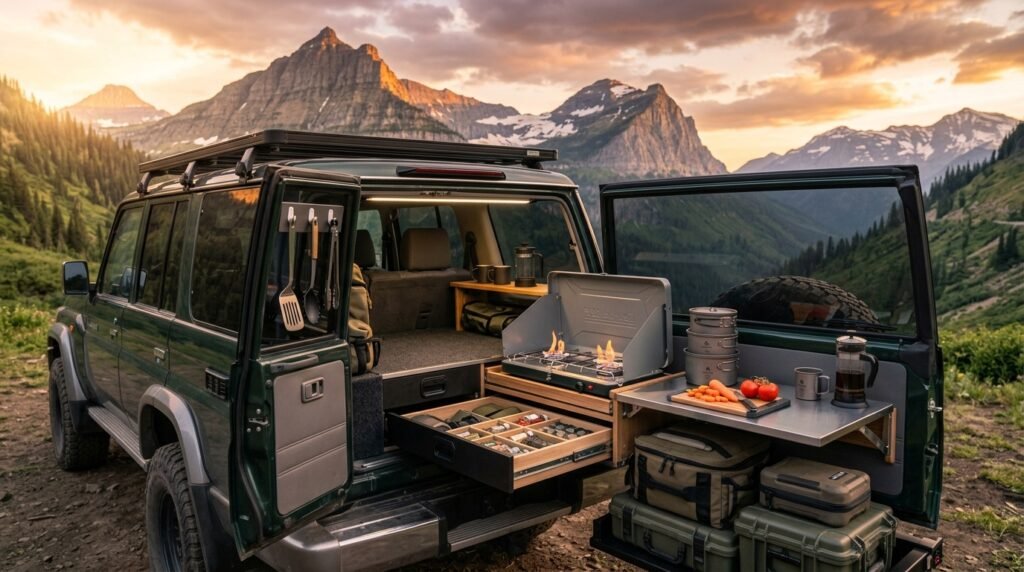
Fitting a real kitchen into a hatchback, van, or even a bike trailer once meant making tough compromises: scattered gear, slow setups, and messy cleanups. Modern compact overland kitchen setup products solve these problems with foldable, all-in-one systems designed for small vehicles and van life kitchen setup small spaces. With clever engineering, these units collapse or slide into low-profile boxes that ride behind rear seats or tuck neatly into a trunk.
Today’s top setups—like the Kusa 28 and the Tryhomy Stainless Steel series—are under 60 pounds even fully loaded. They’re made from water-resistant aluminum and stainless steel, built to survive actual road trips and weather, and can be deployed in seconds. The days of fiddly bins and camp tables are fading for good reason. You now get modular gear that minimizes space, maximizes actual cooking, and stows away for weekday life.
What to Look for in a Foldable Camp Kitchen for Vehicle Travel
Not all camp kitchens marketed for vehicles really fit city and small lifestyle needs. Here’s how to spot a foldable camp kitchen for vehicle travel that actually delivers:
- Foldability and Modularity: Insist on systems that become a single box—no separate bins, no pieces to assemble at each stop.
- Fast Install and Removal: Seek out models secured with heavy-duty straps (not bolts or screws). For example, the Tryhomy system ties down in 5 minutes, with no drilling.
- Lightweight, Weatherproof Construction: Prioritize aluminum or stainless builds with sealed hinges and rugged latches.
- True “Fit-Anywhere” Designs: The best setups slide behind rear seats of crossovers or pop into a trunk, leaving you full rear visibility and no need to unload the whole cab for a meal.
What to avoid: Jumbled bins and bags, any setup taking more than 10 minutes to deploy, and cheap plastic builds that will crack after a season. Too-heavy systems also defeat the point for solo and city travelers—anything over 60 lb fully loaded is too much for many users. The goal is quick, tool-free access and storage—ready whenever you want to cook and gone with zero trace afterward.
Top Compact Camp Kitchen Systems in 2024: Real-World Product Spotlights
This is where real-world road testing matters. Each system below is built for quick setup, small footprints, and genuine durability. Here’s how the leaders stack up:
| Product | Weight | Main Material | Footprint | Setup Time | Key Features | MSRP | Best For |
|---|---|---|---|---|---|---|---|
| Kusa 28 | ~45 lb | Powder-coated aluminum, ply | Fits trunk, 28” wide | Under 2 min | Stove bay, full prep counter, drawers | $1,150 | Solo/couple, car camping |
| Nomad Kitchen Nano | 30 lb | Aluminum, steel | Behind rear seats | 1-2 min | Sink, pull-out counter, customizable layout | ~$1,000 | Subcompact SUVs, van builds |
| VOZ Kit | 57 lb | Sealed steel, composite | 48″ wide, closed unit | 15 sec (no assembly) | 2-burner stove, faucet, sink, all-in-one | $1,300 | Van life, longer trips |
| Teraglide BOX | 40-50 lb | Aluminum | Fits most hatchbacks/SUVs | 90 sec | Lockable, slide-out drawers; no-drill install | $1,200 | EV/SUV, removable/temporary |
| Tryhomy Stainless Series | 24-80 lb (varies by size) | Stainless/aluminum | 24”-34” wide | Under 5 min (strap-in) | Stove slide, sink, multi-tier storage | $799-$1,299 | Small cars, modular, speed |
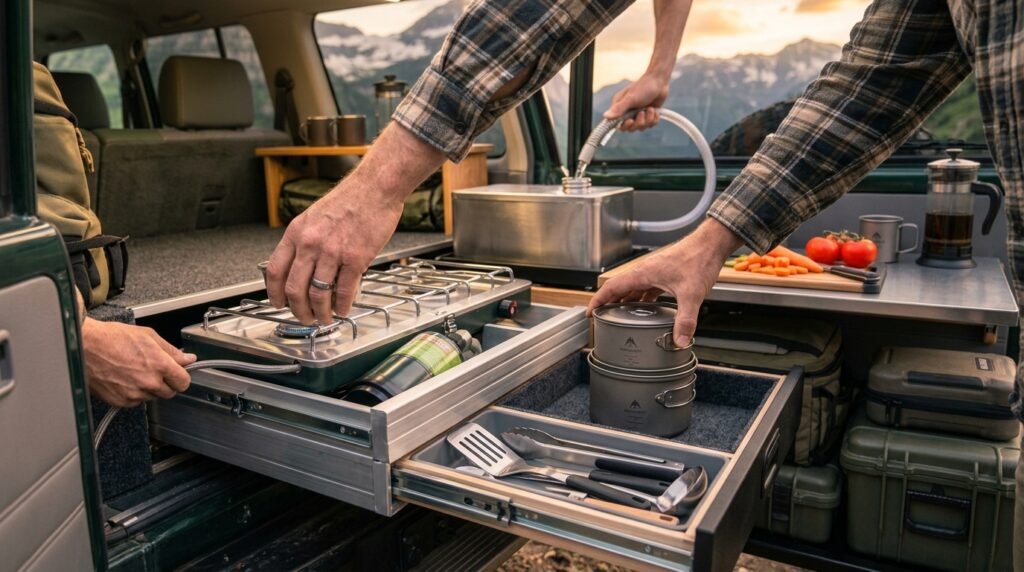
Most of these systems include slots for a dual-fuel camping stove and come ready to use straight out of the box, offering true modular vehicle storage kitchen options. All cited systems above are lightweight, weather-resistant, and can be secured without drilling—directly addressing renter and city-driver needs. The VOZ Kit, for instance, is completely sealed and needs zero assembly, making it perfect for those who refuse the tedium of setup at every stop.
Learn more about optimizing gear for compact rigs in our Adventure Motorcycle Camping Gear Guide and see modular storage solutions in modern motorcycle overlanding checklists.
Pro Tips for Maximizing a Van Life Kitchen Setup in Small Spaces
Real-life van life kitchen setup small situations are all about using every inch smartly while minimizing chaos. Here’s how to do it right with a modular vehicle storage kitchen approach:
- Go All-in-One: Modular kitchen units remove scattered bins and “where did I pack it?” headaches. Integrated drawers for utensils, stove, and food save space and keep things secure on bumpy roads.
- Vertical Stacking: Choose units that stack or include multi-tier storage—crucial for keeping bulky gear away from your sleeping and living area.
- Harness Every Securement Option: Use included heavy-duty straps to keep your setup rock-solid during travel. The Tryhomy system “packs a stove slide, sink, and multi-tier storage into a highly compact footprint and is secured with heavy-duty straps in 5 minutes” (Source).
- Prep at Home: Use collapsible, color-coded silicone bins for meal prep and cleanup—these stow in your main unit and keep you organized at the campsite.
- Pack Smart: Adopt “last in, first out”—store your daily-use items on top or up front so you’re not unpacking everything to make coffee at dawn.
Common mistake: Relying on bins and crates to “hack” a kitchen leads to a mess and hours lost searching for basics. Modular kitchens look more expensive up front, but save frustration (and often weight) over time. For cold or multi-season travel, bring a heated vest for morning meal prep.
Choosing the Best Compact Kitchen for Your Vehicle (Buyer’s Decision Guide)
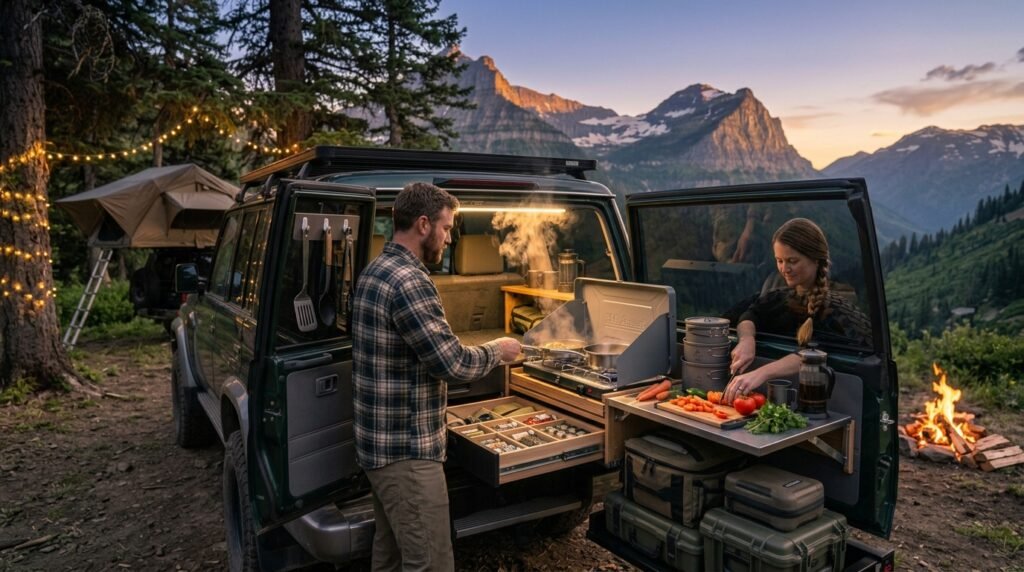
There’s no one-size-fits-all solution. Here’s how to match your compact overland kitchen setup to your lifestyle:
- Trip Length: Weekend campers and solo travelers may get by with the lightest and smallest units. For long-haul van life or couples, integrated stoves and sinks are game-changers.
- User Count: If you camp solo, compact foldables like the Nomad Kitchen Nano or Teraglide BOX are ideal. For families, larger all-in-one models like the VOZ or Kusa 28 offer more prep and storage space.
- Budget: Expect $800–$1,500 for a quality system that actually lasts, with cheaper options for minimalist setups. Modular DIY approaches can save money but rarely save time or frustration.
- Removability vs Permanence: If you rent, lease, or swap vehicles often, you need no-drill, strap-in setups. The Teraglide BOX “provides lockable, slide-out drawers, fits SUVs/EVs, and requires no drilling for install—ideal for renters and those who want low-commitment solutions” (Source).
- Install Constraints: Verify unit width/depth—some “compact” kitchens are still too wide for small hatchbacks. Double-check before buying.
Upgrade your system with a compact dual-fuel camping stove or see our full ultralight motorcycle camping guide for even more space-saving ideas.
If your adventures go beyond weekends, check out all-weather protection and safety essentials in mosquito repellent and our breakdown of heated vests for cold mornings.
FAQ
Can these kitchens really fit behind rear seats or in a small trunk?
Yes, most compact overland kitchen setups like Tryhomy, Nomad Kitchen Nano, and Kusa 28 are engineered to fit behind rear seats or within a trunk, often with footprint widths of 24–34 inches.
Are they difficult to install or remove for daily driving?
No. The best systems secure via heavy-duty straps with no drilling. Most can be installed or removed in 2–5 minutes, making them perfect for renters and city dwellers.
Do I need special cookware to use these setups?
No, but using nesting or collapsible cookware maximizes drawer space and minimizes rattling while driving. Some manufacturers offer custom-fit options for even easier packing.
Are modular kitchens worth the upfront cost compared to DIY bins?
While upfront cost is higher, modular vehicle storage kitchens prevent gear scatter, last longer, and cut down daily hassles. Over time, many find the quality-of-life upgrade worth the investment.
What if I want a stove that runs on multiple fuels?
Look for units compatible with a dual-fuel camping stove for the most flexibility in fuel choices during remote travels.
—