

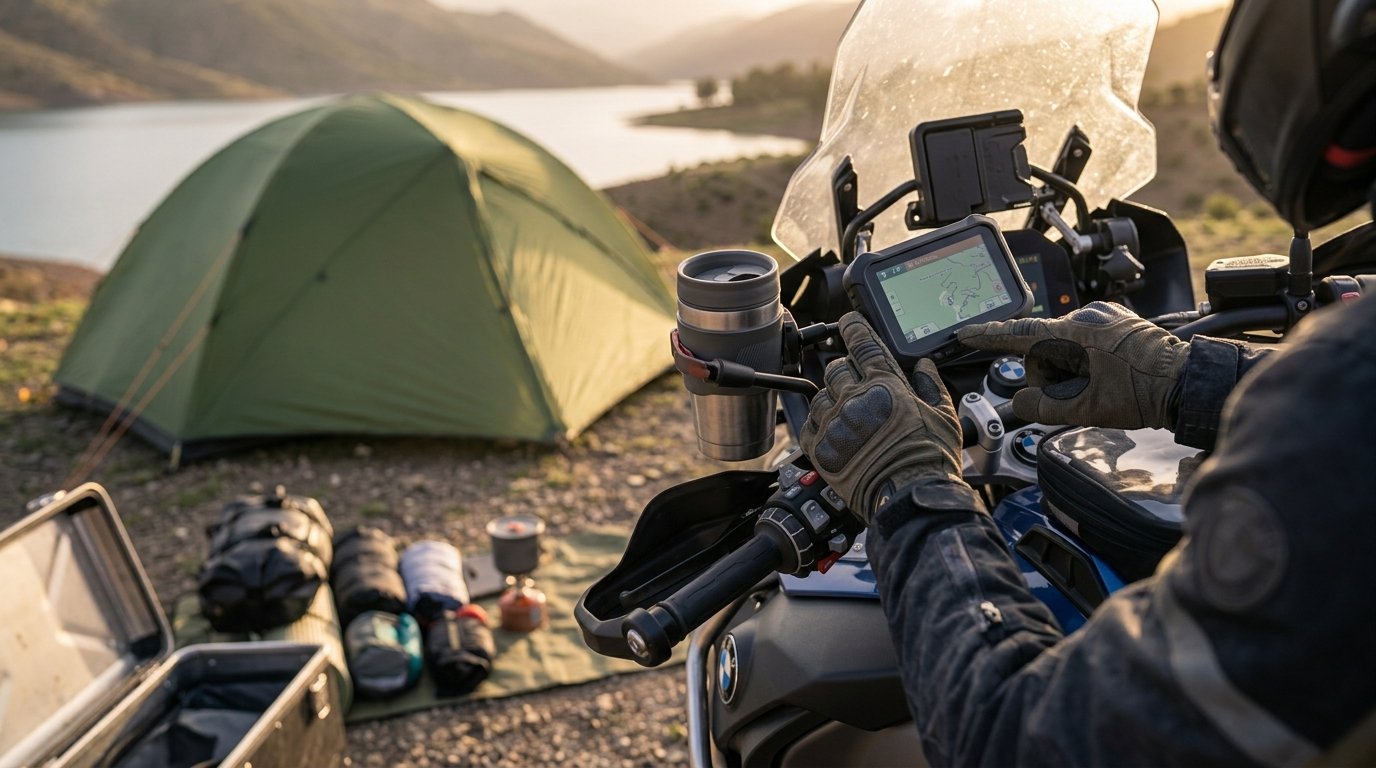
Adventure motorcycle touring is equal parts exhilaration and challenge. Whether you’re gearing up for your first multi-day ADV trip or refining your touring setup for tougher terrain, a field-tested approach can drastically reduce fatigue and boost safety, comfort, and confidence in unpredictable conditions. Here’s how real ADV riders succeed long after the pavement ends.
Key Takeaways
- Reliable adventure motorcycle touring means proactive bike prep, modular gear, and smart packing strategies to stay comfortable across mixed terrains and weather changes.
- Layering, hydration, and electronics like GPS and Bluetooth helmet intercoms can cut fatigue and keep you connected and safe on long distance rides.
- Avoid common pitfalls by tuning your ADV touring setup for realistic weight, weather, and quick adjustments, not just ideal conditions.
Table of Contents
What Makes or Breaks Adventure Motorcycle Touring?
Long distance adventure motorcycle touring is less about fancy gadgets and more about readiness for real-world unpredictability. Mixed terrain—dust, gravel, mud, tarmac—can punish gear and body, so your ADV touring setup needs rigorous prep, regular servicing, and gear choices proven in the field, not just on YouTube. Prioritize reliability, rapid adjustments, and fatigue-minimizing comfort over showy mods; prepping both your motorcycle and yourself is non-negotiable for safety and fun.

Start with a recently serviced adventure bike: check oil, chain, brakes, coolant, and suspension. Set tire pressure for your trip’s heaviest load and terrain split (higher for tarmac, lower for off-road, but never risking a pinch flat). Research shows the biggest trip-enders are neglected basics: old tires, questionable batteries, or ignored leaks (source). Equip essential electronics: GPS, satellite communicator (for SOS and low-signal areas), and Bluetooth helmet intercom for navigation and morale.
Now the rider. Modular, protective, and layered motorcycle touring gear is critical. Breathable waterproof pieces (Gore-Tex jacket and pants, boots, gloves) plus a full-face or modular helmet protect against weather and impact. Layer up: wicking base, insulator, and rain shell. For women riders, make sure gear is properly sized and armored for all-day comfort; see our feature on women’s adventure riding gear for more tailored tips.
How to Prepare Your Bike, Gear, and Self: Step-by-Step Guide
- Service Your Bike Ruthlessly
- Oil, filters, chain tension, coolant, brake fluid—everything gets double-checked before launch.
- Dial in suspension to your loaded touring weight. Use manufacturer settings as a baseline, then adjust preload and damping for comfort and stability.
- Choose tires geared to your route’s terrain mix, keeping a tire repair kit within arm’s reach (fix flats the right way).
- Spare fuel options (auxiliary tank or external pod) matter if you ride remote. Know the actual range fully loaded, not just the spec sheet.
- Build a Flexible ADV Touring Setup
- Protect vital parts: crash bars, reinforced foot pegs, quality skid plate. If you ride a Royal Enfield, check our protection accessories guide.
- Install modular, lockable luggage. Soft or hard panniers keep weight low and offer crash resilience (soft panniers), while a tank bag organizes essentials.
- Packing smart: Layer small, quick-access items high; keep heavy or seldom-used gear near the bottom for even balance.
- Arm Yourself With Multi-Weather Gear
- Waterproof, breathable, and armored is non-negotiable (source).
- Always bring layering options and a lightweight packable down jacket for sudden cold (packable down reviews).
- Moisture-wicking base layers and multiple gloves (thin + waterproof) let you adapt in seconds mid-ride.
- Electronics and Lighting That Go the Distance
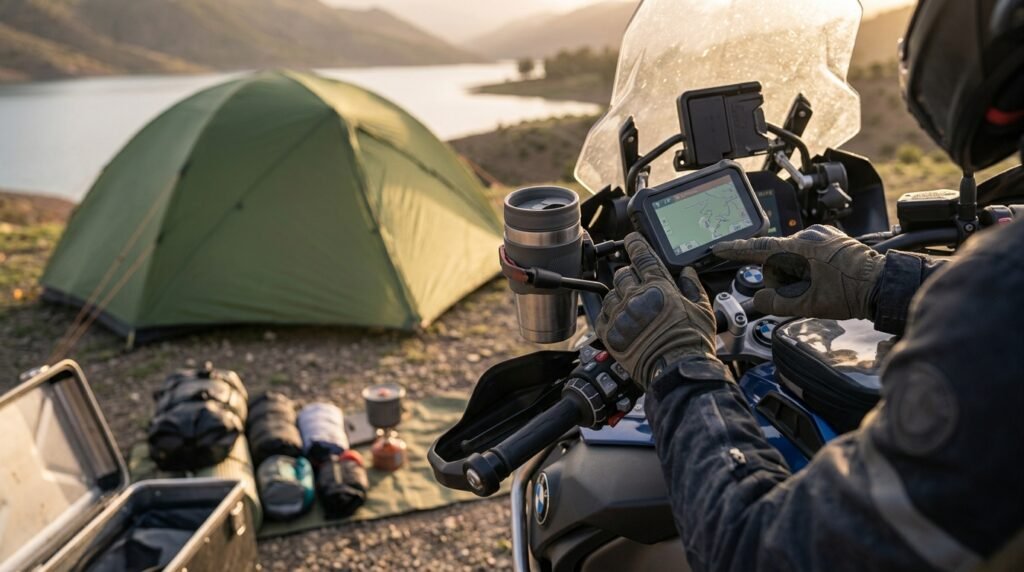
- Reliable GPS with offline maps: phone apps with waterproof mounts or bike-dedicated GPS units (navigation mounting advice).
- Add auxiliary LED lighting for night or low-visibility stretches.
- Power: Dual-USB outlets and a charged battery backup; essential for comms and cameras. Consider a smart battery charger for long layovers.
- Hydration, Health, and Emergency Prep
- Hydration bladder or ADV-specific backpack is a must (best choices).
- Packed first aid kit plus basic meds and electrolyte tablets.
- Earplugs, sunglasses or goggles, high-SPF sunscreen, and insect repellent. Stash a mosquito repellent for muggy evenings.
Plan your route for realistic daily kilometers. Fatigue stacks fast, especially on challenging off-road. Experienced ADV riders recommend flexible waypoints and a “bailout” shortcut in case of exhaustion or mechanical issues (research data).
Finally, always carry a quick-reference pre-ride checklist. Use our motorcycle overlanding packing list or the one below for your own system.
Advanced Pitfalls and How to Dodge Them
Even the best-prepped adventure motorcycle touring plans can falter in real-world chaos. Here are the most common (and sometimes painful) pitfalls, with battle-tested solutions:
| Problem | How It Hurts You | Pro Solution |
|---|---|---|
| Over-packed Gear/Luggage | Saps handling, increases drop risk, and crushes comfort on rough sections | Pack by necessity, not “nice to have”—each kilo adds to fatigue. Modular soft panniers let you shed or rearrange mid-trip (soft pannier reviews). |
| Ignoring Bike Weight and Suspension | Bouncy, wallowy handling and rapid tire wear; high-speed wobbles possible | Reset suspension every major load change; check sag with gear fitted. Consult our mid-size ADV tuning guide. |
| Using Single-Season Gear | Cold snaps, sudden rain, or blazing sun leave you shivering, soaked, or overheating | Layer smart: moisture-wicking base, insulator, waterproof outer. Stash a heated vest for cold days. |
| Neglecting Early Fatigue Signs | Numb hands, sore knees, “micro-frictions” that build to real injury or burnout | Schedule breaks every 80-100km, stretch at stops, and never skip mid-ride hydration and snacks. Use layering and comfort tricks. |
| Poor Lighting/Electronics Prep | Lost in remote areas, riding blind in low light or bad weather | Upgrade lighting, always carry a secondary nav system, and fully charge power banks every night. |
For new riders, the myth of “single setup fits all” is persistent. But a setup that rides smooth when empty could be a chore when loaded, especially on technical trails. Test, adjust, and be willing to change mid-ride. See more on true ADV prep.
Conclusion
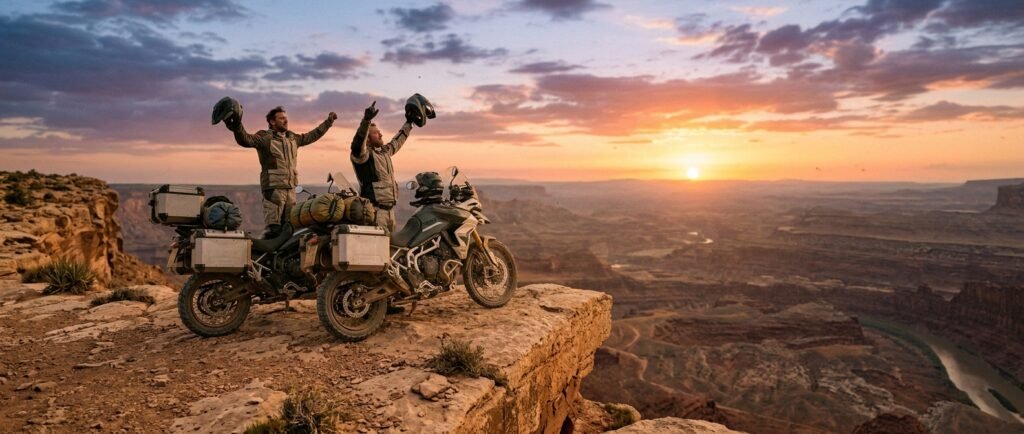
The road (and trail) rewards those who prep honestly—not just for the glamorous Instagram moments but for the heart-of-nowhere fixes, wet boots, and surprise detours. Adventure motorcycle touring is about calculated reliability: mileage-tested maintenance, adaptive layers, electronics that work offline, and knowing your own limits.
Put these steps to work on your next trip. Test, tweak, and trim your load before launch. Don’t just plan for perfect weather or pavement—build your ADV touring setup for everything in between, and you’ll ride further, safer, and with more genuine fun. Ready to step up your adventure motorcycle touring experience? Bookmark this guide and start your checklist today.
FAQ
What’s the best adventure bike for long-distance touring on mixed terrain?
There’s no single answer—it depends on your height, experience, and trip demands. Middleweight ADV bikes strike the best balance between agility and comfort. For new riders, check our guide to a lightweight ADV bike for new riders.
How should I layer gear for unpredictable weather?
Start with moisture-wicking base layers, add a mid insulating layer, and finish with a waterproof, breathable shell. Carry packable rain gear and, for colder trips, a heated vest. Modular layers adapt fastest—avoid one-piece suits unless your weather is predictable.
Do I need a hard case or soft luggage for adventure touring?
Hard (aluminum) cases offer the most crash protection and lockability, but soft panniers are lighter and less likely to trap legs in a drop. Soft luggage also lets you ditch weight mid-trip. Check reviews of waterproof motorcycle panniers for options.
What electronics are essential on a remote tour?
GPS (or a phone with offline maps and waterproof mount), satellite communicator for SOS and texting, Bluetooth intercom for on-the-fly navigation or group rides, and a dual USB charger. A compact battery backup is smart, especially if you ride with heated gear.
How do I reduce fatigue on long-distance motorcycle trips?
Regular breaks, constant hydration, correct bike ergonomics, and pre-trip fit adjustment on your gear are essential. Use earplugs for wind noise, and keep comfort snacks and wipes handy to tackle “micro-frictions.” Fatigue starts small—address it early.
—