
Adventure motorcycle camping gear can make or break your multi-day ADV journey—especially when you’re aiming for ultralight setups that maximize comfort in limited pannier space. For riders planning solo or duo expeditions, the right compact gear lets you travel farther, camp better, and keep your bike nimble.
Key Takeaways
- Smart packing and ultralight gear mean you can camp comfortably without bulking out your bike’s panniers or duffels.
- compression dry bags for motorcycle camping radically reduce the volume of clothes and sleep systems for easy fit and better weight distribution.
- Real-tested tents, sleeping bags, and stoves make a massive difference in pack size, setup speed, and camp comfort for multi-day ADV trips.
- Why Space-Efficient Adventure Motorcycle Camping Gear Matters
- Clever Packing: Luggage Systems & Space-Saving Tricks
- The Best ADV Motorcycle Tent: Tunnel-Style Compact Picks
- Ultralight Sleeping Bags: Max Warmth, Minimum Bulk
- Packable Camp Stoves & Essential Cooking Gear
- Sample Packing List: What Fits (and What Doesn’t) in a 30L Pannier
- Pro Tips from Experienced ADV Campers
Why Space-Efficient Adventure Motorcycle Camping Gear Matters
When you ride solo or with a partner on adventure bikes, every liter of luggage space is precious. Gear choices don’t just decide comfort at camp—they affect how your bike handles, your ability to balance loads, and how fast you can react on or off road. The goal: keep everything you need contained within a small duffle, a pair of soft panniers, and a tank bag with room to spare for water, spares, and food.
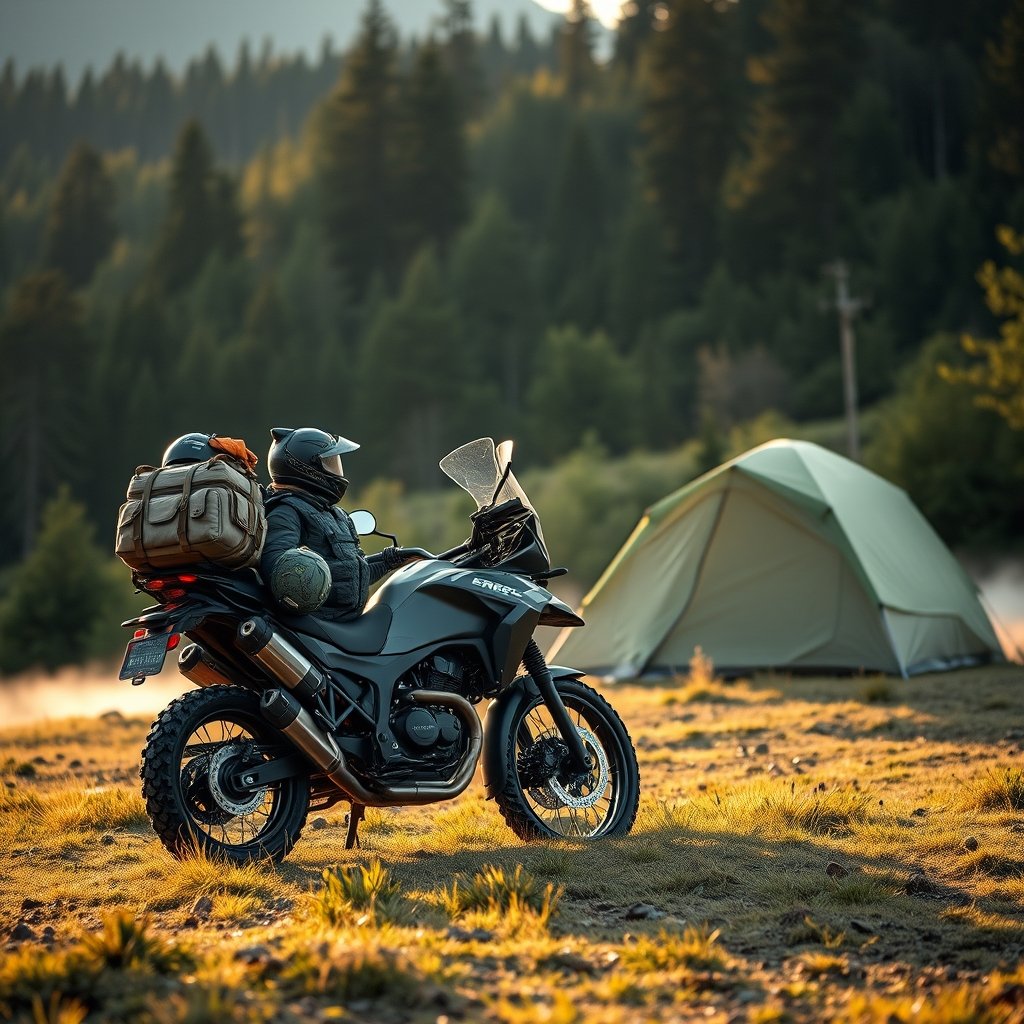
Why obsess over compact camping equipment? “Motorcycle camping requires gear that is lightweight and compact so it fits easily on the bike without affecting the balance and handling.”[7] This means tight scrutiny over every item, shaving off ounces where possible, and learning which comfort luxuries are worth the space tradeoff.
Get this balance right and multi-day routes are safer and more enjoyable. Overpack, and you’re stuck with an unwieldy bike, risky weight distribution—and a less satisfying adventure camping experience.
Clever Packing: Luggage Systems & Space-Saving Tricks
The most effective luggage setups for adventure motorcycle camping gear blend Soft panniers (28 to 30L is the sweet spot) with a waterproof tail duffle and a small tank bag or fender bag. Why? Hard panniers add bulk and weight, and are much harder to compress or repair trailside. Soft systems are lighter, often weatherproof, and can cinch down as your supplies shrink through the trip.
“Use compression bags for clothing and the sleeping system to shrink volume further, and keep the heaviest gear low in the saddle bags to preserve balance…” [9] That tip alone is worth dozens of hours of gear Tetris and trail self-rescue.
The ideal arrangement for most ADV bikes is:
- Soft panniers (28-30L each): For sleep system, tent, tools, and food supplies.
- Waterproof duffle (20-30L): For camp clothes, cooking gear, bulkier comfort items.
- Tank/fender bag: For snacks, mini med kit, chargers, and daily-use essentials.
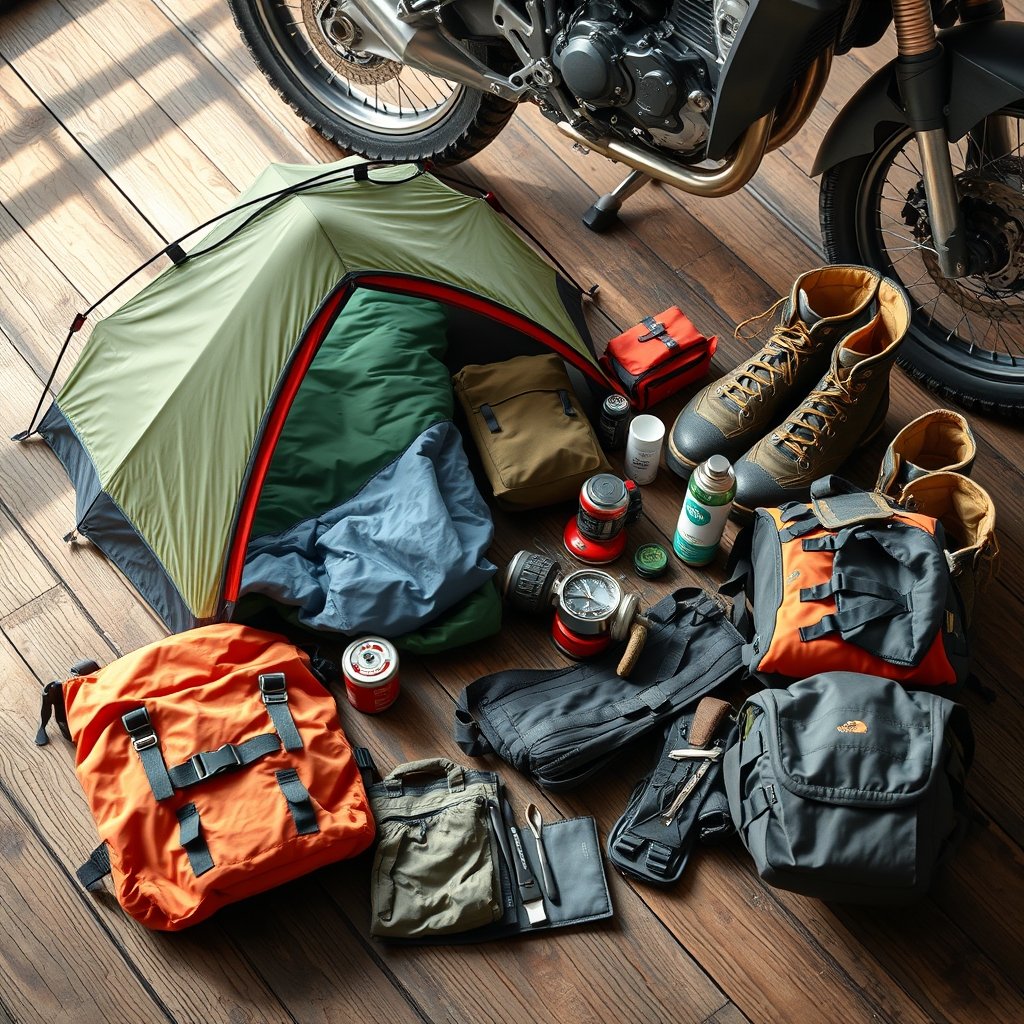
If you want to keep your load even nimbler, look into modern “roll type” saddlebag/duffle combos like the Giant Loop Great Basin—which works on bikes even without racks and simplifies weight distribution.[9]
And for those wondering—yes, you can travel with just a duffle if you’re ruthless about cutting your kit, but most ADV riders go with panniers and a duffle: “Between those I can handle all of my moto camping gear without a backpack.”[3]
The Best ADV Motorcycle Tent: Tunnel-Style Compact Picks
A quality tent shouldn’t dominate your pannier space. The best ADV motorcycle tent is the one you actually want to pitch night after night, with just enough room to stash gear, shrug out of riding clothes, and ride out any rough weather.
Look for tunnel-style tents with integrated pitching (inner and fly go up at once) for all-weather protection and speed. Top-rated picks:
| Tent Model | Packed Size | Weight | ADV Highlights |
|---|---|---|---|
| Laser Compact 2 | ~12×5 inches | 1.25 kg (2.7 lbs) | Smallest, lightest tunnel tent; all-in-one pitch; fits in most panniers |
| Lone Rider MotoTent | ~24×7 inches | 4.4 kg (9.6 lbs) | Garage space for bike, but much bulkier and heavier[1] |
“Laser Compact 2 tent… It’s the lightest and most compact tent in this list. It can be buried away in your panniers and won’t take up any room.”[4] If you want true ultralight minimalism, this is the one most seasoned ADV campers pick.
If budget or weather pushes you toward a heavier or larger tent, consider what comfort is worth to you—will you actually use the garage space every night, or will you regret the extra bulk at every rough pass? For most, prioritizing pack size pays dividends.
A lightweight heated vest also doubles as tent/lounge warmth on especially frigid nights, shrinking the need for heavier sleep systems.
Ultralight Sleeping Bags: Max Warmth, Minimum Bulk
For true space mastery, skip the traditional mummy bag in favor of an Ultralight down sleeping quilt or advanced compact bag. The two favorites among adventure riders in 2026:
- Therm-a-Rest Corus 32°F/0°C Down Quilt: Packs to a compact 10-inch stuff sack, warm enough for three-season use.[6]
- Sea to Summit Traveller Down Sleeping Bag (45°F): Similarly compressible and ideal for warm-weather routes.[6]
Both weigh under 1.5 lbs and crush down into spots where only a bulkier synthetic bag used to fit. But what’s the catch? “Good sleeping bags that pack down really small are INCREDIBLY expensive. You could shave $200 off the price and still pack it down to the same size by using a $20 compression bag.”[9]
Pair these with an inflatable, packable sleeping pad (some ADV-specific, some ultralight backpacking models), and bundle both inside a waterproof compression dry bag for motorcycle travel. This shields your sleep kit from rain during river crossings or camp setup, and almost always fits low in a pannier for perfect balance.
It’s worth remembering that slim ear protection can be a comfort lifesaver for light sleepers at noisy campgrounds.
Packable Camp Stoves & Essential Cooking Gear
Cooking on the road doesn’t have to mean settling for cold beans. The best food setups for ADV travelers are based on pocket-sized stoves, one-pot cookware, and ultra-efficient fuel storage.
- Packable camp stove for moto camping: Small is key—look for single-burner canister models (like this reviewed dual-fuel Gas One GS-3400P) that nest inside your cook pot with space for a small fuel can.
- Main essentials: Titanium or alloy pot; all-in-one spork; lighter/matches; a small mug; and collapsible bowl if you want extra luxury.
- Dry food strategy: Dehydrated meals, instant oatmeal, pre-made packets—no need for bulky perishables or fragile eggs.
This system “ensures you can have an enjoyable, hassle-free moto camping escape, experiencing the freedom and peace of the outdoors without the gear-related problems.”[6]
Don’t forget a compact mosquito repellent for open-air cooking in buggy regions!
Sample Packing List: What Fits (and What Doesn’t) in a 30L Pannier
So what does a realistic packing list look like when every cubic inch matters? Here is a proven gear loadout for a single 30L pannier—ideal for solo rides, and easily scalable for two by sharing tent/stove/first aid between bikes.
- 1 x Tunnel-style bike tent (Laser Compact 2 or similar)
- 1 x Ultralight down sleeping quilt (packed in a compression dry bag for motorcycle trips)
- 1 x Inflatable sleeping pad (packs to a liter or less)
- 1 x Small camp stove + 100g fuel can (nested in cookware)
- 1 x Titanium cook pot with spork, mug, and compact lighter
- 3 x Sets of technical underwear/merino shirts, socks (each set fits in a sandwich-sized compression bag)
- Toiletry kit with micro towel, biodegradable soap, toothbrush/paste minis
- Mini med/first aid kit (essentials only)
- Fold-flat dry bag (for laundry/wet items)
- Headlamp, powerbank, charging cords, and earplugs
- 1 x Lightweight hiking/camp shoe (optional, but tight fit)
“I can fit my tent and sleeping [system]… Between those I can handle all of my moto camping gear without a backpack.”[3]
But what gets left behind?
- No extra boots, no giant lanterns, no hard-sided coolers, and never camp chairs that don’t collapse to Nalgene-bottle size (if carried at all).
- You’ll have to wear riding pants off the bike or bring a pair of gym shorts for camp use.
- Your backup for big temperature swings is an ultralight heated vest, not a second jacket.
Remember: compromise on “wants” in favor of smart “needs,” and splurge for ultralight where sleep, safety, or warmth is non-negotiable.
For more advice on which bikes balance power and lightweight best for beginners, visit our full guide on mid-size adventure motorcycles for beginners.
Pro Tips from Experienced ADV Campers
- Don’t chase every gadget—essentials rule. Most “nice-to-have” gear rides unused and just eats pannier space.
- Pre-load your kit for the first night’s weather; if you pack in the rain, your sleeping bag stays dry until you get shelter up first.
- Use compression dry bags for motorcycle sleeping kits and clothes—even a $20 sack does the same job as high-end gear in packability.[9]
- Keep chargers for your USB powerbank or battery charger in a waterproof pouch, in the tank bag, for easy access.
- If riding in bear country, a compact odor-proof food bag is worth every ounce. Otherwise, double dry-bag your food and hang it well away from camp.
- Practice setting up your sleep system in the dark—so you’re not stranded fiddling with clips and stakes after a long day’s ride.
- Instead of hard coolers, carry high-strength, sweat-resistant mosquito repellent—less bulk, more comfort.
- If you pack an action camera, such as the DJI Osmo Action 4 Essential Combo, stash mounts and spares in a tiny zippered pouch to avoid lost bits in your pannier abyss.
| Pitfall | Why It Happens | Fix/Alternative |
|---|---|---|
| Overpacking heavy gear in tail duffle | Easy to access tail bag; less thought about bike balance | Keep denser items low in panniers for better handling |
| Ignoring compression options | Assume a sleeping bag or jacket can’t shrink more | Use compression dry bags for motorcycle camping |
| Cheap tent with large packed volume | Cost-saving, but sacrifices packability and ride | Save up for a proven compact tent, like Laser Compact 2 |
| Too many “comfort” extras | Bringing chairs, big stoves, huge coffee kits | Choose ultralight or skip entirely and enjoy the freedom |
Conclusion
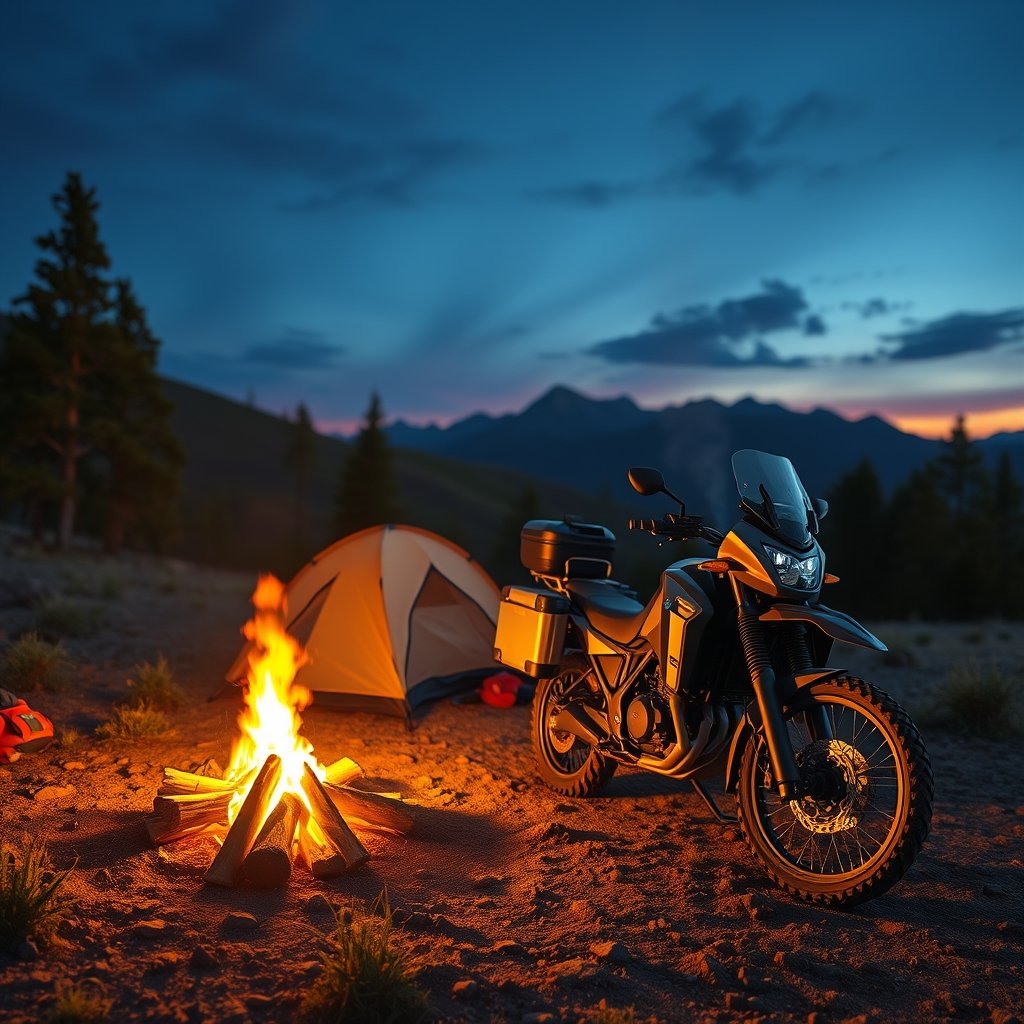
The right adventure motorcycle camping gear setup gives you a rare balance—travel light, sleep well, and enjoy the ride as much as the destination. Pack smart, invest in true ultralight gear where it matters, and use compression dry bags for motorcycle camping to get even more. Steer clear of the luxury trap in favor of real-world essentials.
Ready to build your own ultimate kit? Take what you’ve learned, dial in your adventure motorcycle camping gear, and get out there. Have a tip or favorite tiny tent? Drop us a comment or check out our full lineup of ADV-tested gear and bike mods.
Frequently Asked Questions
What is the smallest tent that actually works for adventure motorcycle camping?
The Terra Nova Laser Compact 2 is widely cited as the smallest, lightest tunnel tent that serious ADV riders trust. Its pack size is roughly 12 x 5 inches—enough to fit inside almost any pannier with spare room.
Can I use regular backpacking gear for moto camping?
You can, but dedicated adventure motorcycle camping gear is designed for even more compactness and often adds weatherproofing (like compression dry bags for motorcycles) to protect your entire sleep system and clothes during sudden rain or river crossings.
What’s the best way to pack clothes for a multi-day trip?
Use compression dry bags for motorcycle trips. Roll or fold technical layers into individual bags, squeeze out air, and store clothes low in your pannier system. This protected, compact setup is more resilient than using basic stuff sacks alone.
How do I keep camp meals simple but satisfying on the road?
Bring a micro stove, a titanium cup or pot, and opt for lightweight meals like dehydrated or pre-cooked pouches. Avoid carrying large food coolers or perishables. Consider buying fresh dinner only every few days or en route.
Do I need a chair or table for moto camping?
Only if you have space. Most solo ADV riders either bring a minimalist fold-flat stool/chair or skip them completely—sitting on panniers, rocks, or the bike. If you can’t live without back support, look for chairs under 1.5 lbs and that pack smaller than a large water bottle.