

Table of Contents
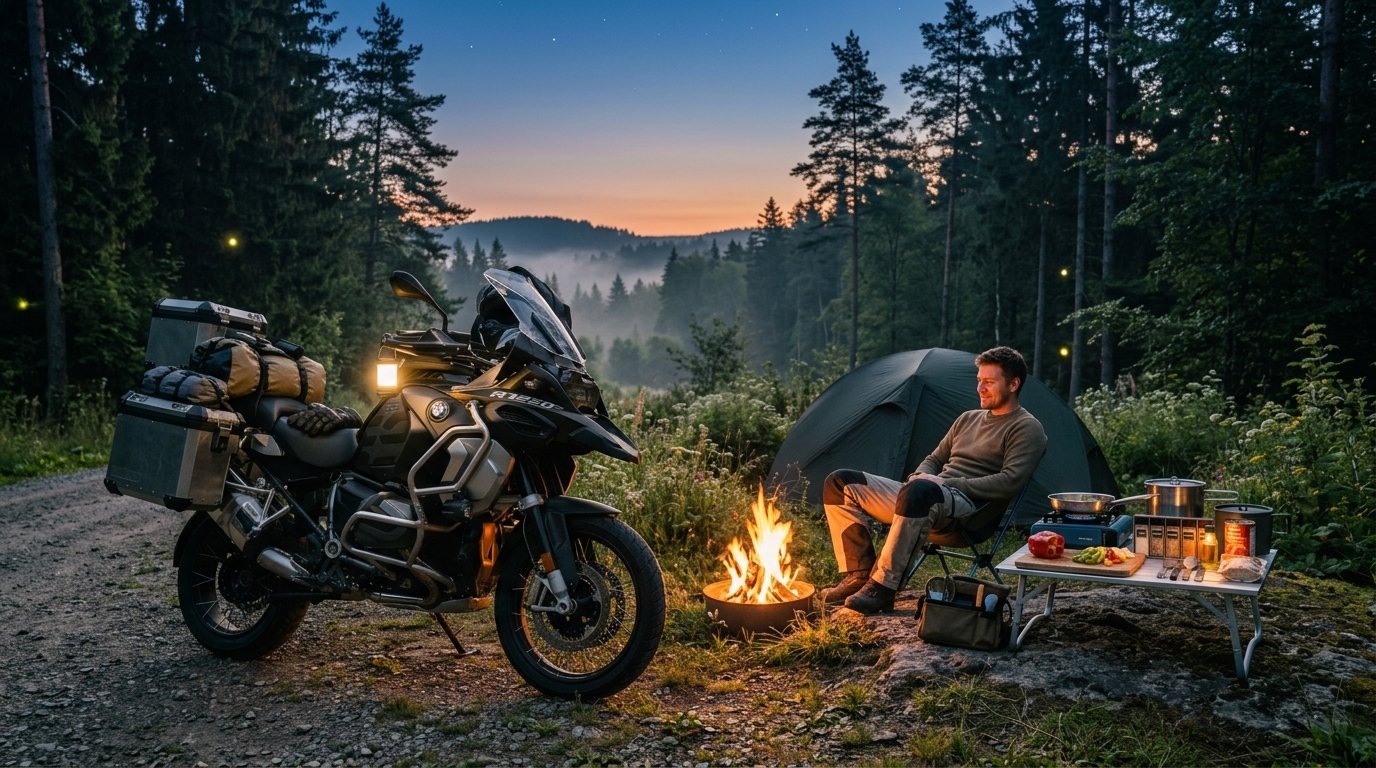
Motorcycle camping kitchen setups have transformed how adventure riders eat on the road, letting you pack fast camp meals in tough conditions with minimal bulk or weight.
Key Takeaways
- A truly compact motorcycle camping kitchen can fit everything for cooking, eating, and cleaning into one 25-30L pannier, weighing under 2kg.
- Smart gear nesting and packing strategies make or break efficient ADV cooking setups—cylinder packing beats stacking loose kit every time.
- Carefully chosen, multi-use lightweight camping cookware ensures fast boiling, simple one-pot meals, and easy cleanup wherever your ride stops.
- Why You Need a Compact Motorcycle Camping Kitchen
- Essential Components of a Motorcycle Camping Cooking Setup
- Recommended Lightweight Camping Cookware for Motorcycle Trips
- Packing Strategies: Nesting & Space Optimization
- Practical Meal Planning & Roadside Cooking Tips
- Sample Compact Kitchen Kits: Real-World Setups
- Final Checklist: Building Your Motorcycle Camp Kitchen
- FAQ
Why You Need a Compact Motorcycle Camping Kitchen
Adventure bike riders and dual-sport travelers face unique obstacles when eating on the road: limited pannier space, strict weight limits, and unpredictable weather. You can’t haul a full home kitchen, yet skipping proper meals saps both energy and morale. That’s where the concept of a compact moto camping kitchen comes in—an ultra-efficient setup built to survive knocks, pack small, and get riders a hot meal anywhere.
All crucial cooking gear, utensils, and cleaning supplies can fit into a single medium pannier—usually totaling just 1.5-2kg—if you use space-saving gear and smart nesting techniques. This minimalist approach keeps your motorcycle nimble while letting you cook, eat, and clean with no fuss, even on remote ADV tours or tight dirt trails.
Essential Components of a Motorcycle Camping Cooking Setup
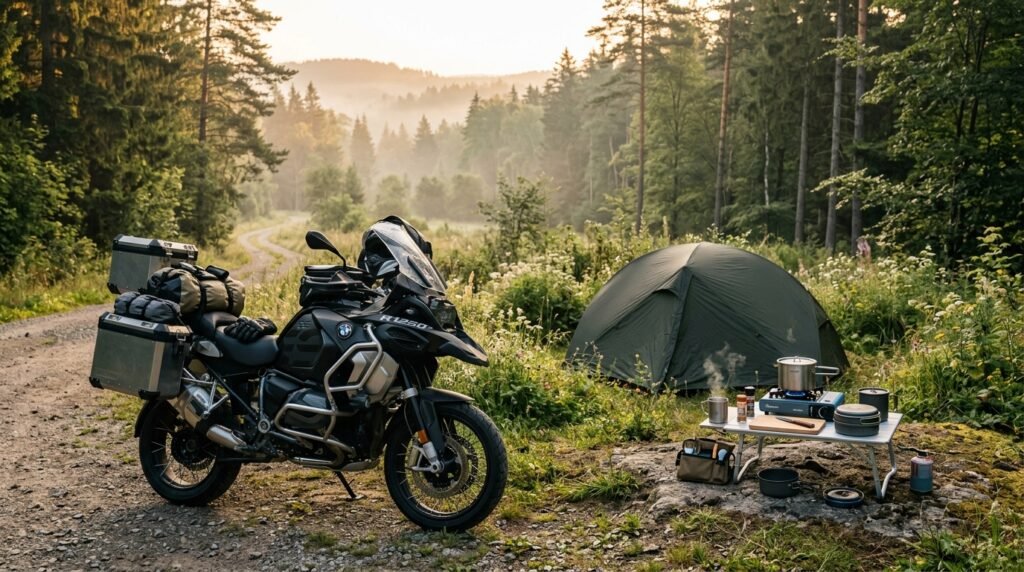
Putting together a practical motorcycle camping cooking setup means focusing on essentials, not the kitchen sink. Here’s how to build a reliable motorcycle camp kitchen kit that really fits and works:
Stove & Fuel: Compact canister stoves like the MSR PocketRocket Deluxe, Jetboil Zip, or Trangia variants weigh around 100-150g and stow neatly with a single isobutane or propane canister. Versatility matters—propane or dual-fuel stoves (see the Gas One GS-3400P Dual Fuel Portable Camping Stove) help when fuel availability is patchy.
Pots, Pans, Bowls: Most efficient kits use a 1.5-2L hard-anodized aluminum or titanium pot, often with a pan/lid combo that nests inside, cutting space and weight (source). Use collapsible or stackable silicone bowls and mugs to fill every gap in the kit.
Utensils: Go for one or two durable, multi-use tools: a titanium or silicone spork, fold-out tongs or spatula, and a can-opener (multi-tools work wonders). Pivot tongs and compact spatulas—like those from GSI Outdoors (source)—are favored by moto campers.
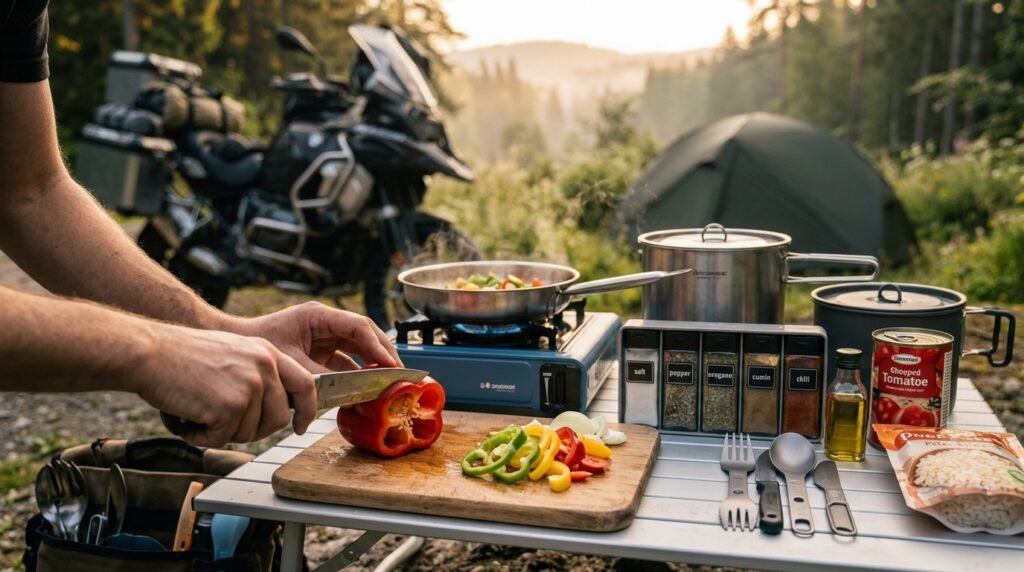
Food Storage/Cleaning: Small zip-locks, a folding cutting board, a mini spice kit, an insulated cooler bag, and a collapsible water jug or bottle top the prep list. Biodegradable soap, a scrub brush, and a tiny dish towel finish things off.
Most importantly, design your motorcycle camping kitchen so everything nests into one logical package—nothing loose, nothing rattling, nothing left behind.
Recommended Lightweight Camping Cookware for Motorcycle Trips
Not all camping cookware survives the demands of real motorcycle travel. Your motorcycle camping kitchen depends on reliability, compact size, and true featherweight construction—no gimmicks, and no fragile parts.
- Best Stoves:
- MSR PocketRocket Deluxe — Famed for rapid boils and weighs just about 100g.
- Trangia Canister Stove — Flexible, proven, easy to maintain.
- Jetboil Zip — Integrated pot and stove; perfect for boiling, but less versatile for pan-frying meals.
- GSI Pinnacle Four Season — Compact, but is limited to isobutane canisters which can be rare on remote routes (source).
- Best Cookware:
- Snow Peak Titanium 3-Piece Set — The gold standard for ultralight, indestructible kits (around 200g total); packs small and shrugs off hard riding.
- GSI Outdoors Pinnacle Dualist or Soloist — Aluminum, nested, budget-friendly but slightly bulkier.
- Mugs, fold-away silicone bowls, and a lid or frying pan with folding handles round out the set.
- Avoid glass, ceramics, and multipiece (3+ item) kits—they rarely survive or fit properly in panniers.
Utensils: Go titanium or sturdy silicone. Sporks, GSI Outdoors Pivot Tongs, compact camp knives, or an all-in-one multi-tool will do the job.
According to both user tests and expert reviews, “Some ultralight stoves weigh just 100-150g, and titanium cooksets like the Snow Peak 3-Piece are practically indestructible.” (source)
Packing Strategies: Nesting & Space Optimization
Nesting makes a compact moto camping kitchen genuinely small. Start with the biggest pot or pan—slide the stove, fuel canister, utensils, mug, towel, and lighter inside, then wrap the set in a silicone bowl or mug. Stuff soft goods (spices, bandana, coffee filters) into voids for maximum efficiency.
Carry everything in one “cylinder” instead of scattering parts around your pannier. This approach protects your gear, simplifies both setup and repacking, and lets you balance weight for better bike handling. As one field report put it: “Packing a cylinder of nested gear is far more efficient than carrying five individual pieces.” Water jugs, coffee makers, and even small insulated bags can be folded flat or fit outside the main cylinder.
- Collapsible silicone bowls and mugs are especially useful for filling dead space.
- Tuck utensils and knives into slots between the pot and outer mug (or use a neoprene wrap).
- Place the finished kit on the exhaust side pannier to keep heavier items lower and towards the bike’s centerline.
Practical Meal Planning & Roadside Cooking Tips
A basic compact kit supports boiling water, one-pot meals, French press or pour-over coffee, and quick cleanup with minimal fuss. Focus on foods that weigh little, cook fast, and require only a single pot or pan:
- Instant oats, breakfast bars, or instant coffee for easy mornings.
- Dehydrated dinners, noodle packs, tuna pouches, or couscous for main meals. Add a spice kit and oil for flavor.
- Fresh veggies, tortillas, cheese, and cured meats do well in a small insulated bag (for 24-48 hours max).
Key time- and effort-savers:
- Pre-mix dry ingredients or spice blends at home, storing them in zip-lock bags for speed and space savings.
- Use individual portion packs to prevent leftovers and reduce packaging bulk.
- Bring a few wet wipes and a tiny bottle of biodegradable soap for fast cleanup—wipe first, wash once.
- Collapsible water jugs double as both a cooking supply and a final dish rinse.
For even more lightweight ideas, see our beginner dual sport motorcycle and ultralight adventure camping gear guides.
Sample Compact Kitchen Kits: Real-World Setups
Below are three proven motorcycle camp kitchen kit setups. Each fits in a 25-30L pannier and weighs 1.5–2kg—all prices from early 2026:
| Kit Type | Key Gear | Approx. Weight | Price (USD) |
|---|---|---|---|
| Premium Ultralight (Titanium) |
Snow Peak Titanium 3-Piece Set MSR PocketRocket Deluxe Titanium spork GSI Pour-Over Coffee Maker Collapsible 2L jug Multi-tool, spice kit |
~1.3kg | $240-300 |
| Budget Classic (Aluminum) |
GSI Outdoors Soloist Cookset (Aluminum, nested) Fire-Maple or Trangia canister stove Silicone bowl, folding mug Plastic spork, mini spatula Folding board, zip-locks, basic spice mix |
~1.8kg | $80-130 |
| ADV-Focused Setup |
GSI Pinnacle Four Season Stove Dual-use MSR ceramic pan/lid Insulated cooler pouch Multi-tool or Leatherman Collapsible silicone mixing bowl Cleaning brush, dish towel |
~1.7kg | $180-240 |
All three setups cover water boiling, one-pan meals, coffee, and basic cleanup—inside a single pannier. For more rider-tested kitchen kit examples and specialized ADV gear, explore our detailed adventure motorcycle camping checklist and camping luggage setup guides.
Final Checklist: Building Your Motorcycle Camp Kitchen
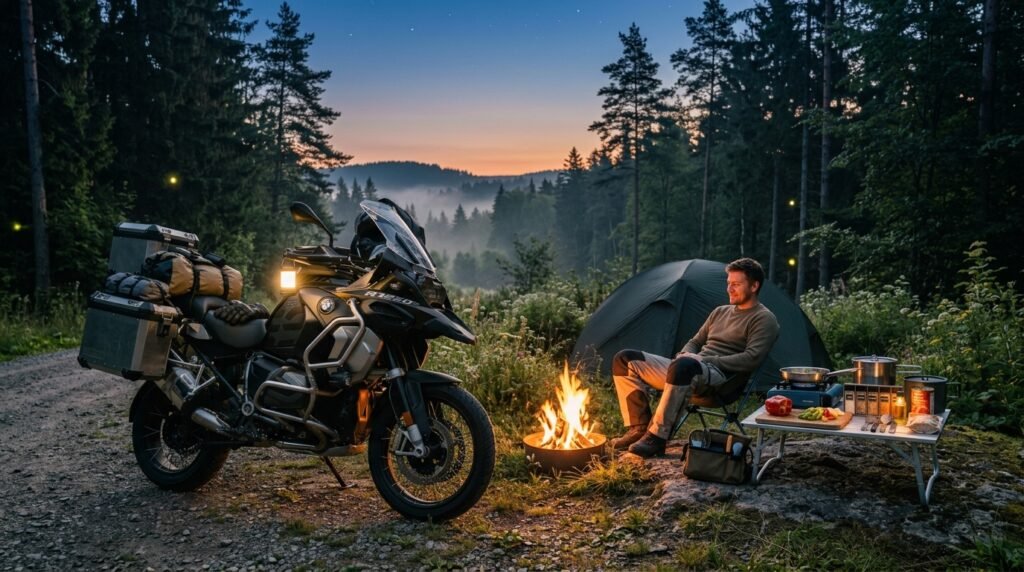
Use this checklist for your next ADV trip. Print, laminate, or keep it saved on your phone—one check before you roll keeps you fed and fueled every night.
- Ultra-compact stove (Jetboil, Trangia, or MSR PocketRocket)
- Fuel canister(s)
- Main pot (1.5-2L, hard-anodized aluminum or titanium)
- Nesting pan/lid
- Silicone/titanium bowl and mug
- Titanium spork or fold-out tongs
- Folding cutting board (doubles as colander)
- Multi-tool or Leatherman (with can-opener and scissors)
- Compact spice kit (salt, pepper, oil, chili, garlic powder, etc.)
- Biodegradable dish soap & small scrub brush
- Zip-lock bags (various sizes) for portions and trash
- Dish towel or microfiber cloth
- Collapsible water jug or Nalgene bottle
- Small insulated cooler pouch
- Fuel lighter + stormproof matches
- Optional: pour-over coffee maker, wet wipes, and spare lighter
Also consider packing a heated vest for those cold, early starts, and reliable mosquito repellent for camp comfort.
FAQ
How do I make sure my motorcycle camping kitchen gear fits into one pannier?
Use a nesting strategy: start with your largest pot or pan, and pack everything else—stove, fuel can, mug, utensils, spices—inside. Fill dead space with zip-locks or small towels to prevent rattling and damage.
What is the ideal weight for a compact moto camping kitchen?
A well-optimized motorcycle camp kitchen kit, including stove, cookware, utensils, and cleaning gear, should total around 1.5–2kg and fit in a 25-30L pannier.
What meals can I realistically cook with this kind of setup?
One-pot and rehydrated meals (instant oats, noodles, pasta, couscous), quick-fry items, and basic coffee or tea are easiest. Elaborate, multi-stage recipes are possible but often impractical for quick, low-fuss camp cooking.
What are the biggest mistakes new riders make when building a motorcycle camping kitchen?
Overpacking heavy or unnecessary items, using gear that doesn’t nest, packing fragile cookware, and forgetting cleaning supplies are the most common errors. Practice packing/unpacking at home, and never assume you’ll have perfect weather or dry stopping points.
How do I keep my kit clean and prevent food smells that attract animals?
Use separate zip-locks for trash and food scraps, rinse cookware immediately after use, and wipe everything down nightly. Stow your kitchen kit inside a sealed pannier overnight and keep scented items in odor-proof bags when wild camping.