

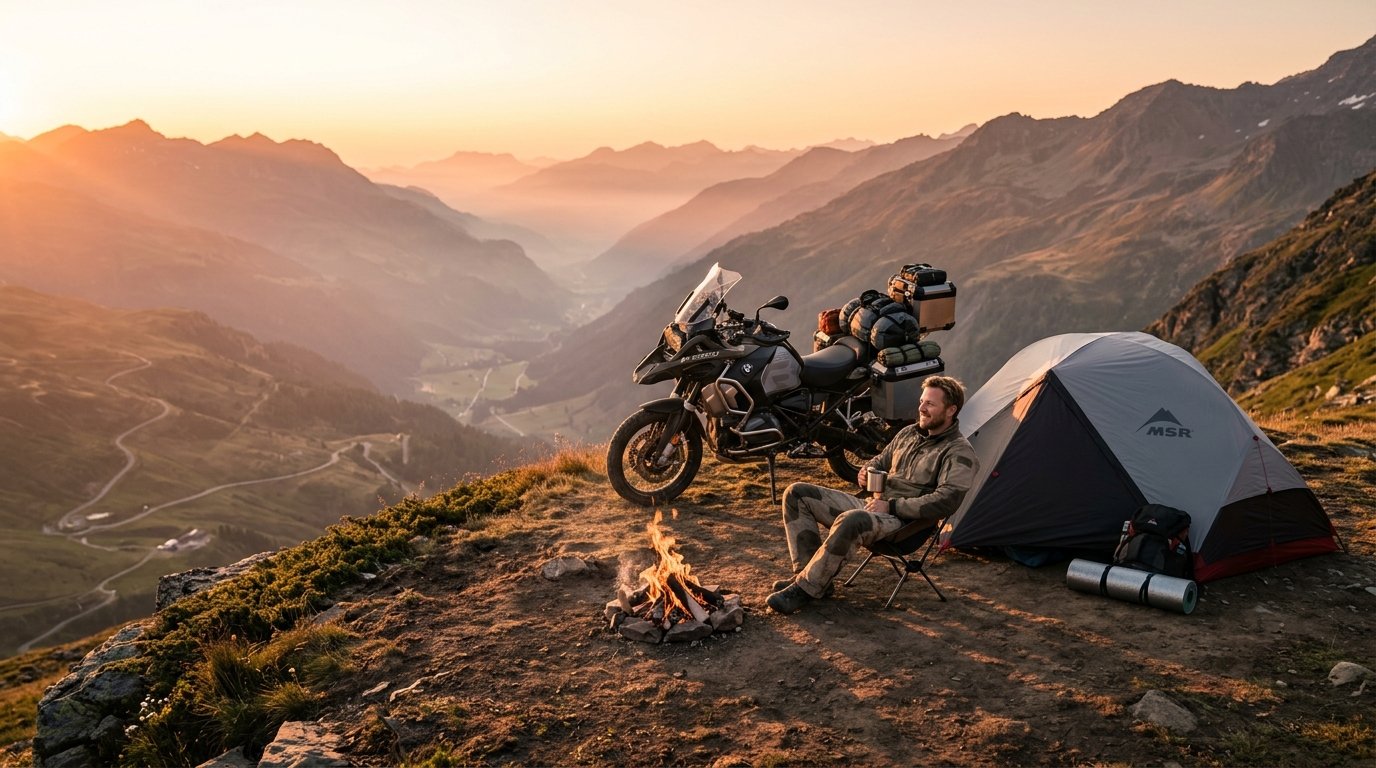
Adventure motorcycle camping checklist is the single most critical tool for any rider planning a 2026 camping trip. If you want to stay safe, comfortable, and genuinely enjoy your journey—start here. Whether you’re riding solo or with a buddy, packing smart and light is what separates the pros from those who spend the night cold, wet, or stuck on the roadside.
Key Takeaways
- Pack light—aim for total luggage of about 80 L (roughly 25 kg) for manageable weight and a safer ride.
- Your camping success hinges on carrying essentials: full protective riding gear, bike maintenance tools, lightweight shelter, efficient cooking and hygiene kits.
- Test your setup before any big trip, choose multipurpose items, and don’t skip safety or weather protection—these save space and stress.
Table of Contents
Ultimate Adventure Motorcycle Camping Checklist for 2026
Adventure motorcycle camping in 2026 is all about combining safety, comfort, and speed—with a focus on efficient, lightweight packing that matches both modern gear and real-world conditions. The adventure motorcycle camping checklist covers riding protection, bike reliability, overnight security, trail cooking, hygiene, and emergency plans. The goal: keep your total load at or under 80 L of volume (about 25 kg) to avoid overburdening your motorcycle, ensure maneuverability, and prevent fatigue or breakdowns on the road. [Source]
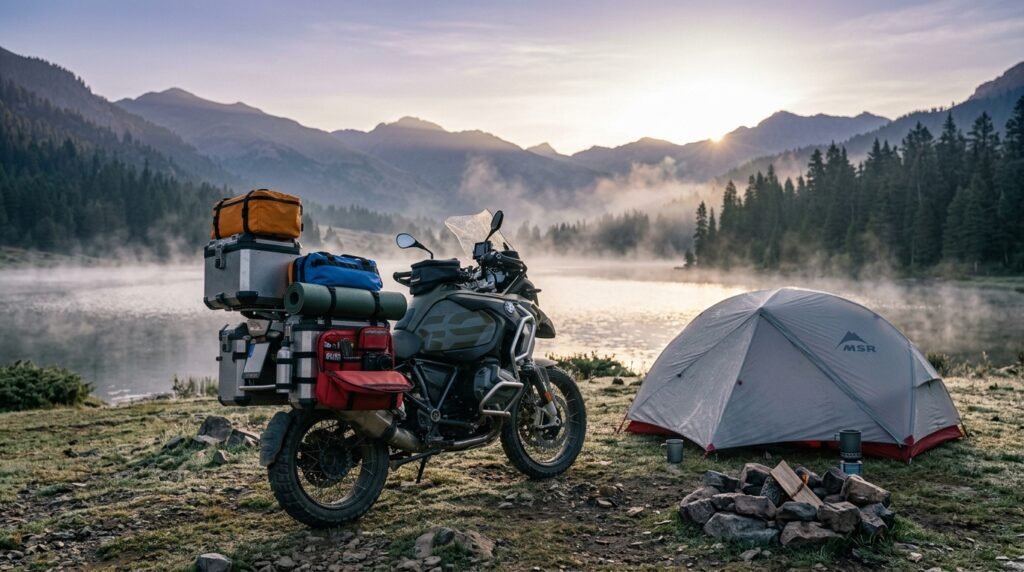
Step-by-Step Guide: Packing and Preparation
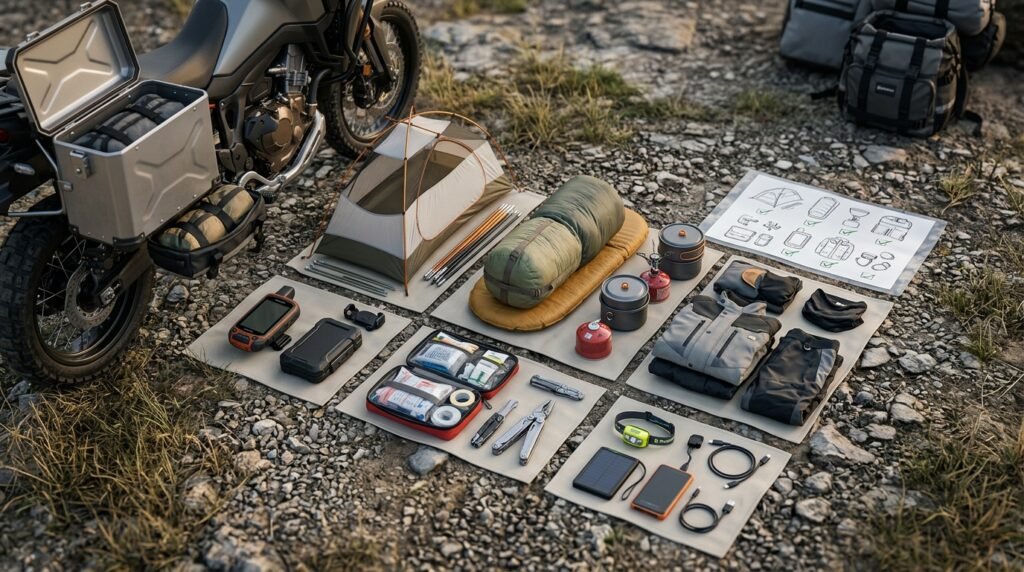
The right motorcycle camping packing list is built step by step, prioritizing high-value, low-weight items you can’t improvise in the wild. Here’s how to assemble a reliable, 2026-ready kit.
1. Riding Gear: Zero Compromises on Safety
- Helmet with cold-weather liner
- Armored jacket and pants
(motorcycle jacket for women) - Motorcycle boots (waterproof)
- Gloves (plus thermal liners and a spare set)
- Waterproofs/rain suit
- Base layers (wicking shirts, riding underwear, long johns)
- Hi-vis vest and earplugs
- Pack an extra of each—this can save your trip if you drop or soak an item.
(learn about affordable ADV gear)
“Full riding protection—including helmet, gloves, boots, armored jacket and pants—plus waterproof layers and at least one spare set of basics are essential for adventure motorcycle camping.” [Source]
2. Motorcycle Maintenance & Security Kit
- Bike-specific mini toolkit
- Tubeless tire repair kit or CO₂ cartridge inflator (see repair kit picks)
- Compact air compressor or mini pump
- Duct tape and zip-ties for fast fixes
- Spare key (hide in your gear or on bike)
- Disc lock/alarm
- Waterproof “stuff” bag for wet/dirty gear
- waterproof panniers (explore waterproof panniers)
Group these inside soft panniers or modular packing cubes for fast roadside access. Aim to keep essentials together for emergencies.
3. Lightweight Shelter and Sleep System
- Backpacking tent, bivy, or hammock—must fit in pannier
- Synthetic sleeping bag (e.g., Nemo Forte Ultralight 35)
- Inflatable sleeping pad (patch kit included)
- Compact pillow (or clothing in a drybag)
- Ultralight folding camp chair (packs down small)
(ultralight moto camping gear)
“Most motorcycle campers use a small backpacking tent or hammock setup due to lighter pack size. Synthetic-filled sleeping bags like the Nemo Forte Ultralight 35 are favored for rough conditions.” [Source]
4. Cooking, Water, and Food
- Mini canister/isobutane stove (dual-fuel portable stove review)
- Nestable pot/pan set and utensils
- Freeze-dried meals, instant coffee, energy bars
- At least 2 L water bottle/bladder (best hydration packs)
- Water filter (Sawyer Mini, LifeStraw, or bottle with filter)
- Collapsible mug/spork set
“Cooking gear should be a small canister stove, a nestable pot set, lightweight utensils, freeze‑dried meals, and a water-carrying solution with a filter or purifier.” [Source]
5. Hygiene, Bathroom, and Comfort
- Toilet paper and small cat-hole trowel
- Biodegradable wipes and hand sanitizer
- Quick-dry towel (microfiber recommended)
- Travel soap/shampoo (biodegradable)
- Personal meds and basic first aid
- Travel toothbrush, toothpaste, comb
- Mosquito repellent for bug-prone areas (top-rated repellent)
6. Safety, Power, and Emergency Gear
- First aid kit (compact but complete)
- Rechargeable headlamp (plus spare batteries)
- Knife/multi-tool
- Waterproof matches/lighter/fire starter
- Universal power bank and USB charger
- GPS tracker or satellite messenger (explore GPS trackers)
- Hand/foot warmers
- Cheap emergency rain poncho
7. Documents & Digital Essentials
- Bike registration and insurance
- Driver license (with international permit, if needed)
- Copies of documents in cloud & paper form
- Credit/debit card, some cash, emergency contacts
8. Packing Strategy
- Use modular “stuff” bags or cubes to organize categories (riding, sleeping, tools, food, hygiene, safety, comfort).
- Distribute weight low and centered in panniers for balance—heaviest items at the bottom.
- Use rain covers always, even for waterproof bags: nothing ruins morale like finding your spare baselayers soaked.
- Total load should never exceed 80 L or 25 kg, including spares and emergency gear.
Advanced Analysis & Common Pitfalls
Even with the world’s best adventure motorcycle camping checklist, there are traps and rookie errors that catch both beginners and veterans. Learning from others’ mistakes can save your trip—or your health.
Common Mistakes & How to Avoid Them
| Issue | Why It Happens | How to Solve |
|---|---|---|
| Overpacking (exceeds 80 L/25 kg) | “Just in case” mentality; not testing gear at home | Use checklists, do a dry-run with all gear packed, cut single-use items |
| Skipping spare gloves or socks | Trying to save weight or space | Always pack a backup for single-point-of-failure gear (wet/cold hands = misery) |
| Forgetting rain covers/dry bags | Assuming “waterproof” bags never leak | Double-bag electronics and bedding; use trusted waterproof solutions |
| Poor load distribution | Packing heavy items high or to one side | Pack heaviest items low, close to bike centerline in both panniers |
| Neglecting tire repair kit or pump | Not expecting flats, especially on road sections | Tubeless repair kit + air source is mandatory, even for short trips |
| Choosing down sleeping bags in wet climates | Down loses insulation if wet; harder to dry on the road | Pick synthetic-filled sleeping bags for all-purpose adventure |
| Skipping a gear dry-run | New to moto camping or new gear | Camp one weekend locally—test the bag, setup, and comfort for 1-2 nights |
Beginner & Veteran Pitfalls
- Overestimating camp setup speed—give yourself daylight to set up.
- Poor campsite selection—avoid soft ground, flood zones, or proximity to animal trails.
- Failure to secure bike overnight—use a lock or a line from bike to tent as Mad or Nomad recommends.
- Underestimating weather or altitude—pack warm layers, emergency blanket, even in “summer.”
- Ignoring local rules for campfires or wild camping—check regulations by country/state.
When to Go Ultra-Light vs. Full Comfort
- Long remote trips: cut every non-multiuse item. Choose lighter, smaller, dual-purpose gear.
- Weekenders or group rides: you can bring comfort items like a small chair or Bluetooth speaker.
- Always keep safety, warmth, and food basics—never compromise to “save” weight in these areas.
Conclusion
Motorcycle camping is more accessible than ever if you come prepared. The difference between a miserable night and the ride of a lifetime is how you use your adventure motorcycle camping checklist. Pack light, check your essentials, and don’t skip on safety or dry gear. Ready to plan your adventure? Download our printable list and hit the road with confidence. Questions or personal tips? Share them below!
Frequently Asked Questions
What is the most important item in the adventure motorcycle camping checklist?
Beyond your helmet and protective clothing, a reliable shelter (tent or bivy), a synthetic sleeping bag, and a functioning tire repair kit—these three will cover you in an emergency.
How do I keep my gear as light as possible?
Test your setup before leaving, choose multipurpose gear (e.g., a neck buff for wind, sun, or warmth), and cut non-essentials. Use compression drybags and only carry spares for the items that can end your trip if lost or soaked.
How do I keep my equipment dry in storms?
Invest in proven waterproof panniers and always double-bag anything that can be ruined by water—especially sleeping gear and electronics. Use rain covers even on waterproof luggage for extra security.
What changes for camping in different countries or climates in 2026?
Pack for local rules (fire/wild camping), check weather patterns, and always bring an extra warm (or cooling) layer. Download offline maps, ensure you have proper documentation, and adapt your food/water solutions for less developed areas.
What’s a common rookie mistake for first-time motorcycle campers?
Packing too much, not doing a dry-run of setup, forgetting a tire repair kit, and not protecting documents from rain are the most common mistakes. Always test your packed setup at least once before a major trip.
—