

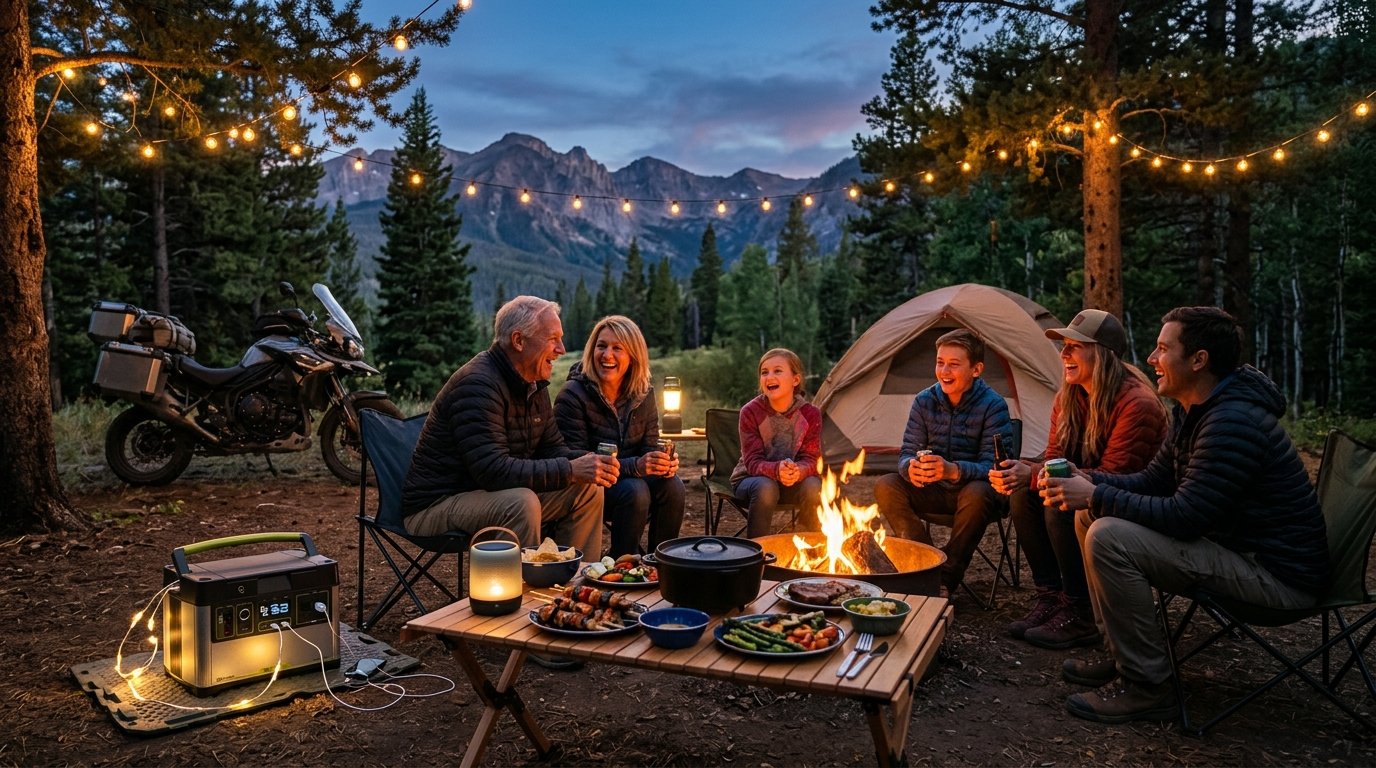
Portable power station camping unlocks new freedom for outdoor adventurers who want to keep phones, cameras, drones, and laptops running for multiple days off-grid—without hauling heavy backup batteries or being stuck with dead devices.
Key Takeaways
- Jackery and Anker excel as the top choices for portable power station camping, but they serve slightly different needs—Jackery is lighter, while Anker offers more ports and faster charging.
- For a typical 2 to 3 day trip running small devices, look for stations with 300 to 500Wh capacity—and seriously consider solar panels to extend your stay off the grid.
- The right pick comes down to your packing style, device mix, and how much portability you need versus recharging speed and output flexibility.
Table of Contents
Why a Portable Power Station is Essential for Multi-Day Camping
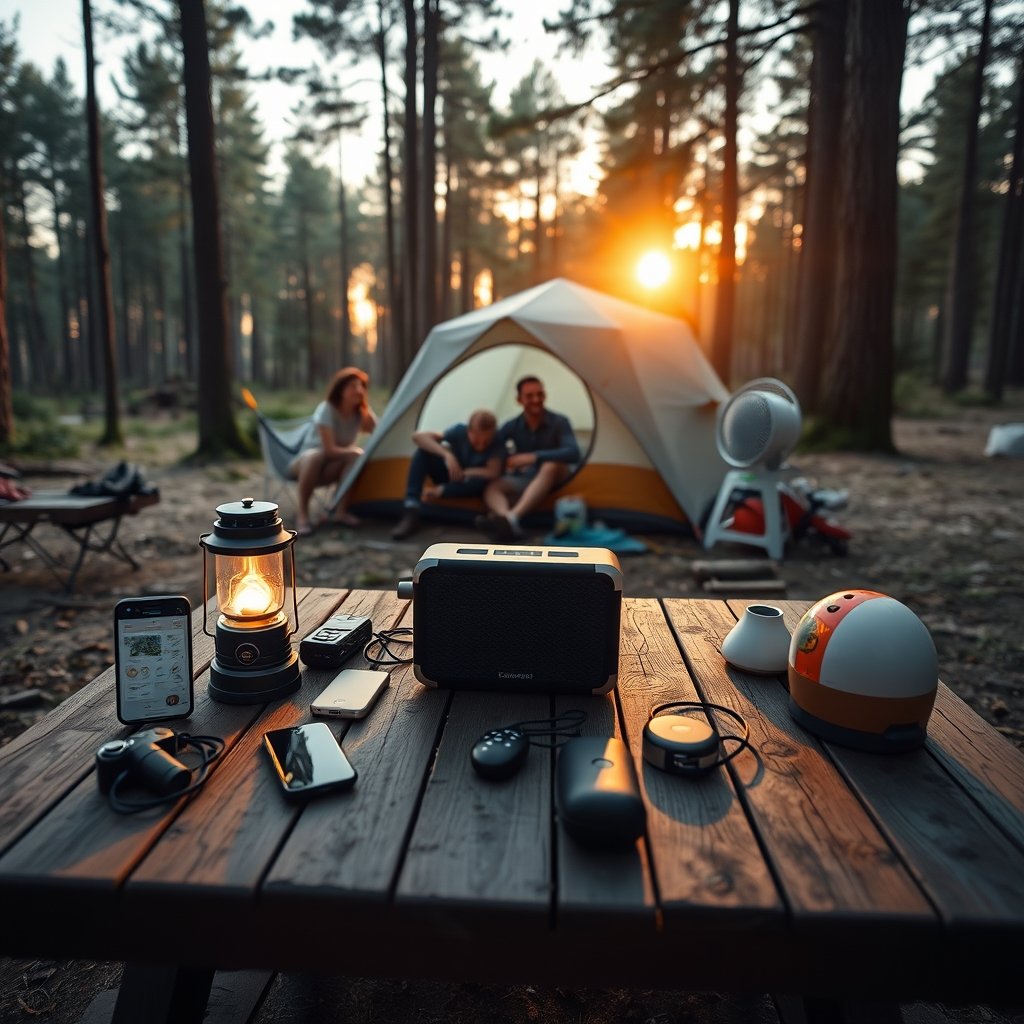
Modern campers and overlanders carry more electronics than ever. Keeping a camera, drone, laptop, or phone charged over a multi-day trek isn’t just a luxury—it’s essential for navigation, safety, and capturing memories. Basic power banks are fine for a single night, but for portable power station camping—especially 2 to 3 days off-grid—you need genuine capacity, AC outlets, and support for devices with higher power needs. A traditional power bank struggles to charge a laptop or run a mini fridge, while a quality portable power station can handle phones, camera gear, drones, LED lights, and more.
Statistics from field tests and user reports show that most campers running a phone, action camera, LED lights, and a small 12V portable fridge require 300–500Wh for a typical two to three-day trip. With more gear—or a group—demand rises quickly. This is why choosing the right station is vital if you want to reliably charge your camera, drone, or laptop while camping without hunting for an RV outlet or draining your car battery.
Choosing Between Jackery and Anker: Core Differences for Camping Use
The Jackery vs Anker portable power station debate comes down to matching the unit to your real-world camping style. Here’s how to break it down:
- Decide how mobile your trip will be. Jackery power stations are famous for being lighter than Anker’s, clocking in at just 23.8lb for the Explorer 1000 v2 (versus Anker SOLIX C1000’s 30.9lb). If you’ll regularly set up and pack down, or carry your unit away from a vehicle (motorcycle camping especially), Jackery’s footprint makes lifting and packing significantly easier.
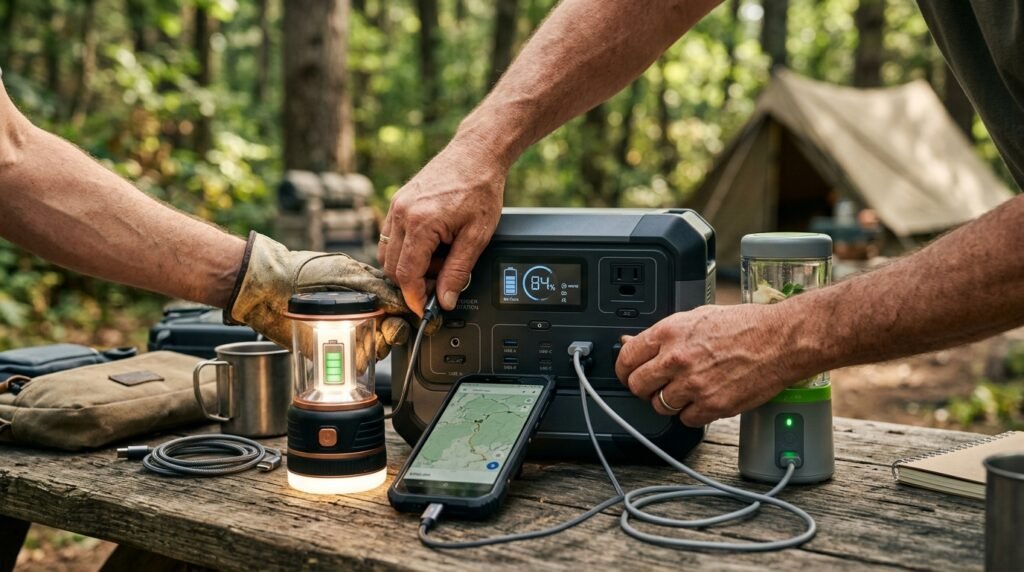
- Check your must-have outputs. Anker leans hard into versatile ports—including more USB-C, 12V, and even wireless charging pads on select models. That’s a real perk for “tech-heavy” setups where you need to charge a drone, laptop, and two or three cameras at once. Jackery units often trade port count in favor of simplicity and proven interfaces.
- Solar charging comparison. Jackery’s top models (Explorer 2000 Plus/5000 Plus) allow up to 4,000W solar input, but for smaller units (300 to 1000Wh), both brands offer folding panel kits that connect in seconds. In higher wattage classes (overlanding rigs), Anker’s F-series can handle up to 6,000W continuous output and ultra-fast solar charging speeds.
- Durability. Anker PowerHouse 521 and C1000 are built with rugged campsites in mind—drop-proof, water-resistant (to a point), and sporting integrated LED lanterns. Jackery’s build feels less “armored,” but is time-tested for thousands of outdoor users. For motorcycle camping and active movement, both are proven, but Anker “wins” on raw toughness.
For step-by-step tips on packing ultralight, visit our lightweight motorcycle camping gear guide, and for overlanders, see our motorcycle overlanding checklist to optimize your entire setup.
Powering Up: Matching Power Station Size to Trip Length and Device Needs
Estimating real watt-hour demand is critical. Here’s an example breakdown for typical camping gear:
- Phone: 10Wh/day
- Camera (e.g. action camera or mirrorless): 15–20Wh/day
- Drone: 30–50Wh per battery
- Laptop: 40–60Wh/day (web/photography use, not video rendering)
- LED camp lights: 5–10Wh/night
- 12V portable fridge: 250–350Wh/day (set at about 40°F/4°C, intermittent use)
For a duo on a 3-day trek with one phone each, one camera, LED lights, and a single-battery drone:
- Phones: 2 x 10 x 3 = 60Wh
- Camera: 20 x 3 = 60Wh
- Drone: 40 x 3 = 120Wh (assuming a recharge each day)
- LED lights: 10 x 3 = 30Wh
- Fridge: 300 x 3 = 900Wh
Total: 1,170Wh — but this assumes the fridge stays running. Most users skip the fridge or run it off their station only overnight, dropping realistic needs for “device-only” charging to the 300–500Wh range for 2–3 days. That’s why the Anker PowerHouse 521 and Jackery Explorer 300–500 are so popular—they balance weight (around 10lb) and capacity for typical campsite loads, making them ideal for portable power station camping that includes a mix of cameras, drones, and laptops.
For overkill power (heavier rigs, larger groups, or fridge/radio setups), step up to the 1,000Wh+ models, but know you’ll likely be carrying more than 20lb.
Solar Generator Options for Overlanding and Stationary Base Camps
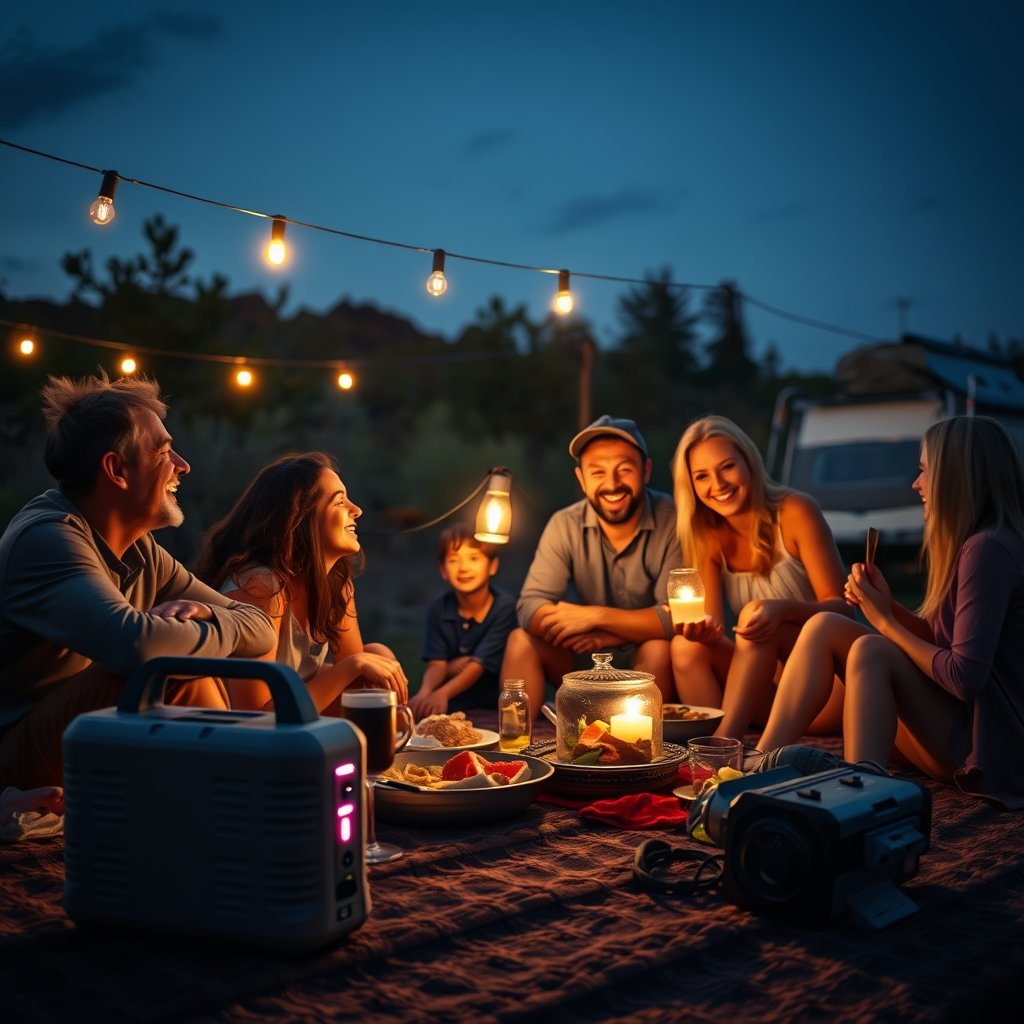
Solar input can make or break your ability to stay off-grid, especially for longer trips or if you rely on your power station for refrigeration. Here are the essentials:
- Panel type. Get folding solar panels—rigid panels are for vehicle roofs or permanent installs. Both Jackery and Anker offer matching panel kits, but third-party panels work if voltage and connectors match.
- Compatibility. Always confirm voltage/amperage matches your station’s specs. For example, the Jackery Explorer 1000 v2 can accept up to 4,000W on Plus models, but smaller units will max out closer to 150W–200W input.
- Realistic recharge times. In full sun, expect to recharge a 500Wh unit in 6–10 hours with a 100W panel. With clouds, double that.
- Overlanding pros. Unlimited runtime, ability to run 12V fridges or camp lights all week, flexibility for remote routes.
- Overlanding cons. Panels add bulk, require sun exposure and repositioning, and can be slow (or useless) in shade or stormy weather—plan accordingly.
Jackery’s 5,000Wh Plus models allow up to 4,000W solar while Anker’s F-series can deliver up to 6,000W continuous output. For typical 2–3 day adventures, a single foldable panel is adequate, but for larger groups or pro video setups, consider daisy chaining two panels.
If you’re building a complete adventure kitchen, check out our compact overland kitchen setup guide to optimize your power and cooking system.
Quick Comparison Table: Jackery vs Anker for Camping and Overlanding
| Model | Weight | Capacity (Wh) | Output Ports | Max Solar Input | Fastest Recharge | Standout Features |
|---|---|---|---|---|---|---|
| Jackery Explorer 300 | 7.1lb | 293 | 1 x AC, 1 x USB-C, 2 x USB-A, 1 x 12V | 90W | 2.5 hrs (wall) | Ultra-light, simple UI, proven track record |
| Anker PowerHouse 521 | 8.2lb | 256 | 2 x AC, 2 x USB-A, 1 x USB-C, 1 x 12V | 65W | 2 hrs (wall) | Rugged/durable, integrated light, drop-proof |
| Jackery Explorer 1000 v2 | 23.8lb | 1,264 | 3 x AC, 2 x USB-A, 2 x USB-C, 1 x Car | 400W | 1.7 hrs (wall, dual input) | Lighter than competition, high solar input |
| Anker SOLIX C1000 | 30.9lb | 1,056 | 2 x AC, 2 x USB-A, 2 x USB-C, 1 x Car | 600W | 1 hr (wall, turbo) | Fast recharge, app integration, more ports |
| Jackery Explorer 5000 Plus | 61.5lb | 5,048 | Multiple AC/DC, USB-A/C, Car | 4,000W | 1.8 hrs (wall) | Expandable, high solar capacity |
| Anker SOLIX F3800 Plus | 132.3lb | 3,840 | Multiple AC/DC, USB-A/C, Car | 2,400W | 1.2 hrs (wall) | 6,000W output, robust build, multi-station |
Jackery maintains its historical advantage in weight optimization—critical for camping and emergency evacuation scenarios—with a 7.1lb difference in the 1,000Wh class [details].
To see how compact camping stoves, heated vests, or adventure gear can work alongside your power station setup, check out our coverage on waterproof action cameras, heated vests, and optimizing your motorcycle camping kitchen.
Recommendations: Choosing the Right Portable Power Station for Your Adventure
For single or duo campers targeting 2–3 days of charge time for phones, cameras, and a drone or laptop, stick to the Jackery Explorer 300–500 or Anker PowerHouse 521—they hit the sweet spot of capacity (≈ 300Wh), weight, and packability. Pair either with a compact foldable solar panel for truly independent power.
For heavier loads (large groups, fridge/cooler, video editing on the road), step up to the Jackery Explorer 1000 v2 (1,264Wh, 23.8lb) or Anker SOLIX C1000 (1,056Wh, 30.9lb). Both can handle 2–3 days of aggressive gear use, but Jackery is nearly 30% lighter. Anker wins for faster recharge and extra ports, so prioritize based on your need for portability, recharge speed, and output diversity. If you’re building a solar generator overlanding setup, both platforms are expandable and compatible with third-party panels—just double-check connector and voltage specs for hassle-free integration.
Ready to get even more out of your trips? Browse our top picks for camping checklists and see our CNET roundup of the best portable stations for 2026. Gear up and go further this season—without ever running out of power.
FAQ
How do I estimate how much power I need for a 3-day camping trip?
Make a list of devices you’ll run (phones, cameras, fridge, lights). Look up their daily power draw in Wh (watt-hours), add them up, multiply by trip length, then add 20% as a buffer. For basic setups, 300–500Wh usually covers 2–3 days for 2 people running small electronics.
What’s better for motorcycle camping—Jackery or Anker?
Jackery stations are lighter and easier to carry, making them ideal for frequent moves or lighter packs. Anker offers more ports and faster charging but can be bulkier—great for base camp or if you need to charge multiple USB-C devices at once. See our motorcycle camping power station tips for more info.
Will a standard foldable solar panel work with my power station?
As long as voltage and connector match, most foldable panels will work. Jackery and Anker sell their own, but third-party options are available. Always check your model’s input specs and bring the right adapters where needed.
Can I run a fridge or electric cooler on a 500Wh station for two nights?
Only if the fridge is super efficient and you minimize opening/closing. Most 12V coolers use 250–350Wh per day, so a 500Wh station is usually good for one night plus light device charging—not two full days. For longer runs, upgrade to 1,000Wh+ and use solar panels for mid-trip top-ups.
What’s the biggest pitfall in portable power station camping?
Underestimating how quickly a fridge or drone battery will drain your supply—or relying only on wall charging when you could use solar. Always pad your capacity estimates and don’t wait until your station is empty to recharge!