

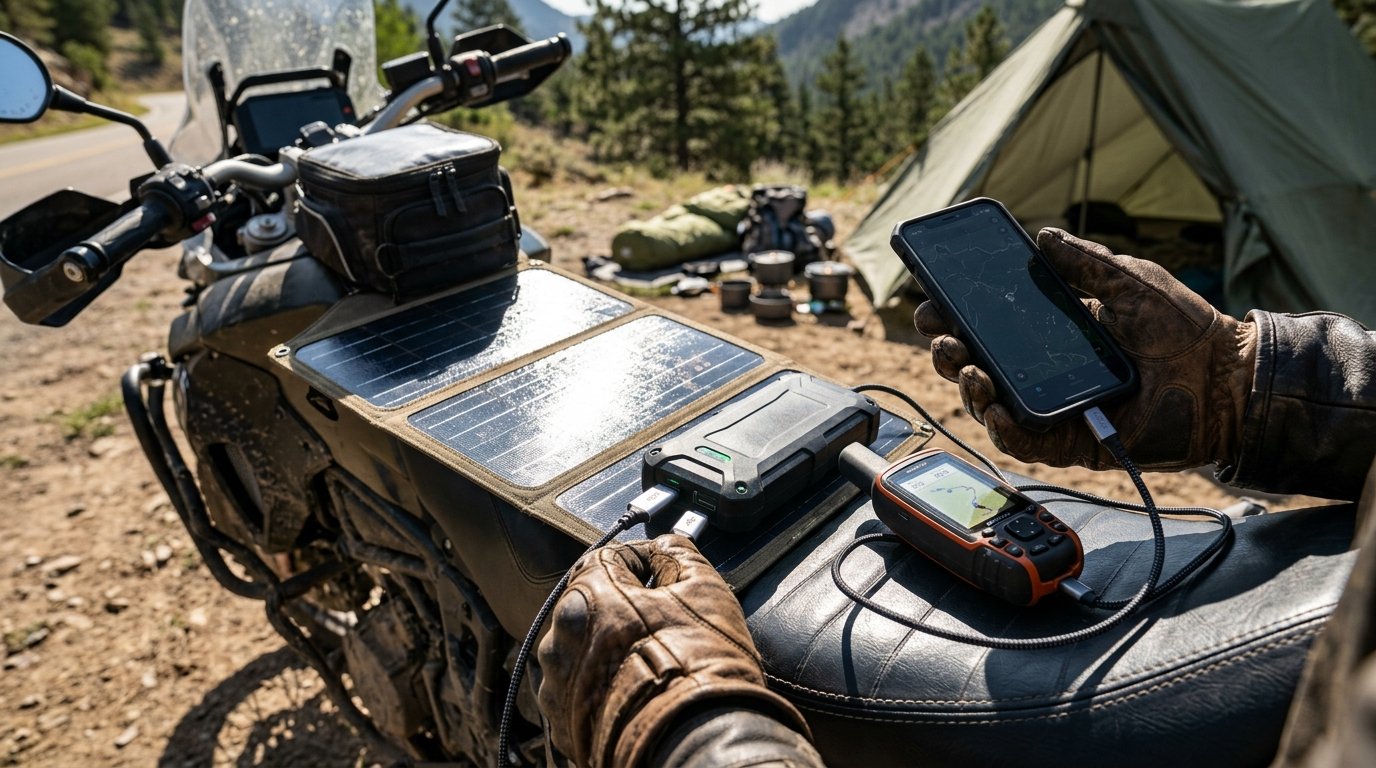
Motorcycle camping solar charger setups are essential for riders on multi-day adventures who need dependable, portable power far from the grid. If you rely on GPS, phones, cameras, comms, or a heated vest in the wild, choosing the right solar solution can make or break your trip. This guide dives deep into rugged, compact, saddlebag-friendly compact and foldable solar chargers built for motorcycle camping—not just any outdoor solar panel.
Key Takeaways
- Motorcycle camping demands compact, foldable, and weather-resistant solar chargers sized for saddlebags or racks.
- Pairing a solar panel with a portable power station ensures you can charge all devices—phones, GPS, action cams, and more—even when the sun isn’t shining.
- Mounting, cable management, and connector compatibility are critical for efficient and safe solar charging on the road.
Table of Contents
Why Motorcycle Camping Needs Specialized Solar Chargers
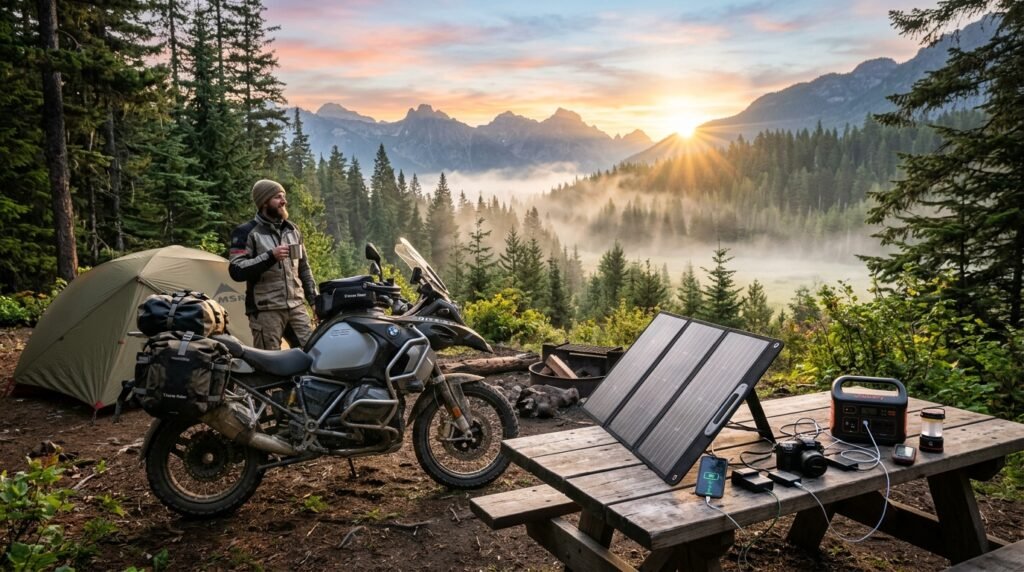
Power management during off-grid motorcycle trips isn’t a luxury; it is a necessity for safety, navigation, and peace of mind. Unlike car camping, motorcycle campers have minimal storage and must balance weight, space, and durability. While standard camping panels may work for large groups or RV setups, most are too bulky or fragile for saddlebag life. Instead, you want a motorcycle camping solar charger that folds up, shrugs off vibration, and can charge your critical devices directly or via a portable power station. As field tests show, “for long motorcycle camping trips, a compact and foldable solar charger that can be mounted on the bike or carried in a saddlebag is essential.”[1]
Criteria for Choosing a Solar Panel for Motorcycle Camping
Not every solar panel is cut out for ADV and motorcycle camping. Here’s what you should look for when picking a solar panel for motorcycle camping:
- Weight & Size: Choose panels that weigh one to two pounds or less and fold to fit inside side cases, tail bags, or panniers without stealing space for clothes or tools.
“Some panels are lightweight (one to two pounds) and ideal for backpacking; others are larger and can power small appliances or can be plugged directly into GPS, phone, camera, etc.” [9] - Durability & Weather Resistance: Look for panels rated IP65 or higher, with reinforced corners and waterproof fabrics or coatings. A motorcycle camping solar panel gets dropped, strapped, and exposed.
- Mounting Options: Integrated loops, grommets, clips, or Velcro straps make it easy to attach panels to your tent, pannier, rack, or even the bike itself while riding or camped.
- Output & Compatibility: A minimum of 5W is enough for phones/GPS, while 15-40W covers tablets or recharging a small power station. USB-A, USB-C, and DC outputs maximize compatibility with modern and legacy devices.
- Power Storage: Consider kits that pair with power banks or compact stations for flexibility—charge devices at night or under clouds.
For ADV riders, balancing these criteria means you can keep your electronics charged day after day, with minimal space or weight penalty. For tips on lightening your camping setup and packing effectively, check out our lightweight motorcycle camping gear guide.
The Best Portable Solar Chargers for Moto Camping
A practical solar system should be shaped by your ride style and trip duration. Here’s a real-world review of the top portable solar charger moto camping options. We rate each for ADV riders, campers, and power users.
- SolarMonkey Adventurer
- 5W panel, rugged foldable case, weighs 265g
- Includes dual USB/Apple cables; $130
- Mounts to tent, bag, or rack easily; ideal for single-device use or ultralight riders
- In-depth SolarMonkey review
- Goal Zero Nomad 5/20
- Offers 5W and 20W weather-resistant foldable panels
- USB output, 8mm solar port, folds flat for storage
- Pairs perfectly with Goal Zero portable power stations (Nomad 100/200) for longer stays
- See Goal Zero’s solar lineup
- EcoFlow RIVER 3 Plus / DELTA 3 Plus
- RIVER 3 Plus: 286Wh (enough for several days charging phones, GPS, lights); 10lb; supports up to 600W output
- DELTA 3 Plus: 1024Wh capacity, 1800W output, 120W solar input supported, but bigger and heavier (for group/multi-week trips)
- Both recharge fast with foldable 40W, 60W or 120W panels, suit solo and group ADV expeditions
- EcoFlow camping power tips
- SunJack Rugged Foldable Panels
- Powers up to 180W, weatherproof (ETFE coating), designed for tough terrain
- Foldable, easy to stash in any ADV luggage system
- SunJack solar panels
- Marhynchus 15W Flexible Panel
- 15W output, flexible design, dual USB & DC ports, IP65 waterproof
- Lightweight, adjustable mount—works for tents or bikes
- Budget-friendly choice for minimalists
- CP180 Portable Folding Panel Kit
- Delivers 180W and up to 10A charging for serious power users or group rides
- Folds for transport; needs a matching power station for best results
For weeklong trips, combining panels with a compact power station like the EcoFlow RIVER 3 Plus ensures you can charge camera batteries, a heated vest (learn more about heated vests that sip power), or emergency satellite devices. Modular folding solar panel motorcycle kits grant flexibility, but always match output to your needs. Remember, a too-heavy panel can steal precious storage for food, water, or gear. Don’t forget to check out our motorcycle camping power station tips for optimizing your full setup.
Practical Setups and Tips: Mounting, Storage & Usage
Real-world efficiency depends on how you mount and manage your solar charger—not just the specs on paper. Here are practical tips and lessons learned from field use:
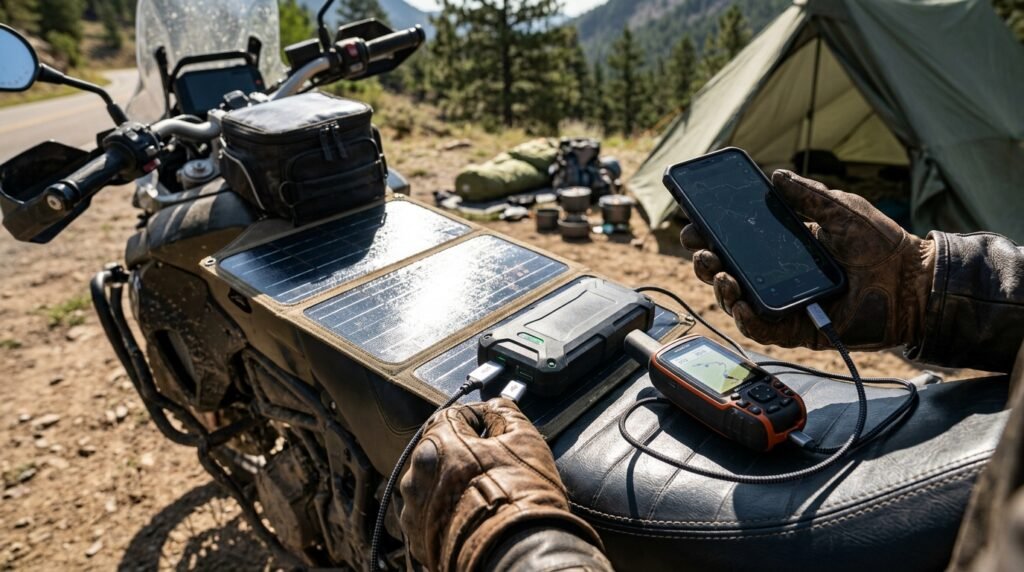
- Mounting: Use the included loops or add mini-biners/Velcro straps. Secure panels to your tent or tarp when in camp. Some riders mount low-output panels flat across the luggage rack during the ride to trickle-charge a battery pack. If strapping to your bike, avoid covering key vents or hot pipes.
- Storage: Always store panels folded, cords stowed, and in a padded sleeve. Weatherproof bags protect from mud and sudden rain. Never store when damp or dirty—moisture can degrade wiring and connectors.
- Power Management: Unplug panels at night or during rain to avoid reverse discharge (some cheaper panels lack robust blocking diodes). [6]
- Connector Matching: Always verify your panel connectors match your devices or power station’s input. Use quality adapter cables and avoid daisy-chaining low-grade splitters, which can introduce voltage drop or heat build-up[7].
For space-saving tips and how to squeeze the most into your bags, see our motorcycle luggage organizer guide. Pair these habits with waterproof motorcycle panniers to keep your solar gear safe.
Frequently Asked Questions about Motorcycle Camping Solar Panels
| Brand / Model | Panel Output | Weight | Outputs | Best for | Cons |
|---|---|---|---|---|---|
| SolarMonkey Adventurer | 5W | 265g | Dual USB/Apple | Minimalists, solo | Slow for large power stations, pricier per watt |
| Goal Zero Nomad 20 | 20W | 1.5lb | USB, 8mm | Weekend/short ADV trips | Midweight, needs power station for best use |
| EcoFlow RIVER 3 Plus | – | 10lb | AC, DC, USB-A/C | Power users, group trips | Bulky for solo ultralight rides |
| SunJack Rugged | 40–180W | 1.2–7lb | USB, DC | Flexible use, all-weather | Larger models need bigger bags |
| Marhynchus 15W | 15W | 360g | USB, DC | Budget, backup panel | Single device only |
| CP180 Panel Kit | 180W | 9lb | Anderson, MC4 | Group, multi-device or emergency | Oversized for most solo trips |
- Don’t expect panel-only setups to work at night: Most solar panels for ADV camping don’t store power. “Panel-only chargers do not store the electricity; you’ll need a compatible portable power bank or station to convert and store energy collected.”[9]
- Clouds cut charging speed: Expect up to 80 percent less output under full overcast. Consider adding a higher-wattage panel or prioritize charging whenever the sun appears.
- Poor connector matches cause frustration: Double-check all cables before departure. A $10 wrong cable can kill your entire off-grid plan.
- Cheap panels, cheap problems: Bargain, non-weatherproof panels can soak, corrode, or drop output fast—stick to field-proven, rugged options.
- Weight creeps up fast: Big panels + big batteries = less room for essentials. Pack only what you need for your longest day of use, not theoretical max consumption.
Summary: The Best Motorcycle Camping Solar Charger for Your Needs
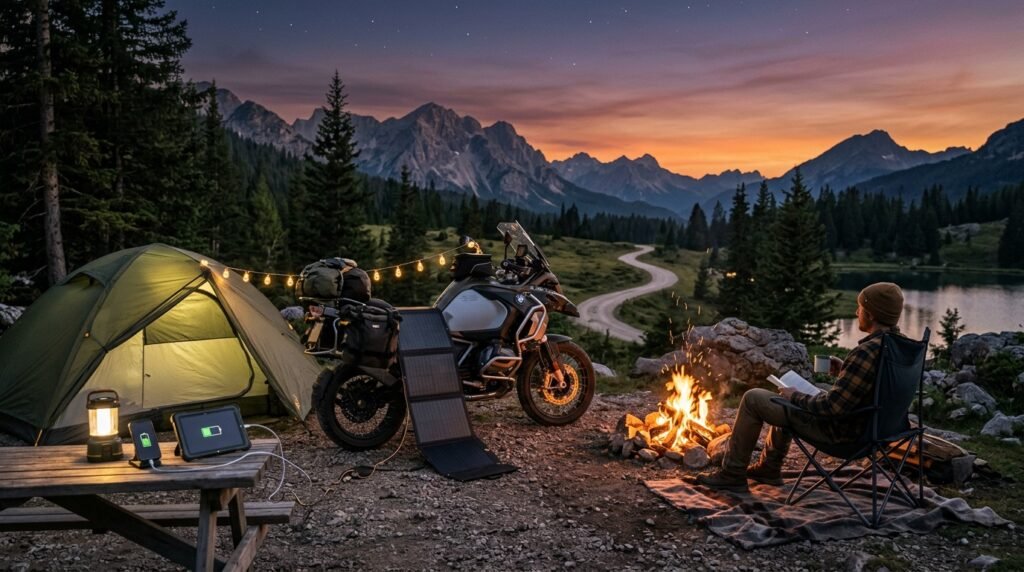
Choosing a motorcycle camping solar charger isn’t about chasing the biggest watt rating or the lowest price—it’s about matching your real needs and packing habits:
- Minimalists/Weekend Riders: Go with the SolarMonkey Adventurer or Marhynchus 15W panel—compact, simple, no bulk.
- Smartphone/Tablet/GPS Focused: Goal Zero Nomad 20 or SunJack’s 40-60W panels deliver fast charging in any weather, pack neatly, and mount easily.
- Long-Haul/All-Device Power: EcoFlow RIVER 3 Plus plus a 40W-60W folding solar panel keeps comms, heated vests, and camp lights running for days (see our moto camping checklist for full kit ideas).
- Group/Expedition Riders: Combine the CP180 Portable Panel Kit with a heavy-duty station like DELTA 3 Plus (if you have room); ideal for multi-rider base camps.
All these options support charging smartphones, tablets, GPS units, e-readers, and more, and can be paired with portable power stations for long rides away from outlets. Wherever you ride, invest in a solar panel for motorcycle camping that matches your style and gear. Ready to upgrade your ADV power setup? Explore top off-grid charging tips here.
Frequently Asked Questions about Motorcycle Camping Solar Panels
Can I charge my phone or GPS directly from a solar panel?
Yes—if your solar panel includes built-in USB outputs, you can plug phones, GPS, or cameras directly in and charge in the sun. For best results, top up a small power bank during the day, then charge your devices after dark.
Do I need a portable power station for motorcycle camping?
For single-device use, a direct solar panel may suffice. However, if you need to charge multiple devices, run camp lights, or power a heated vest, a power station paired with your solar panel is far more reliable—especially on cloudy days or for overnight charging.
How much power does motorcycle camping gear actually use?
Smartphones need 5W–12W per full charge, GPS about 5W, action cams 5–8W, heated gear over 20W. Track your own device watt-hours to size your panel and battery system. For low temperatures, see our heated vest review.
What if the weather is cloudy or rainy?
Solar charging slows dramatically in overcast—expect only 10–20 percent of typical panel output. Keep a backup fully charged battery bank, and always charge devices whenever you have sun, not just when empty.
What is the best way to mount panels to avoid wind damage?
Secure panels to your tent, tarp, or a ground stake using carabiners or cord. Avoid exposing panels to high wind unanchored. For more packing and setup ideas, check out our ultralight ADV camping gear tips.
—