
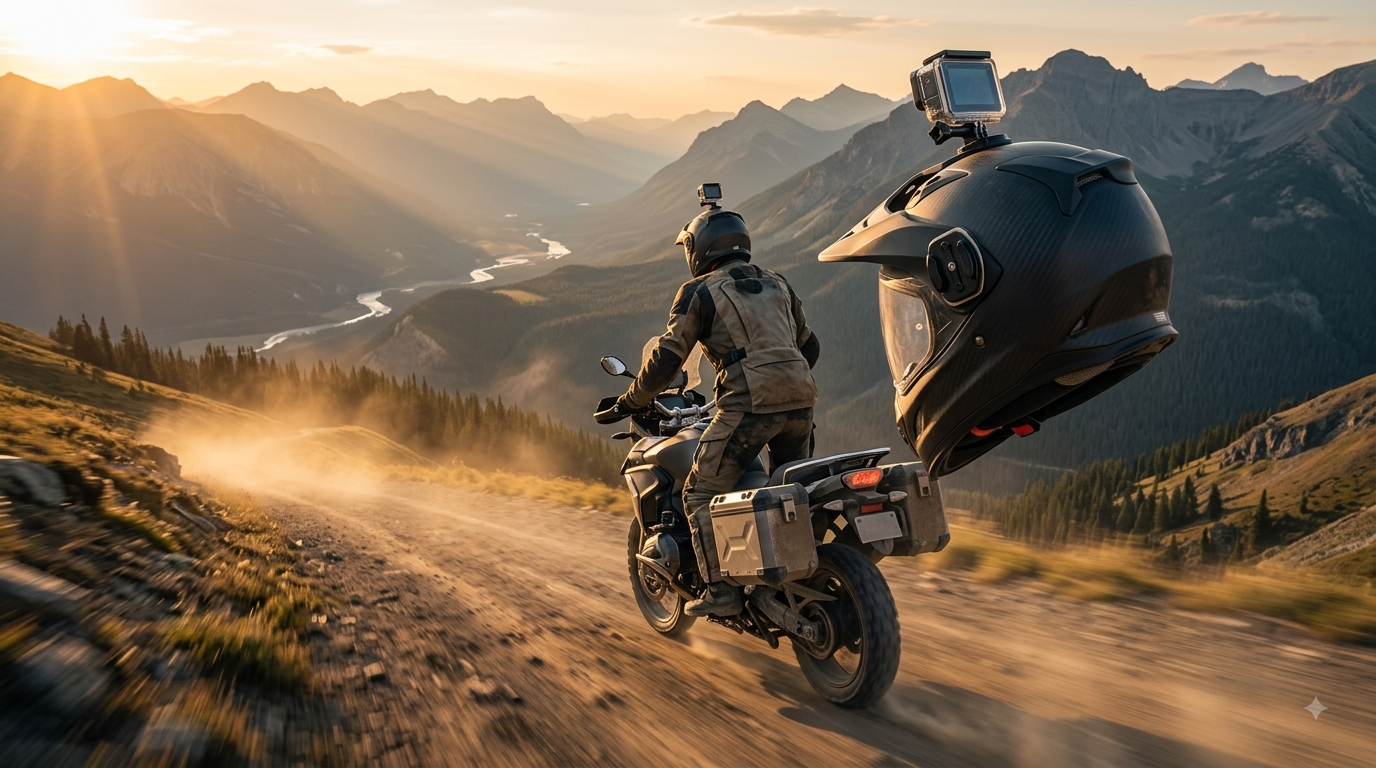
ADV helmet camera mount compatibility is a top concern for adventure riders who want to capture their rides without risking helmet safety or compliance. If you want clear footage and a safe helmet, you need to know what works and what to avoid before installing any camera mount on your adventure helmet. Here’s how to get it right—the first time.
Key Takeaways
- Choose a helmet camera mount that matches your helmet’s shell geometry and material to maintain safety and avoid voiding certification.
- Proper installation is crucial—avoid drilling or blocking ventilation to keep your helmet compliant and fully protective.
- Top-rated mounts like Adaptom, Chin mounts, and RideTechMoto offer reliable compatibility, vibration resistance, and safety features for modern action cameras.
Table of Contents
Why Helmet Camera Mount Compatibility Matters for ADV Riders
Mounting an action camera to your adventure helmet is only safe when the mount is specifically matched to your helmet’s shell shape and material. Using an incompatible mount or making shell modifications can weaken the helmet, potentially voiding vital safety certifications like DOT or ECE. According to industry research, adhesive or clamp mounts that are correctly installed and within their rated load limits do not compromise the helmet’s certification as long as they do not alter the shell structure or block ventilation. Drilling is discouraged, as any penetration can weaken impact protection. The right ADV helmet camera mount compatibility means safer riding, reliable footage, and keeping your helmet’s approval intact.
Step-by-Step Guide: How to Select and Mount a Camera Safely
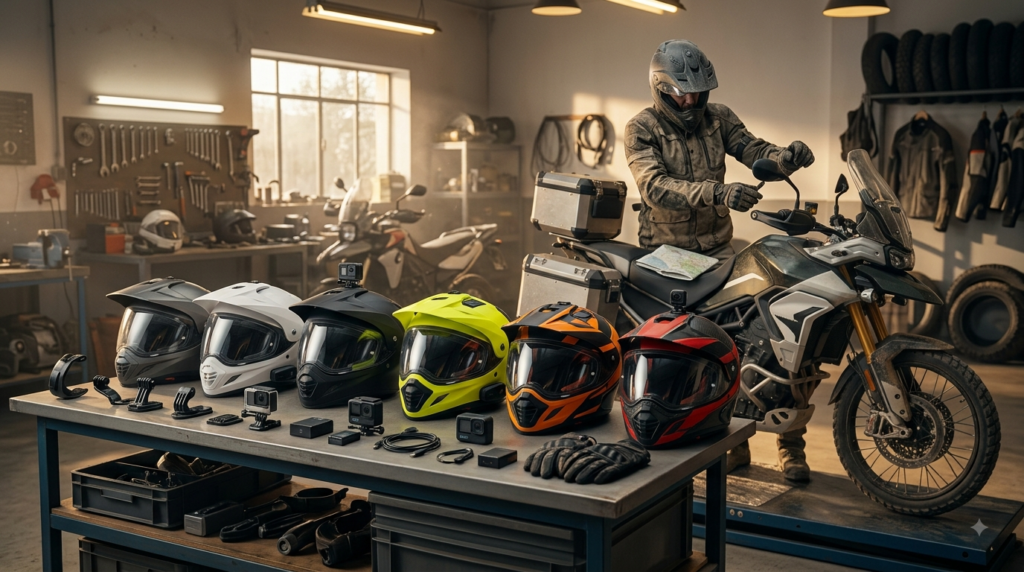
- Identify Your Helmet’s Shell Shape and Material
- Adventure helmets often feature broader, rounder chin bars and a peak. Shell materials can include carbon fiber, fiberglass, and thermoplastics like TPU. Spotting these differences is key for fitment.
- Choose the Right Mount for Your Helmet
- Chin mounts deliver the truest point-of-view (POV) footage but must flex to fit both sharp sportbike and broad ADV chin bars (sportbike: under 12mm radius; ADV: 22–28mm).
- Peak mounts are preferred for peaked adventure helmets as they keep ventilation clear and the chin free for goggles. Peak mounts by brands like RideTechMoto ensure a natural POV for dirt, dual-sport, and ADV helmets.
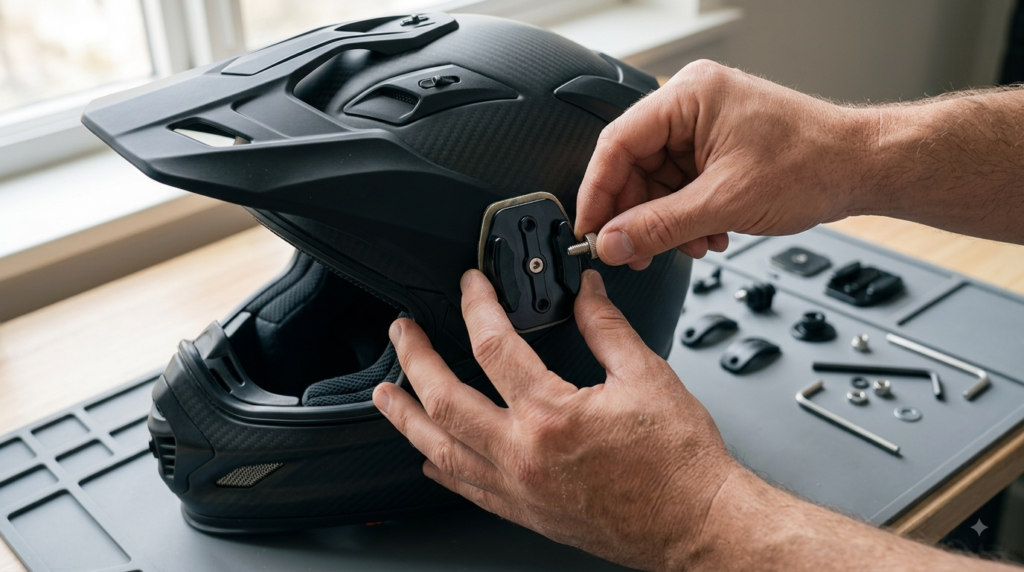
- Prep the Mounting Area Properly
- Clean the area with isopropyl alcohol. Light abrasion with a microfiber pad may help adhesives grip, especially on carbon fiber.
- For fiberglass or painted plastic, ensure all release agents are removed—sometimes a second cleaning is required.
- Pick the Best Mounting System
- Hybrid silicone-adhesive or clamp mounts are ideal for most ADV helmets. Reputable options include ChinMounts, Adaptom, and RideTechMoto, compatible with GoPro, Insta360, and DJI models. Look for vibration resistance and safety tethers.
- Install Without Permanent Modifications
- Never drill or block vents. Use adjustable mounts and check movement. Confirm you’re not interfering with visor or peak adjustability. Always use a safety tether in case the main mount fails.
If you need examples or want to compare gear, see our picks for the best adventure action cameras or explore how a packable camp stove for moto camping complements your travel setup.
Advanced Analysis & Common Pitfalls
Even with the right kit, ADV helmet camera mount compatibility is easy to get wrong if you miss the details. Here are the risks and how to avoid them:
- Using Incompatible Mounts: A mount that does not match your helmet contour or material can peel off, shift during a bump, or—worse—damage the protective shell.
- Poor Adhesion: Not all adhesives work on carbon or slick painted fiberglass—always clean thoroughly and pre-treat as needed. Skipping this step risks sudden camera loss at speed.
- Blocking Ventilation or Drilling: Any permanent modification, like drilling for a screw-mount, instantly voids helmet safety ratings and may redirect impact force in a crash. Never block intake or exhaust vents—this makes you hot and lowers protection during a fall.
- Mount Weight & Balance: Heavy cameras or large mounts can affect helmet dynamics, increasing neck fatigue or causing the helmet to lift at speed. Lightweight, compact solutions work best for true adventure use.
- Vibration Issues: Cheaper mounts often rattle or shake, ruining footage and distracting you at speed. Select mounts designed with vibration-dampening features and always add a safety tether.
- Universal vs. Custom Contour: Universal mounts may “sort of fit,” but custom-contoured models match the helmet perfectly, improving security and camera angle.
| Mount Type | Ideal Helmet Shell Shape | Best For | Risks |
|---|---|---|---|
| Chin Mount (Flexible Silicone) | Sportbike & ADV (rounded chin bars, 12–28mm radius) | POV, unobstructed footage, most helmet types | Poor fitment can cause detachment or block vents |
| Peak Mount (Rigid/Clamp) | Helmets with front peak (ADV/dirt) | Keeps chin free for goggles, does not block ventilation | May shift on large impacts if not secured with a tether |
| Top/Side Mount (Adhesive) | Flat or gently curved surfaces | Unique angles, wide shots | Increased wind drag, possible helmet imbalance |
For more tips on rugged gear, check out the latest on waterproof helmet intercoms or our review of electronic earmuffs for motorcycle riding.
Conclusion
Installing a camera on your helmet only works if you consider ADV helmet camera mount compatibility from the start. Choose mounts tailored to your helmet’s geometry, never drill or block vents, and always prep your shell correctly. Use reputable brands with proven records—Adaptom, ChinMounts, RideTechMoto—to protect both your head and your footage. Need the right helmet or want to compare gear? Dive into our guide on modular adventure helmets or catch up on affordable ADV gear essentials. Don’t compromise your safety: demand reliable, safe, and fully compatible helmet camera mounting every time.
Ready to capture every mile without risking your helmet’s protection? Choose a mount that puts ADV helmet camera mount compatibility first, and ride with confidence. Explore more expert-tested riding gear right here on ComeToRide.
Frequently Asked Questions
Does mounting a camera to my ADV helmet void the helmet’s safety certification?
No, not as long as you use non-invasive adhesive or clamp mounts and avoid any modifications to the shell (like drilling) or blocking any ventilation. Safety ratings only become void if you alter the helmet’s structure or airflow channels. Source
What’s the safest location for an action camera mount on a peaked adventure helmet?
Peak and chin positions are the safest for adventure and dirt helmets. Peak mounts keep the chin bar free for goggles and avoid interfering with ventilation, delivering a natural POV. Chin mounts work if contoured to the bar and don’t block vents.
Will adhesive mounts reliably stick to carbon fiber or fiberglass helmets?
Adhesive works well with proper preparation. Clean the spot thoroughly using isopropyl alcohol. Carbon fiber may need light abrasion, while fiberglass or TPU shells require extra cleaning to remove release agents. For difficult shapes, consider hybrid silicone or clamp mounts for added security.
Which brands offer the best ADV helmet camera mount compatibility?
Brands like Adaptom, ChinMounts, and RideTechMoto are proven for their compatibility with various helmet shapes and materials. They offer vibration resistance, tethers, and are designed to coexist with helmet safety features. You can learn more about model-specific fitment in their product guides or on Amazon listings.
Can I use the same mount for GoPro, Insta360, and DJI action cameras?
Most modern mounts, such as those from Adaptom and RideTechMoto, offer adapters for various popular models, including GoPro, Insta360, and DJI. Always confirm the mount includes the right bracket, and review compatibility notes—some cameras may need a separate adapter plate.
—