

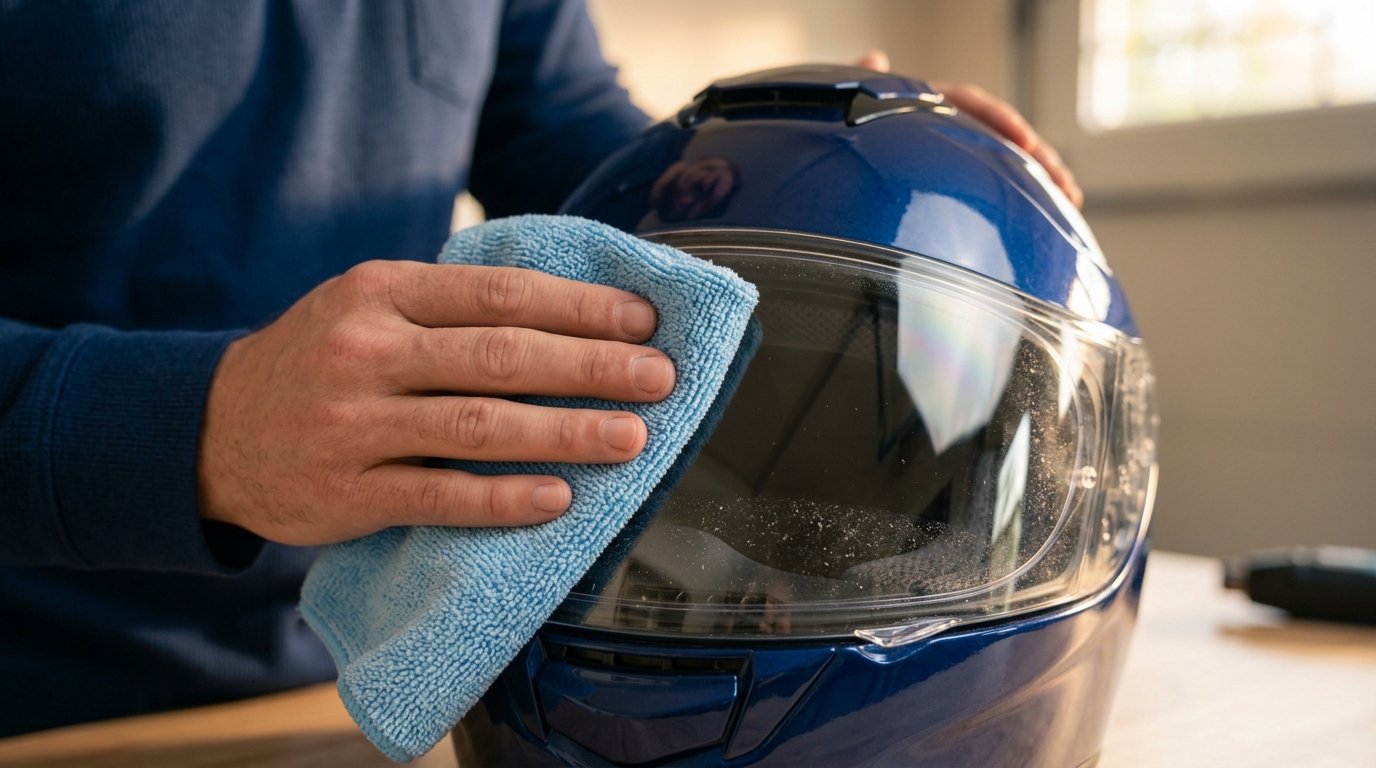
microfiber helmet visor towel is the quickest, most affordable way for riders to keep their helmet visors clean and fog free on any trip, without expensive kits or bulky gear.
Key Takeaways
- Carry a compact microfiber helmet visor towel and mini anti fog solution for fast, streak-free cleaning anywhere.
- Disposable tissues can scratch visor surfaces and create dangerous glare; microfiber protects your vision and works for hundreds of uses.
- Budget-friendly visor cleaning kits offer everything you need for roadside grime, bugs, and long rides without sacrificing performance.
Table of Contents
Why Your Helmet Visor Gets Cloudy (and Why It Matters)
Every biker knows the frustration of riding into the sun with a streaky or fogged-up visor. Fog, bugs, and road grime not only reduce visibility, but even tiny scratches from improper cleaning can create glare and make riding unsafe. All it takes is a bad patch of weather or an evening run through bug country to turn your clear shield into a smeared mess. Your helmet visor is your window on the world — but it’s also a magnet for moisture, sweat, splattered insects, dirt, and dust. That’s why a motorcycle visor wipe is an essential part of your daily ride gear, especially for those who commute or tour regularly.
Microfiber Helmet Visor Towels — The Fast, Cheap Solution
Forget using paper towels or the sleeve of your jacket. A microfiber helmet visor towel is purpose-built to clean delicate polycarbonate or acrylic helmet visors without scratching. Premium options like the compact Muc-Off detailing cloth cost about $7.50, are machine washable, and take up almost no space in your pack.[3] Compared to tissues, they’re far safer for your investment, and will save you from the expense of replacing a badly scratched shield. Here’s how to quickly clear up your view, even while stopped at a red light or scenic overlook.
- Pre-treat if needed: For heavy bug splatter or mud, pour a little water (or anti-fog spray) on the visor and let it soak thirty seconds.
- Wipe with microfiber: Using your microfiber helmet visor towel, buff in light, overlapping circles. Don’t press hard — pressure can trap grit and damage the outer coating.
- Dry/polish: With a dry corner of the towel, wipe in a single direction to remove excess moisture for a streak-free finish.
- For fog protection: Use an mini anti fog solution — available for about $8 — rubbing for 5–10 seconds to deposit a protective film that lasts up to 100 rides.[1]
- On-the-go cleaning kits: Consider a mini helmet visor cleaning kit with a spray bottle and towel; some even include bug removal cloth motorcycle visor wipes for stubborn gunk.[4]
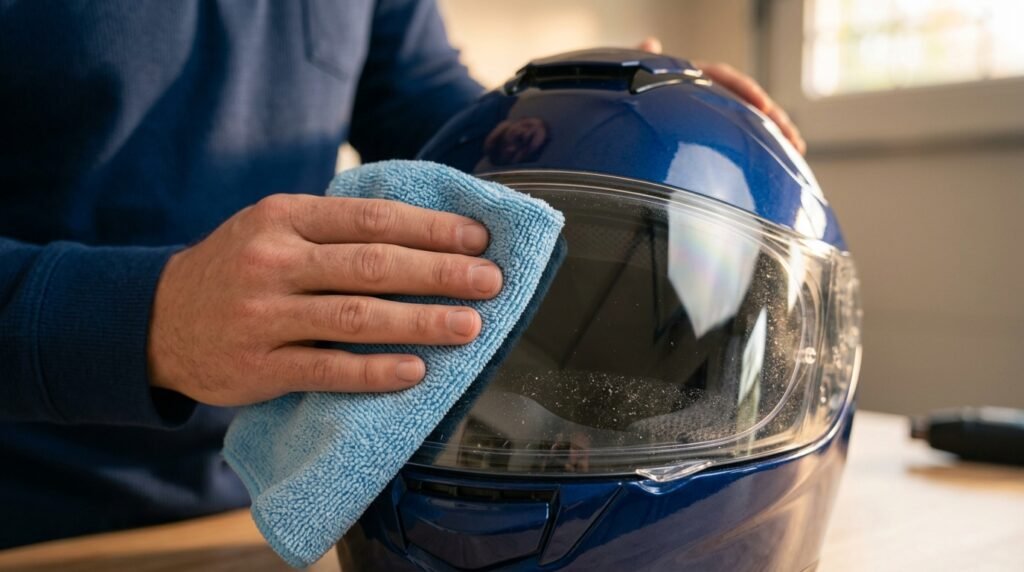
For adventure riders or long-distance commuters, this exact routine will work with gear from most motorcycle cleaning brands. The Muc-Off Helmet, Visor & Goggle Cleaning Kit is a standout under $20 and comes with a pH-neutral spray and microfiber cloth for full, quick roadside use.[4]
If you’re piecing together your own kit, toss in an inexpensive anti-fog paste like Z Clear — a single 2 oz bottle (about $20) will last more than 200 applications and provides 8–12 hours of fog protection.[2] Even budget picks like the Khaki Tom cleaner bundle deliver a towel and over 200 sprays for around $16.[6]
Looking for more efficiency hacks for your ride routine? Pair your visor towel kit with a heated vest in winter so you stay warm while keeping visibility clear, or add a set of slim electronic earmuffs to cut wind noise during long trips.
Advanced Analysis & Common Pitfalls
Microfiber helmet visor towels and anti-fog solutions are low cost, high utility — but only if you use them right. Here’s what can go wrong, plus a quick comparison of options so you get the best value for your needs:
| Product | Contents | Price | Best Use Case | Potential Issues |
|---|---|---|---|---|
| Generic Microfiber Towel | 1 travel-sized towel | $7.50 | Quick daily visor wipe | Requires separate spray; can get dirty fast if not stored well |
| Anti-fog Microfiber Cloth | 1 impregnated towel | $8 | Foggy conditions; repeated fog protection | Ineffective if visor is dirty; chemicals may wear down if exposed to water |
| Muc-Off Cleaning Kit | Spray + microfiber towel | $17 | All-in-one, travel or touring | Spray can leak if not capped; need to refill after 30–40 uses |
| Z Clear Anti-fog Paste Kit | Paste, spray, towel, wipes | $20 | Heavy fog areas; adventure rides | Paste can be messy; takes 1–2 mins to apply right |
| Khaki Tom Cleaner Kit | Spray + towel | $16 | Budget daily solution | Spray compatible mainly with visors, not goggles |
Common pitfalls:
- Dry-wiping road grit: Always pre-wet or use spray. Wiping dry can scratch protective coatings, reducing nighttime clarity.[5]
- Dirty towels: A dusty or sand-caked towel causes more harm than good. Carry a backup in a sealed bag for extended trips.
- Misusing chemicals: Alcohol-based sprays or home glass cleaners can fog up or yellow visors over time. Always use pH-neutral products.
- Storage woes: If you stow a wet towel in a dark area, mildew and bad smells build fast. Air-dry before packing away in a travel case.
- Overapplying anti-fog: Heavy paste or spray will smear; a thin, even coat is most effective.
Want more advanced maintenance for your kit? Consider stowing a beginner adventure motorcycle toolkit so you’re prepped for both visor cleaning and on-the-road fixes. Or, for camping tours, add an ultra-compact camping stove that fits easily alongside your compact cleaning supplies.
The Bottom Line — Clear Vision, Small Investment
A little planning and a small outlay for a quality microfiber helmet visor towel and a pocket-size anti-fog spray can solve your most common visibility headaches. Whether you’re an urban commuter dodging truck splatter or an adventure traveler dealing with dust, fog, and bugs, this combo gives you all the cleaning and protection you need without breaking the bank. Skip the tissues, save your sleeve, and make your next ride safer by equipping your bag with the right cloth and cleaner. Your eyes (and your wallet) will thank you. Try the microfiber helmet visor towel solution today for crystal-clear riding all year.
Want more budget-friendly gear tips? Check out our reviews of the best mosquito repellent for outdoor riders and the top action camera for motorcycle adventures.
FAQ
Can I use a microfiber helmet visor towel to clean a tinted or mirrored visor?
Yes, as long as the towel is clean and the cleaning solution is pH-neutral and scratch-free, you can use it on all types of visors — clear, tinted, or mirrored. Never use abrasive cleaners or rough towels, which can damage special coatings.
How often should I wash my microfiber helmet visor towel?
Ideally, wash it after every few rides, or immediately if it comes in contact with heavy dirt, bug guts, or mud. Machine-wash without fabric softener and air dry for best results.
Can anti-fog visor cloths work in the rain?
Anti-fog cloths are most effective on interior visor surfaces and under humid, foggy conditions. They help some in rain, but heavy rain will wash away most anti-fog films — reapply as needed.
Is a purpose-made helmet visor cleaning kit worth it versus just buying a towel?
If you ride daily or commute in all weather, a full cleaning kit (like the Muc-Off or Khaki Tom kits) saves time and ensures you always have safe, compatible cleaning agents at hand. For the occasional rider, a single microfiber towel paired with a small lens spray is more than enough.
What’s the fastest way to clean bugs off my visor mid-ride?
Stop in a safe spot, add a squirt of water or spray to soften dried bugs for thirty seconds, then gently wipe with a microfiber towel. Never use your glove or sleeve, which can create tiny scratches that scatter headlight glare at night.
—