

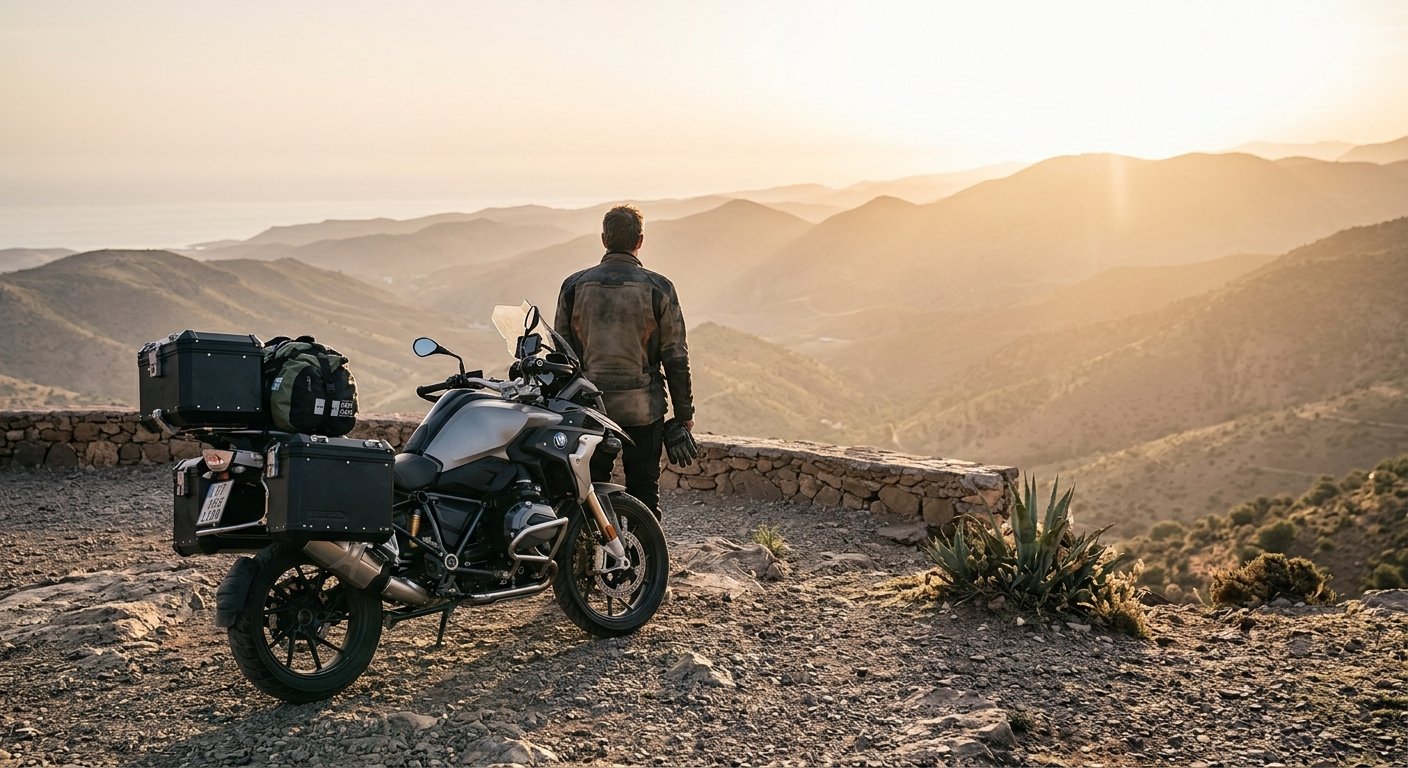
Motorcycle tour packing list decisions can make or break an adventure ride. Forget something vital or overload your luggage, and your dream journey gets a lot less enjoyable—no matter how experienced you are. Use this real-world, pro-vetted checklist to ride farther, camp happier, and stay safe on every trip.
Key Takeaways
- Smart packing directly impacts safety, comfort, and your bike’s handling.
- The right gear mix means adapting to changing weather, road conditions, and camping needs—without overload.
- Optimizing your motorcycle camping gear checklist helps you stay self-sufficient anywhere, from arid deserts to remote forests.
Table of Contents
Why Packing Smart Matters for Motorcycle Touring
If you’ve ever tried to maneuver a top-heavy, overloaded bike on gravel—or had to cut your journey short because you left out something crucial—you know why the right motorcycle tour packing list matters. Unlike car travel, every kilo impacts stability, comfort, and performance. Pack wrong, and you risk fatigue, slower reactions, more breakdowns, and even safety hazards.
Regular travel checklists don’t account for exposure to rain, dust, heat, or the need for minimal, weather-resistant gear. For ADV touring and camping, your packing choices must cover riding safety, camp comfort, and fast fixes far from home. As experienced overlanders suggest, “Target: 80 liters and 25 kg. It’s not wrong. 30 kg is way too much.” (source)
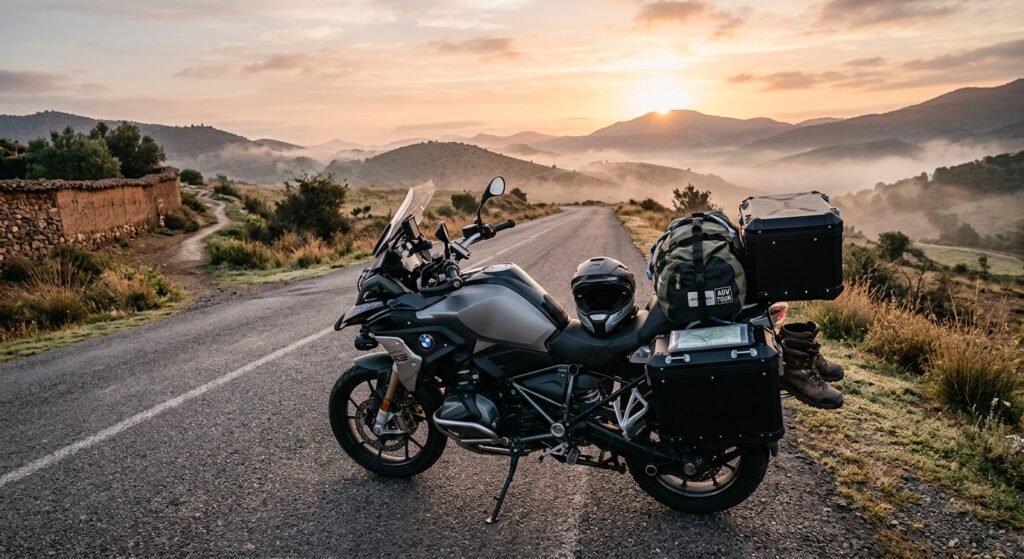
Step-by-Step Pro Packing List Guide
Follow this ADV and long-distance motorcycle trip checklist to balance safety, minimalism, and comfort. Layer your approach, starting with the non-negotiables: riding gear, climate-adaptable clothing, self-sufficiency tools, and true motorcycle camping essentials.
Essential Riding Gear
- Full face helmet (lightweight, well-vented, DOT/ECE or Snell approved) for maximum comfort and safety—”ultimate comfort for those long miles.” (source)
- Armored textile or mesh jacket and riding pants (removable liners for four-season use)
- Sturdy ADV or touring boots, waterproofed before you go
- Multiple gloves (summer mesh, waterproof, insulated; heated gloves or a heated vest for extreme cold)
- CE-certified armored gear (for both men and women, e.g., women’s motorcycle jackets)
- Hi-vis vest and earplugs (for fatigue and safety on highways)
- Balaclava or neck gaiter for wind and cold
- Rain suit or poncho that fits over your riding gear
Find more gear tips for all weather in our adventure touring essentials guide.
Layered Clothing for Any Climate
- 2 to 3 sets of moisture-wicking base layers and quick-dry underwear (saves daily washing)
- Fleece or packable down jacket for cold (see best compressible jackets)
- Convertible pants or tough jeans for off-bike wear
- Lightweight waterproof jacket for evening/camp use
- Socks—quick-dry, long enough for your boots, 3–5 pairs
- Sun hat or bandana for rest stops
- Swimwear for hot springs or lake dips
Tip: Layering trumps thick, non-breathable sweaters. Even in desert heat, cool nights demand insulation you can add or remove fast. “Layered clothing should cover base layers (synthetic long-sleeve tops and leggings), insulating mid-layers (fleece or lightweight down jacket), warm hat or beanie, sun hat, and multiple pairs of moisture-wicking shirts…” (Synthesized)
Motorcycle Camping Gear Checklist
- Waterproof two-person tent (or bivy/hammock setup if space is tight) — compare compact tent campers
- Sleeping bag or quilt matched to the coldest expected temp
- Insulated sleeping pad & small packable pillow
- Headlamp with extra batteries
- Lightweight tarp or ground sheet
- Ultralight stove (dual fuel stove options), small pot, utensil, collapsible cup
- A 3–4L hydration bladder or water bottles + filter or purification tabs
- Freeze-dried meals, energy bars, trail mix, and coffee kit
- Packed spice/salt kit (tiny containers save space)
- Compact camp chair or stool — optional but gold after a rough day
“Camping equipment must comprise a compact, weather-resistant two-person tent… a compact stove (e.g., Jetboil Stash or MSR Pocket Rocket) with fuel canister, a small pot, collapsible cup, utensils, lightweight cooking set, water-filtration system or purification tablets…” (source)
For more, see our motorcycle camping essentials guide.
Tools, Spares & Emergency Supplies
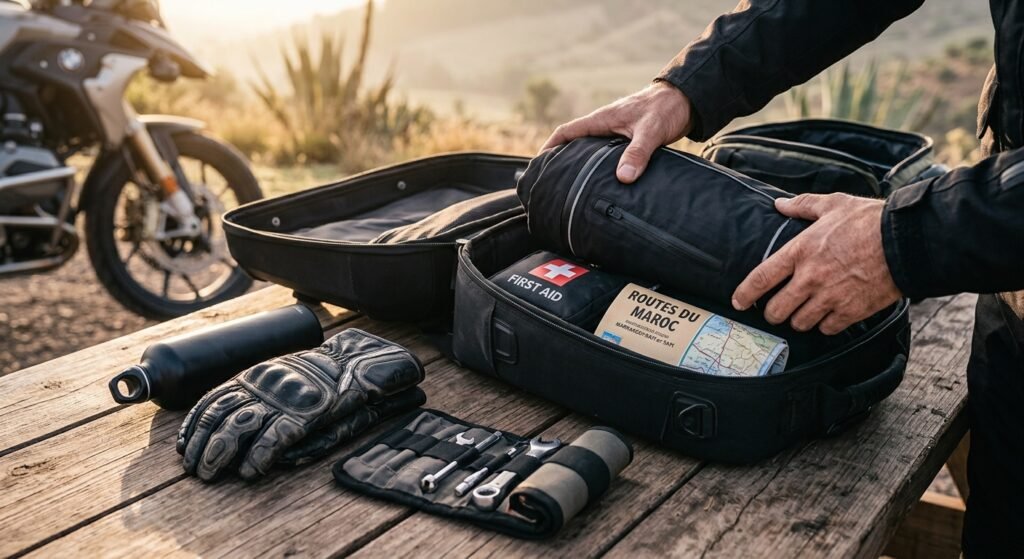
- Mini tool kit (Allen/hex keys, flat and Phillips screwdrivers, tire levers)
- Tire repair kit (plugs or patches, CO2 inflator or compact pump; best-rated kits)
- Multi-tool and compact chain lube/tiny rag
- Roll of duct tape, zip ties, a few spare fasteners/bolts, spare fuses
- Spare brake and clutch levers (if practical); spare key sealed and hidden
- Portable jump starter for solo rides
- Compact first aid kit (bandages, medications, wound closure, moleskin)
“Tool and maintenance supplies should cover a tire repair kit (tire plugs, CO2 inflator or pump), a multi-tool, chain lube, spare brake and clutch levers, basic hand tools, duct tape, zip ties, spare fuses, portable jump starter, spare key, and a compact first-aid kit…” (Synthesized)
Visit our overlanding checklist for even more self-sufficiency picks.
Electronics, Docs & Security
- Rugged smartphone + charger + power bank (solar is bonus)
- Handlebar phone mount (best GPS/phone options)
- Dedicated GPS for true off-grid navigation
- Action cam with spare memory card (see picks)
- Bluetooth helmet intercom for calls/music/directions (best budget headset)
- Satellite communicator for true remoteness (see comparison)
- Passport, license, insurance, printed backup docs in a waterproof pouch
- Emergency cash (hide a $20 in a tire plug kit or jacket lining)
“Electronics include a rugged smartphone with charger and power bank, GPS unit or maps, a camera or action-cam with extra memory cards, a Bluetooth headset for navigation, and an emergency satellite communicator…” (source)
Hygiene, Health & Comfort
- Travel toothbrush, toothpaste, and floss
- Biodegradable soap, deodorant, mini hand sanitizer
- Quick-dry towel/microfiber cloth; small shower bag
- Toilet paper in a zip-lock, compact waste bag (always pack it out)
- Lip balm with SPF, high SPF sunscreen
- Insect repellent (try DEET-based sprays)
- Prescription meds, allergy pills, painkillers
- Baby powder for boots and long days
“Toothbrush, toothpaste, biodegradable soap, quick-dry towel, deodorant, lip balm with SPF, sunscreen, insect repellent, hand sanitizer, toilet paper in a zip-lock bag, a small shower bag, and a compact waste bag…” (source)
Packing Tips & Organization
- Keep total load between 80–100 liters and under 30 kg (bike handles much better) (source)
- Distribute weight low and close to the bike’s center—heaviest in panniers, lighter in top bag/tail bag
- Group rapid-access items (rain gear, snacks, converter) in your tank bag
- Everyday carry: wallet, docs, phone in an inner waterproof pocket/pouch you take with you off bike
- Don’t pack “just in case” extras—every rider returns with unused gear at first, but less truly is more
For next-level luggage secrets, check out pro tips on motorcycle luggage upgrades.
Sample ADV Packing List (For Quick Reference & Printing)
Ready to pack? Here’s a condensed, printable ADV packing list. “Use this as a baseline to get started. Add or remove items to suit. Once you’ve camped a few times, add your location on the bike for each item to the list…” (source)
- Helmet (w/ liner), armored jacket/pants, boots, 3 types gloves, rain gear
- Base/mid/outer layers, waterproof jacket, casual pants, 3–4 pairs socks/undergarments
- 2-person tent or hammock, sleeping bag, pad, pillow, headlamp, camp chair
- Stove, pot, utensils, cup, water bladder/filter/purifier, camp food & snacks
- Tool kit, tire kit/inflator, multi-tool, zip ties/duct tape, spare lever/key/fuses, first aid, jump pack
- Phone + charger, backup battery, GPS/maps, action cam + cards, helmet intercom, satellite tracker
- All documents, passport/license/insurance, cash/cards, waterproof pouch
- Hygiene kit, insect repellent, meds, quick-dry towel, waste bags, hand sanitizer
Adjust this adv packing list to your style and route. For more detailed comparisons and adventure upgrades, explore this overlanding essentials roundup.
Advanced Analysis & Common Pitfalls
Many first-time and even experienced riders run into common issues when assembling a motorcycle tour packing list. Here are frequent snags and expert fixes.
| Pitfall | Why It’s a Problem | How to Avoid |
|---|---|---|
| Overpacking | Bike becomes top-heavy, handling suffers, fatigue increases, space is wasted. | Lay out all items before packing. Remove all “maybe” or duplicate gear. Stick to 80-100L/under 30kg rule. |
| Wrong Weight Distribution | Makes low-speed handling dangerous, increases crash risk on loose surfaces. | Pack heaviest gear (tools, food, water) low and close to pegs/frame; store lighter, bulkier stuff up high. |
| Cheap or Bulky Camping Gear | Oversized gear doesn’t fit bags or gets soaked; cheap tents fail in wind/rain. | Invest in gear made for backpacking or motorcycle camping—light, compact, proven weatherproof. |
| Forgetting Crucial Tools/Docs | Simple breakdowns become trip-ending issues; border crossings become nightmares. | Use a printable checklist and store tools/docs in the same spot every time. Have a digital backup of docs. |
| Skipping Weather Protection | Unexpected rain, cold, or sun can mean misery or danger. | Always pack a rain suit, an insulating mid-layer, and sunscreen—even for short trips. |
| Not Testing Your Setup | Straps come loose, weight shifts, vital stuff is buried deep on day one. | Do a full test-pack and local ride, including a camp night, before your big tour. |
Compact, reliable, and field-tested kit is worth every penny and minute of planning—don’t let gear mistakes cut your adventure short. For extra safety, check our guide on solo motorcycle travel safety.
Conclusion
A smart, pro-level motorcycle tour packing list is your best insurance for comfort, safety, and fun—on or off the grid. Not every item on this list is essential for every ride, but each can save your trip if chosen thoughtfully.
Start lean, test your kits in real-world conditions, and upgrade based on experience—not theory. Ready to ride farther and camp better? Download the sample checklist or read our gear upgrade tips and start planning your own two-wheeled odyssey now.
FAQ: Motorcycle Tour Packing List
What is the ideal weight limit for motorcycle touring luggage?
Experienced ADV riders recommend keeping your total packed load under 30 kg (about 66 pounds) and distributed between 80–100 liters of luggage. Too much weight affects bike handling and fatigue.
How do I pack for unpredictable weather on a long ride?
Layer smart: have base, mid, and outer layers, a waterproof rain suit, and a lightweight insulating jacket. Store rain gear at the top of your pannier or in your tank bag for instant access.
What’s the most important camping gear for ADV motorcycle trips?
A compact, weather-resistant tent or hammock, a sleeping bag rated to your coldest night, and a minimal stove/cook set. Always balance quality, packed size, and weight for moto travel.
How do I prevent losing essential tools or documents?
Establish an exact “home” for every tool and document—use color-coded dry bags and always pack them in the same pannier/pocket. Keep digital copies of all critical docs on your phone and in the cloud.
Is there a printable checklist for me to use?
Yes, the sample ADV packing list above is print-friendly. Start with it, add your own must-haves, and after each ride, tweak it to better suit your trips.
—