
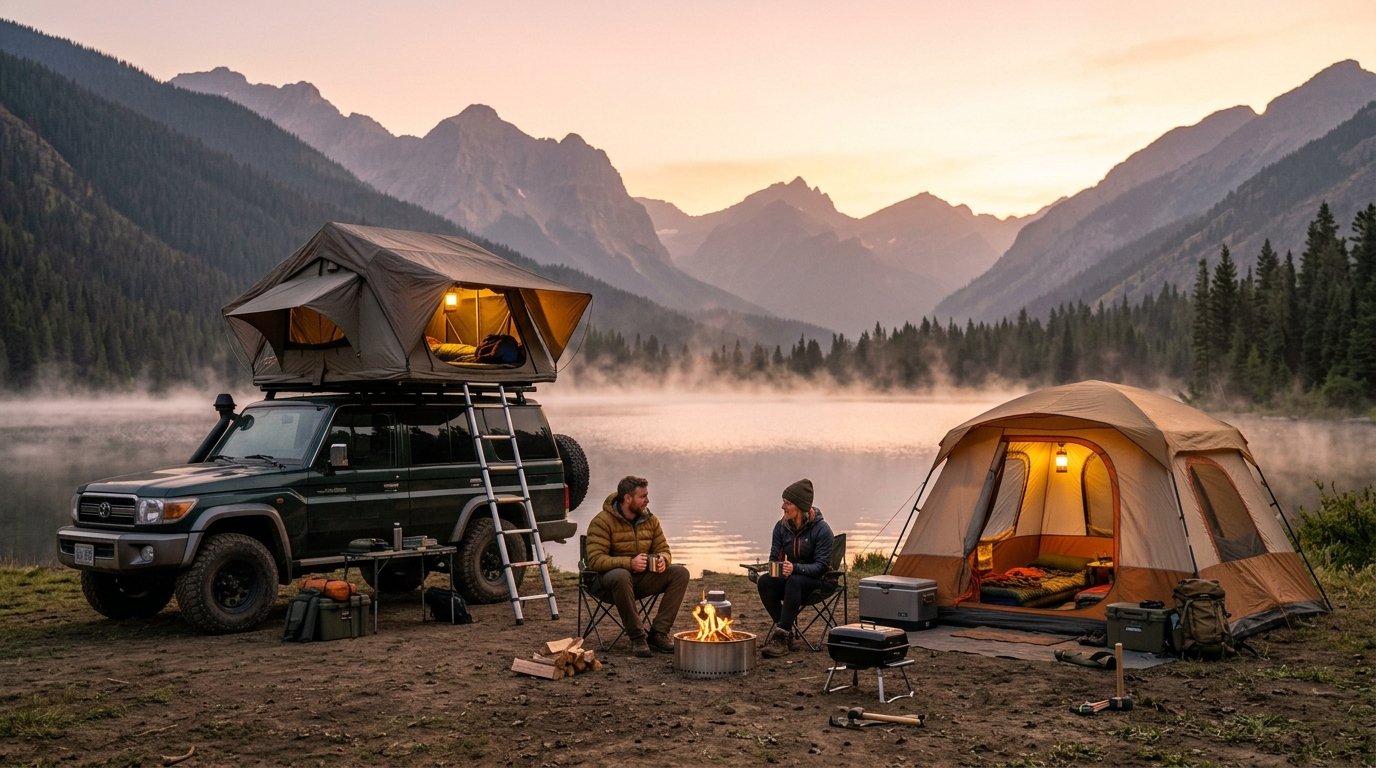
Rooftop tent vs ground tent overlanding is a choice that shapes how you travel, camp, and enjoy every off-grid mile. For overlanders who care about real-world comfort, vehicle handling, and modular camp systems, the right decision means more than just picking a place to sleep.
Key Takeaways
- Hard-shell rooftop tents deploy fast and keep you above the mud but impact fuel economy and limit roof storage.
- Ground tents cost less, offer flexible base camps, and preserve vehicle handling, ideal for modular setups.
- System-building—combining awnings, compact trailers, and tents—delivers comfort and flexibility for smart overlanding.
Table of Contents
Rooftop Tent vs Ground Tent for Overlanding: The Real Differences
Overlanders weighing rooftop tent vs ground tent overlanding face more than a question of comfort—it’s about efficiency, flexibility, and maximizing both your vehicle and your camp. Hard-shell rooftop tents deploy in thirty to sixty seconds and soft-shells in under two minutes, immediately offering a clean, dry sleep above mud and critters. However, they add fifteen to thirty percent to fuel consumption, significantly raise your center of gravity, and eat up precious roof space needed for awnings or recovery gear.
In contrast, ground tents are typically forty to fifty percent cheaper, offer true standing room and spacious interiors, and can stay behind as a base camp, freeing your rig for trail runs or resupply. Yet they need flat ground, can expose you to wet or buggy conditions, and take a few more minutes to properly pitch and pack.
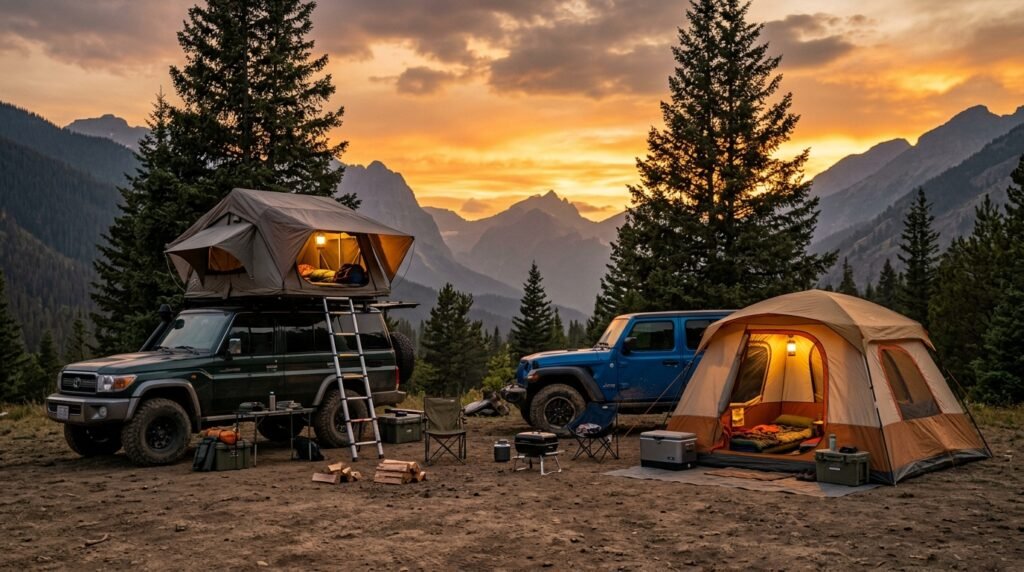
The smartest system often blends the two: keeping your roof clear for light gear or awnings, while leveraging a compact folding ground tent or a trailer-based RTT for longer camp comfort. For detailed gear reviews and ways to build a seamless camp setup, check our adventure motorcycle camping gear guide and related modular camping tips.
Finally, always match your tent style to your trip—short, solo missions might favor the onboard speed of a rooftop, but for family treks or big group journeys, the space and modularity of a ground tent can’t be beat.
When a Ground Tent Makes More Sense (and the Best Models Right Now)
Ground tents are far from old-school. For today’s overlander, they solve real problems RTTs can’t. Consider these scenarios:
- You want to run a lighter, lower vehicle and keep roof space for accessories.
- Your adventures include long base-camps or remote day trips away from camp.
- You travel with a partner or family and need real standing room.
- You want a shelter that transitions between vehicles or can be easily loaned out.
For solo explorers or pairs, the OVS Hubcentric is a top pick—it’s about $400, under 2-minute pop-up setup, cots-compatible and offers standing room. Larger groups or families can look to the GoFSR Hub 4 Double (about $900)—big enough for four, just as easy to pitch, and more comfortable in poor weather (see strong user reviews from The Adventure Portal).
The ability to leave camp set and drive away is a massive advantage, especially in unpredictable weather or wildlife areas, as noted by overland experts in Overland Journal. For extra protection against biting bugs, consider a high-strength mosquito repellent—a smart upgrade for any ground tent trip.
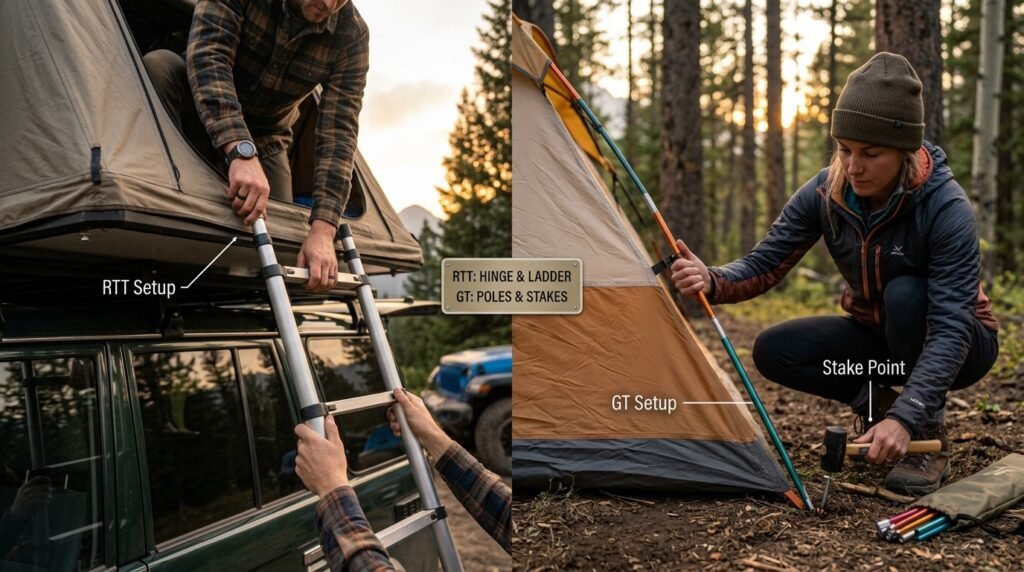
For an even more integrated camp, combine your ground tent with a dual-fuel camping stove and compact awning for full-service cooking and shade, mimicking the best features of an awning-centered camp setup—without sacrificing vehicle agility.
Don’t forget, ground tents can also extend your camp duration by being left up as a secure base while using your vehicle for day rides, bike adventures, or supply runs, an advantage rooftop tents simply can’t match.
Rooftop Tents: Pros, Cons, and Integration with Modern Overland Setups
Rooftop tents offer speed and comfort but come with trade-offs that can trip up even experienced overlanders. Let’s break it down:
- Pros: Deploy in as little as 30 seconds (hard-shell). Sleep above mud, insects, and critters. Bedding stays inside during transit, simplifying camp teardown. Ladder-access boosts security and works well on uneven terrain (just level your vehicle).
- Cons: Add significant weight (80lbs–180lbs) high on your rig—raising the center of gravity and reducing stability, especially for mid-size SUVs. They increase fuel consumption by 15–30% even when closed. All roof cargo space is lost, and gear access (especially in foul weather) requires climbing up and down a ladder—sometimes in the dark or wind.
Modern overlanders often want a hybrid camp: sleeping quickly when needed, but not sacrificing comfort or flexibility for the sake of speed. Solution? Build an awning-centered camp setup. Attach a swing-out awning (like the ARB 5-panel) to a trailer or directly to the vehicle. This creates covered living—and cooking—areas that keep you dry, shaded, and organized.
For a deep-dive on packing and awning compatibility, see our modular motorcycle packing guide.
| Feature | Rooftop Tent | Ground Tent |
|---|---|---|
| Setup Time | 30–120 seconds | 2–8 minutes |
| Cost | $1300–$4000+ | $400–$900 |
| Vehicle Handling Impact | High (15–30% higher fuel use) |
Low (none while driving) |
| Living Space | Low (usually just for sleeping) | High (standing room, boots off inside) |
| Flexibility (Base Camp) | No | Yes |
| Campsite Versatility | Good (on any surface) |
Requires flat ground |
| Weatherproofing | Excellent (in quality models) | Good (can depend on stakes/venting) |
| Integrated Storage/Bedding | Yes | No |
Practical integration means pairing your sleeping setup with a lightweight action camera or keeping portable gear off the roof for top-heavy handling—see our adventure action camera review for related tips.
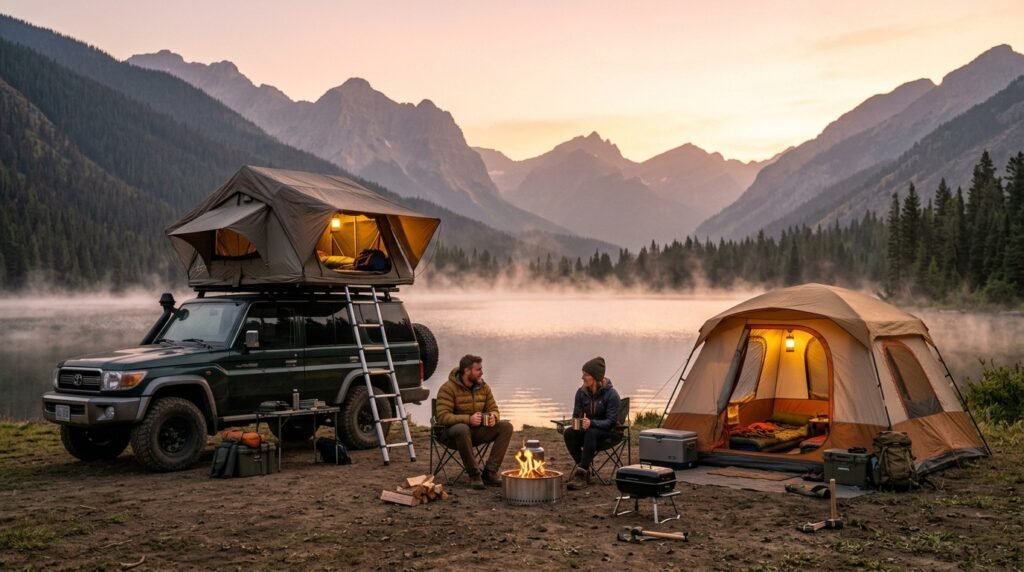
Among the most common pitfalls are ignoring your vehicle’s static and dynamic roof load ratings, overcommitting to a heavy RTT with poor rack support, and building a system that can’t adapt to exploring beyond the tent—like being stuck breaking down a roof tent for a short supply run. If in doubt, consult product manuals and the advice from expert tent comparison guides.
Lastly, make sure your mosquito protection and compact camp stove are dialed in for your setup type—if running ground tents, convenient stove gear such as the Gas One GS-3400P minimizes packing headaches and keeps your overland kitchen simple.
The Modular Approach: Pairing Tents with Trailer Systems and Awnings
Smart overlanders rarely go “all-in” on one style of tent. The modular approach means you can combine a compact trailer (sometimes with its own rooftop tent), a freestanding ground tent, and quick-deploy awnings to create a tailored camp. This grants faster setup, expanded living areas, and keeps your vehicle light for challenging terrain.
Here’s how it works in practice:
- Mount a hard-shell RTT on your trailer for couples or quick overnight stops.
- Use a ground tent or awning-centered room for longer base camps and communal spaces.
- Install a swing-out awning (like ARB 5-panel) on your rig or trailer for instant shade or rain protection.
- Keep your primary vehicle free of bulky loads so you can explore without repacking camp.
This modular camp model is especially effective on long trips, family expeditions, or when the weather turns fast. Modular awning systems can also double as a sheltered workshop for repairs, bike prep, or even as a hangout—maximizing comfort at any camp spot. For more on maximizing packing and gear, browse our overland essentials checklist.
If you ride or support motorcycles from your base camp, our guide to motorcycle GPS navigation mounts shows how modular setups translate smoothly to powered two-wheel travel as well.
This approach means your camp evolves with your adventures—keep it simple for quick overnights, or expand for week-long stays and group gatherings as needed. The result is less frustration, more comfort, and a system built for the way you actually overland.
Decision Guide: How to Choose the Best Sleeping System for Your Overland Goals
The best system blends your priorities: camp comfort, setup speed, weather hardiness, cost, flexibility, and how much gear goes on the roof. Here’s a quick decision matrix to help you choose:
- Want camp setup in under a minute? Hard-shell RTT wins—but adds weight and fuel use.
- Need to leave your sleeping area and take off for a trail or errand? Only a ground tent (or a trailer-mounted RTT) allows this.
- Hauling a family or group? Spacious ground tents offer better value for four or more.
- Trying to keep handling sharp on mountain passes? Avoid heavy tents on the roof; opt for modular gear or base-camp ground tents.
- On a tight gear budget? Quality ground tents deliver a better dollar-per-night value than most RTTs.
Key questions before investing:
- How many people will regularly use the tent?
- Do you want to leave your camp set while you explore with your vehicle?
- Will you camp in extreme wind, rain, or cold?
- How much roof weight is your vehicle rated for?
- Will fuel range, parking height, or trail balance be an issue?
As you refine your overland system, remember: setup speed, weather protection, and vehicle handling are critical—your choices will affect adventure range and how much you enjoy the journey. If you’re building out a motorcycle-specific setup, see our beginner adventure bike guide for proven gear combos.
Conclusion
Choosing between rooftop tent vs ground tent overlanding is all about priorities: do you value camp speed and sleeping above the ground, or is long-term flexibility, family comfort, and preserving vehicle performance more your style? With the right mix of tents, awnings, trailers, and smart gear, you can create a setup that evolves with your trips. Ready to build out your system? Review our guides, weigh the real-world pros and cons, and start with the solution that matches your next overland goal. Still deciding? Compare your needs and budget, then hit the trail with confidence.
FAQs
Are rooftop tents worth it for overlanding?
They’re worth it if you prioritize quick setup and sleeping above mud and critters. But expect increased fuel use, higher center of gravity, and reduced roof storage. Weigh these trade-offs against your trip style before investing.
What’s the best ground tent for overland travel?
The OVS Hubcentric is a highly rated pick for solo travelers or couples thanks to its fast pop-up, cots compatibility, and standing room. Larger groups should consider the GoFSR Hub 4 Double. Choose tents with solid weather protection and fast setup times.
Can I run both a rooftop tent and a ground tent?
Absolutely. Many overlanders combine a rooftop tent for fast stops with a ground tent for base camps or extra space. A modular system with a trailer and awning often delivers the best of both worlds.
What about fuel economy and handling with rooftop tents?
Rooftop tents can increase fuel consumption by 15–30 percent and make vehicles less stable, especially on narrow trails or in high wind. Always check your roof load rating and plan extra fuel stops.
How important is an awning in a modular camp setup?
Awnings greatly improve camp comfort by providing quick shade and weather protection. They’re easy to integrate with both ground and rooftop tent setups, particularly on a trailer system, and keep kitchen or lounge space dry and cool.