

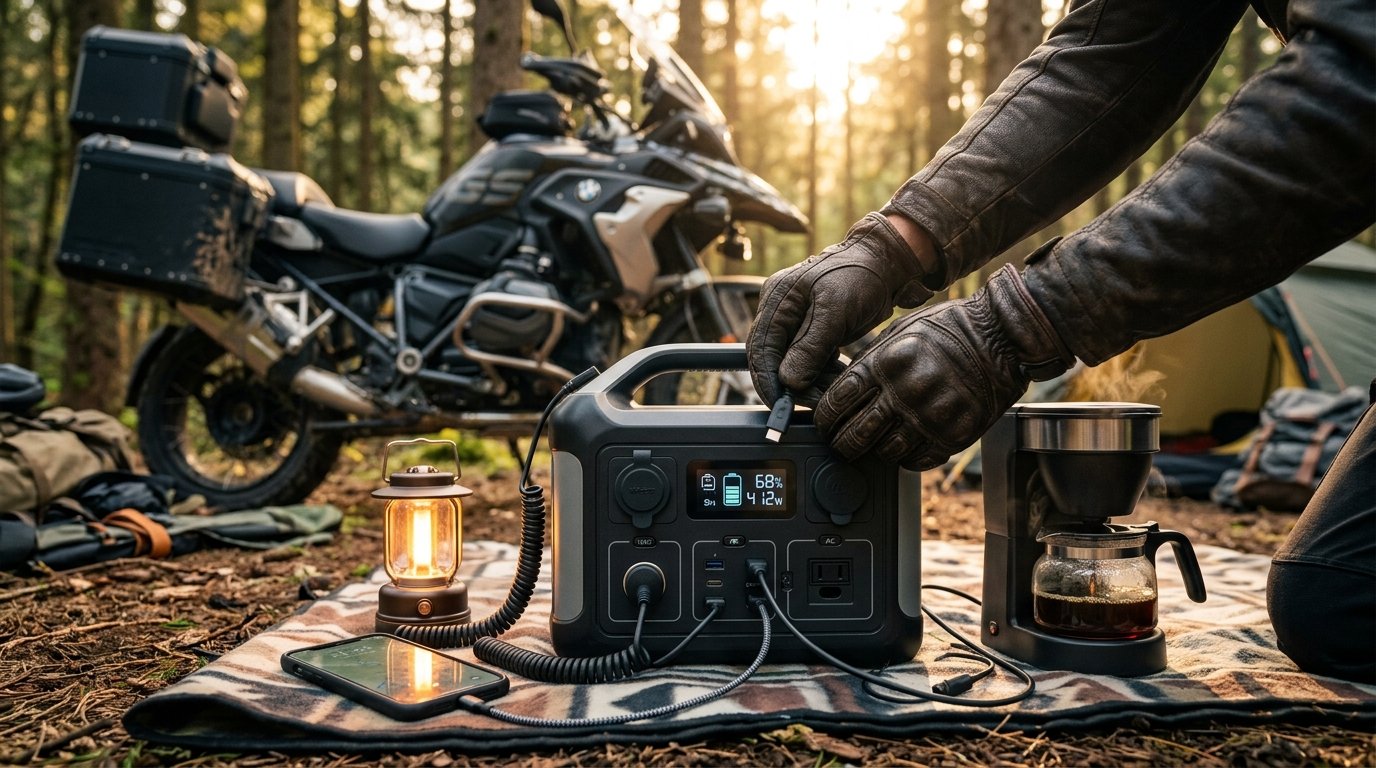
Motorcycle camping power station selection is a make or break for adventure riders who depend on charging phones, GPS units, cameras, and LED lights while truly off the grid. If you want real-world, compact, and reliable portable battery power without dead weight or bulky compromises, read on. Here’s a complete guide to choosing, packing, and using the right power station for off-grid motorcycle camping—plus hands-on product picks and realistic tips to avoid trip-ruining mistakes.
Key Takeaways
- Pick a power station under 5 lb and 150-250 Wh for all-weekend off-grid charging from your panniers.
- USB-C PD, 12V, and AC outputs with solar or fast charging are key for true ADV reliability—avoid outdated models.
- Rugged design and built-in safety matter as much as capacity. Protect your gear from vibration, dust, and storms.
Table of Contents
Why Motorcycle Camping Needs a Specialized Power Station
Adventure motorcycle camping isn’t car camping. Every ounce and cubic inch counts. You face real physical limits—your power solution must be compact, sub-5 lb, vibration-resistant, and tough enough for road, dirt, or rain. You need a motorcycle camping power station that fits in your pannier and will keep GPS, comms, phones, a GoPro or helmet cam, and crucial lights running for a two to three day trip—sometimes far from civilization.
As stated by experienced ADV riders, “For motorcycle camping you’ll want a power station that weighs no more than a few pounds, fits in a saddlebag or pannier, and can keep phones, GPS, cameras, a small fan or a 12‑V accessory running for a weekend.” [EcoFlow Camping Guide].
On rough routes, gear gets subjected to constant vibration, rain, heat, or accidental drops. Many generic battery packs are not built to handle this. Reliability means features like short-circuit protection, stable power delivery, and all the right outputs—from USB-C PD to a 12V car socket. And with phone, GPS, and camera batteries to keep charged, you can’t bet your safety or memories on something from the bargain bin.
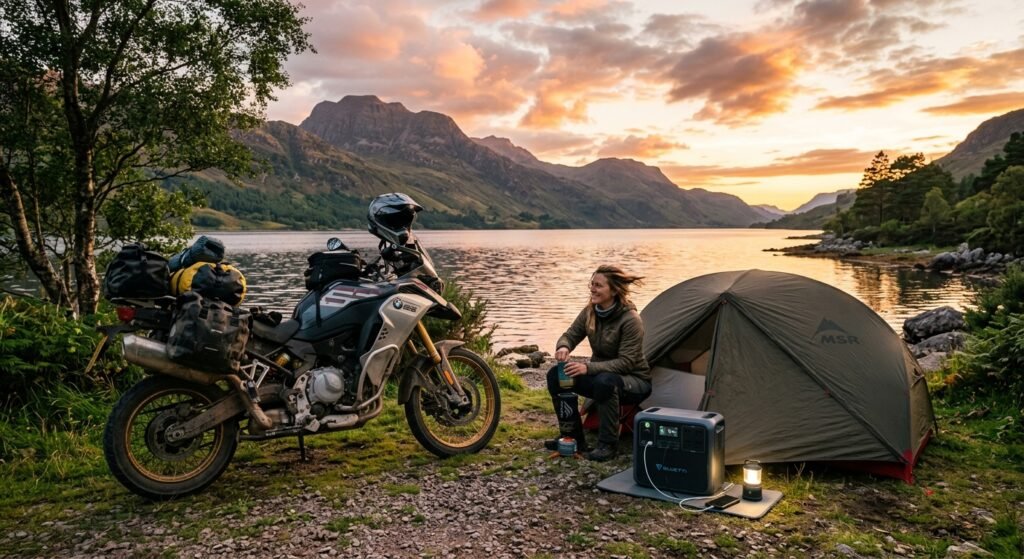
Step-by-Step: Selecting, Packing, and Using Your Motorcycle Camping Power Station
- Estimate Your Power Needs
Make a list of everything you’ll power: phone, GPS, helmet comms, GoPro/camera, maybe a headlamp or a small fan. Check each item’s battery (in Milliamp Hours or Watt Hours) and count the number of charges needed for your trip length. - Pick the Right Watt-Hour Range
For most solo ADV rides, a 100-200 Wh battery pack is perfect. “A 100-200 Wh pack covers phones, GPS, lights, and a low-watt fan. Aim for under 5 lb for easy handling.” (Zed14 Moto Camping Guide). - Packing for Ride Survival
Choose a model compact enough for your pannier or tail bag. Wrap in a padded weather-resistant pouch. Place the unit so it won’t shift or rattle, especially on off-road sections. Rugged designs with rubber feet or silicone bumpers are best. Cable management is key—use a small zippered pouch for essential charging leads. - Charging Devices & Unit
Use high-quality cables and test every output at home before your trip. For fast device charging, pick a battery with at least one USB-C PD port (18-60W). For longer stays, a fold-out solar panel (30-100W) can save your bacon—see compatible models below. When possible, ride with your power station topped up (charge from mains, a bike socket, or solar). - Safety & Maintenance
Never let your lithium battery fully drain; top up before it gets ultra-low. Avoid extreme heat (like closed, parked bikes in summer) and shield from water ingress. Use child lock or energy saving features if available. When storing after a trip, leave the power station at 60-80% charge in a cool, dry spot.
Looking for other ways to pack smarter and lighter? Check the Adventure Motorcycle Camping Gear Guide for expert packing tips.
For serious cold weather, consider pairing your battery pack with a USB-C heated vest to keep warm with minimal drain on your power bank.
Advanced Analysis & Common Pitfalls
Even experienced riders make mistakes when it comes to portable power. Here are the traps and how to avoid them—plus how leading compact models really stack up in real-world use:
- Overestimating Needs: Oversize stations are heavy and waste precious packing space. A 500+ Wh pack is overkill for most solo trips. You’ll curse extra weight every mile.
- Underestimating Solar Reality: Many “solar-friendly” stations struggle with low-watt panels. Look for units that actually support 30-100W quick input. EcoFlow River 3 Plus excels here. (Reference).
- Ignoring Output Variety: Forgetting about 12V, USB-C PD, or AC can ruin your setup. Do a device audit—GoPro, GPS, and some fan setups may require specific ports.
- Cheap Non-ADV Packs: Many budget packs lack dust/weather protection or overcurrent safety. Some have vague or misleading Watt-hour claims.
- Vibration/Water Damage: Standard “office” batteries can fail after rough trails or if they get even slightly wet. Rugged, rubberized finishing is worth the price for off-grid reliability.
| Model | Capacity (Wh) | Weight | Ports | Solar Input | Who It’s Best For | Pros | Cons |
|---|---|---|---|---|---|---|---|
| AFERIY Nano 100 | 99 | 2.4 lb | USB-A, USB-C, 12V, DC->USB | Yes, <30W | Minimalists, ultralight packers, 2–3 day solo trips | Extremely compact, light, rugged, covers device basics for up to 3 days | Not for AC devices, limited solar speed |
| Jackery Explorer 160 | 167 | 3.5 lb | AC, USB-A, USB-C, 12V | Yes, <50W | Budget focused, LED lights, fans, multi-device users | Budget, AC outlet, fits all panniers | No fast charging or LCD, not for high-draw AC |
| EcoFlow River 3 Plus | 256 | 5.5 lb | AC, USB-A, USB-C PD, 12V, LCD | 30W, fast recharge (<2hr) | Power users, remote long weekends, small group rides | LCD display, fast solar, more capacity, surge safe | Just over 5 lb, a bit bulky for minimal setups |
Real-world run time example: “AFERIY Nano 100…can charge your small devices like cell phone, communication device and camera batteries for about 3 days. Perfect for a long weekend of camping.” (Nano100 Review)
For more ways to avoid common moto-camping mistakes, don’t miss our adventure motorcycle camping checklist.
If you plan to run more than just the basics, see the tricks for optimizing charger usage in our motorcycle tour packing list guide.
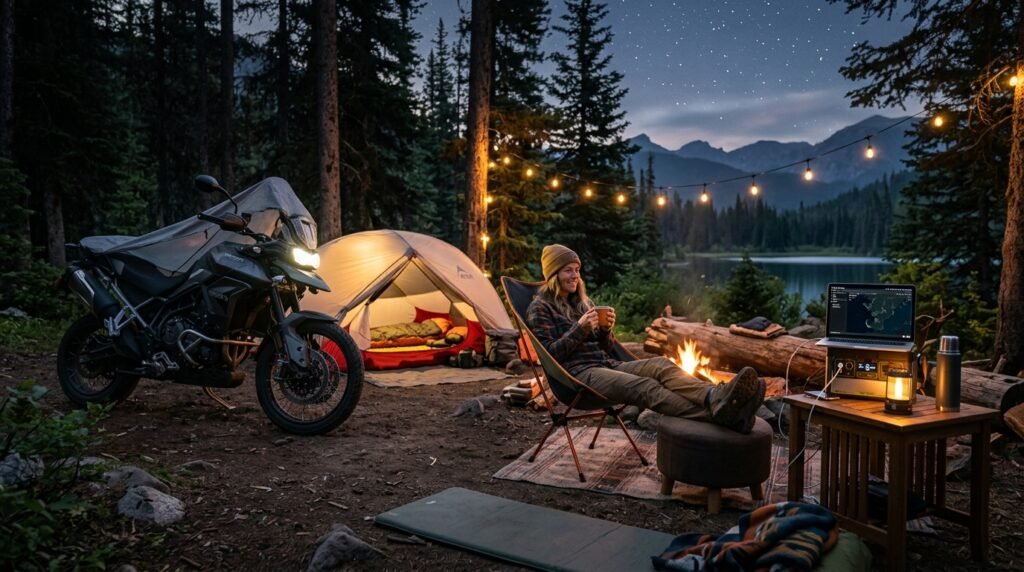
Conclusion
If you want off-grid reliability on your next ADV trip, your motorcycle camping power station must balance weight, capacity, ruggedness, and smart output variety. Models like the AFERIY Nano 100 or Jackery Explorer 160 are excellent, affordable options for most riders focused on core device charging for long weekends—while the EcoFlow River 3 Plus offers larger capacity and true solar rapid recharge for those who need a bit more. Don’t risk your safety or trip with a random pack. Motorcycle camping power station choice matters. Compare, pack intelligently, and enjoy the ride—your gear and memories will thank you.
Ready to level up your ADV power? Research, pick your pack, and prep for your best off-grid motorcycle camping adventure yet.
FAQ: Motorcycle Camping Power Stations
What’s the ideal battery capacity (Wh) for motorcycle ADV camping?
For most solo trips powering phones, GPS, helmet comms, and lights, a 100-200 Wh pack is best. It keeps weight under 5 lb and offers about 2–3 days of typical use. Power-hungry users or group rides may benefit from 250+ Wh, but expect extra weight.
Can I charge my power station from my motorcycle while riding?
Some stations allow DC charging (12V car socket) from your bike. Always check the input compatibility and ride with cables secured. For small stations, a USB power output from your bike is often enough for a steady top-up on long days.
Is solar charging really practical for motorcycle camping?
With a modern 30-100W compact foldable solar panel and a compatible power station (like EcoFlow River 3 Plus), you can get a nearly full recharge in 2-4 hours of direct sun. Weather, panel orientation, and shade all play a role—don’t rely on solar as your only option unless you know your route offers good conditions.
What safety features are a must for motorcycle camping power stations?
Look for overcharge, overdischarge, and short circuit protection. Ruggedized cases, shock-absorbing rubber feet, and sealed ports help protect against dust and vibration—a big deal for off-pavement riding.
How do I protect my battery pack from weather and theft?
Pack your station in a waterproof, padded bag (dry bag or hard case) and tuck it deep inside your pannier, out of sight at camp or roadside stops. If your station has a removable battery, take it with you when away from your bike for extra security.
—