
Table of Contents
Motocamping gear setup for minimalist riders isn’t just a trend—it’s essential for adventure motorcyclists who want to travel further, ride technical terrain, and camp comfortably with the lightest possible pack. If you’ve ever struggled with overloaded panniers, wrestled with bulky tents, or questioned every nonessential item in your luggage, this field-tested, minimalist motocamping guide is exactly what you need.
Key Takeaways
- A well-optimized minimalist motocamping gear setup can keep your base weight near 21 lb (total around 34 lb with food, water, and tools)—pivotal for technical rides on adventure and dual-sport bikes.
- Focus on modular, multi-use, compact gear: one-person tent or bivy, lightweight quilt, insulated pad, minimalist stove, and rackless ultralight luggage.
- Proper packing and smart swaps (e.g., leaving out the chair, using multi-purpose clothing) ensure you don’t sacrifice safety or comfort, even as you reduce bulk.
- Why Minimalist Motocamping Matters for Adventure Riders
- Step-by-Step Guide: Building Your Minimalist Motocamping Gear Setup
- Advanced Analysis & Common Pitfalls for Minimalist Motocamping
- Conclusion: Going Minimalist for Real Adventure
- Minimalist Motocamping FAQ
Why Minimalist Motocamping Matters for Adventure Riders
Every pound strapped to your adventure bike matters. Weight influences how your motorcycle handles rough trails, affects your safety, and ultimately shapes how far you can venture off the grid. A motocamping gear setup for minimalist riders is about finding the absolute essentials that still let you sleep comfortably, eat hot food, and stay dry—without the burden of bulky or redundant kits.
Studies and real-world testing show that a pared-down base kit can hit around 21 pounds, with a total system weight (adding food, water, essentials) of roughly 34 pounds [Research Report]. This “smallest, lightest options” setup means you don’t have to choose between performance and comfort when riding technical or remote terrain.
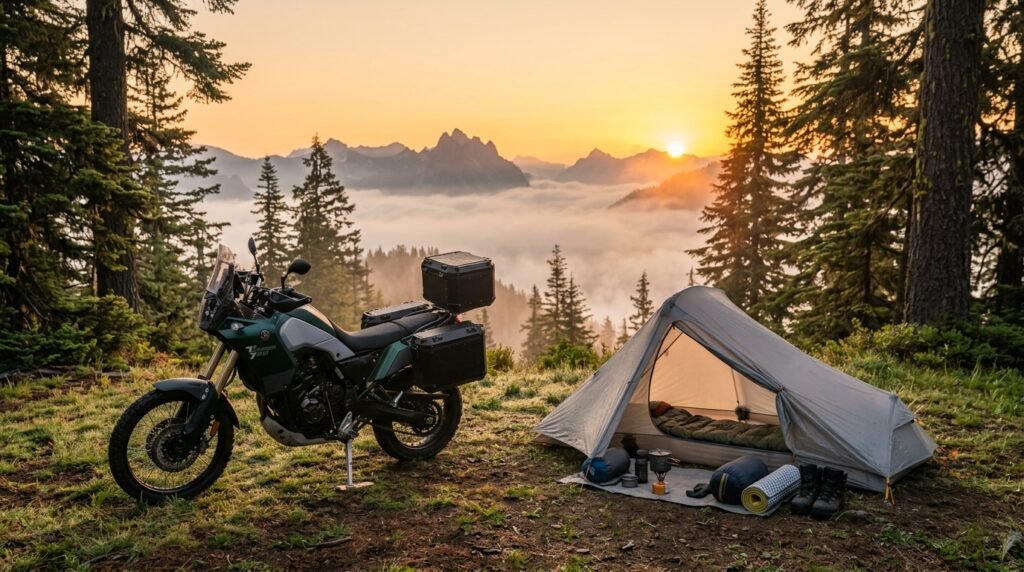
The minimalist approach isn’t austerity—it’s about practical, efficient packing. You rethink needs versus wants. That means a sub-three-pound tent, ultralight sleep system, packable cook kit, and ditching non-essentials like extra camp furniture. Why: the less you carry, the further (and safer) you’ll go. For deeper packing advice, check out our ultralight adventure motorcycle camping guide.
Step-by-Step Guide: Building Your Minimalist Motocamping Gear Setup
Riders who want a true lightweight motorcycle camping gear list for 2026 need to be deliberate. Here’s exactly how to streamline your gear without losing key comforts or safety net items.
Shelter: The Compact & Reliable Minimalist Tents
- Nemo Hornet 1P/2P: Weighs ~2 lbs, tiny pack size, freestanding, proven in wind and rain.
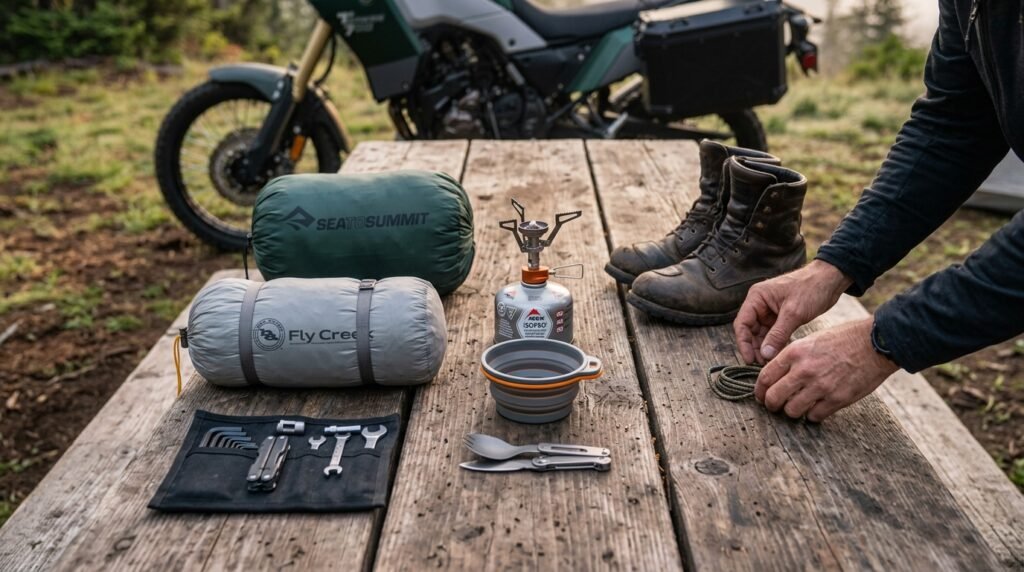
- Big Agnes Fly Creek HV UL2 Bikepack: Just over 2 lbs, “packed weight just under 3 lbs,” packs to 12.5”x6.5” (Research Source).
- Bivy Sacks (e.g. Outdoor Research Helium): Lighter than most tents, ideal for true minimalist rides but less room to move.
For more on tent selection and comparison, visit our motorcycle tent guide.
Sleep System: Lightweight, Modular, and Packable
- Mat: Nemo Tensor Elite Ultralight Insulated, Big Agnes Rapide SL, or Sea-to-Summit Synmat HL Duo (~800 g), all pack tiny but insulate well.
- Quilt: Nemo Pulse Quilt, Sea-to-Summit Ember Down Quilt. Quilts save weight compared to mummy bags and pack smaller.
- Pillow: Sea-to-Summit Aeros Down Pillow, Nemo Fillo Elite, or use a packable puffy jacket (see our puffy jacket picks) inside a stuff sack.
Cooking & Water: Ultralight, Minimalist Kits
- Stove: MSR Pocket Rocket 2, Gas One GS-3400P Dual Fuel, or Vargo Triad Multi-Fuel. Each weighs under 3 oz and packs nearly flat.
- Cookware: 750ml-1L titanium pot; doubles as a mug, bowl, and small storage container.
- Water purification: Always bring a compact water filter. See the top picks in our water filter guide.
Luggage: Rackless, Modular, and Waterproof
- Mosko Moto Reckless 10/40/80 or similar: Proven to fit a 21–34 lb base-to-total loadout. Modular “holster” bags save weight by eliminating racks—see our rackless panniers guide.
- Compressible Dry Bags: Use clothes stuff sacks or compression dry bags. Doubling as both luggage liner and on-bike pack organizer maximizes modularity. For packing more efficiently, check our modular packing system tips.
Optional but Useful: Accessories That Don’t Weigh You Down
- Camp chair (Nemo Moonlite, Helinox Zero): ~1 lb but optional—many minimalists sit on luggage or logs.
- Pump (Exped Widget Pump): Small, easy, but not strictly necessary; packing cubes or clothing sacks can double as pillows.
- Compact electronics: Choose compact chargers for GPS, inReach, or action camera if you’re filming or navigating.
Clothing: Strategic, Layered, and Dual-Purpose
- Pack just enough: two pairs of moisture-wicking underwear, base/mid-layer, rain shell, and a light down jacket or heated vest (see above). Ride in one, pack the other.
- Skip jeans or cotton—the key is synthetic fabrics that wash and dry fast, offering comfort both on and off the bike.
Need a downloadable list? Our motorcycle camping gear essentials guide provides a version you can print and check off.
Advanced Analysis & Common Pitfalls for Minimalist Motocamping
Even the best ultra light motocamping setup comes with trade-offs. Here’s what adventure riders should look out for—plus a direct comparison of minimalist vs. standard setups:
| Category | Minimalist Motocamping | Standard Motocamping | Pitfall or Trade-off |
|---|---|---|---|
| Tent/Shelter | 1-person tent/bivy, sub-3 lb | 2-3 person tent, 5-7 lb | Less room for gear, less headroom for bad weather days |
| Sleep System | Pad + Quilt, ultralight pillow | Full mummy bag, thick mat, large pillow | Quilt may be colder in wet/foul conditions |
| Luggage | Rackless soft bags, 10-40L per side | Hard panniers or duffels, 60-80L+ | Less protection in crashes, more discipline needed to pack light |
| Comfort | No excess items, may skip chair/table | Extras packed for comfort (chair, large lantern, etc.) | You give up some luxuries (chair/table/space) |
| Cooking | Micro-stove, 1-pot, minimal utensils | 2-burner, pots, pans, full kitchen | Only basic meals possible—no gourmet in the wild |
| Weather/Emergency | Limited backup gear | Spare clothing, more comprehensive repair or survival kits | You need to plan carefully; less margin for error |
- Pitfall 1: A bivy or 1-person tent is fast and light but not always comfortable for multi-day camps in sustained bad weather.
- Pitfall 2: Ultralight quilts can be drafty or cold if you move a lot or camp in wind; traditional bags are often warmer but bulky.
- Pitfall 3: Rackless minimalist soft panniers aren’t as theft-resistant as hard cases and require more discipline to pack evenly.
- Pitfall 4: Sacrificing extras (camp chair, compact lantern) saves space, but comfort and morale can suffer on long, rainy layovers.
- Pitfall 5: Less redundancy means you must double-check every item. Forgetting a simple multitool or repair kit has higher consequences when running minimal.
Protect yourself by testing new gear on an overnight trip close to home before long, off-grid rides. Our luggage setup tips can streamline your packing routine and help prevent most rookie mistakes.
Conclusion: Going Minimalist for Real Adventure
Building a purposeful, field-tested motocamping gear setup for minimalist riders sets you up for real exploration off the beaten track. Ditch the dead weight, lean into compact and modular gear, and pack only what earns its way on every ride. Be methodical: plan, test, and review your loadout often. With practice, minimalism becomes second nature—and you’ll never want to pack heavy again.
Ready to put your new setup to the test? Download our camping checklist and plan a shakedown overnighter before your next big journey. Ride light—camp easier!
Minimalist Motocamping FAQ
How light can I realistically get my motocamping kit?
With careful gear choices, a minimalist base weight (excluding food, water, and tools) of 18–22 lbs is very achievable—34 lbs or less total is typical for real-world adventure setups. Prioritize ultralight tent/bivy, modular sleeping gear, and leave out redundant extras.
Is a bivy sack or tent better for minimalist motocamping?
Bivy sacks are lighter and pack smaller but offer minimal shelter in bad weather. For most riders, a 1-person tent strikes a better balance between weather protection and weight, while a bivy is best for fair weather or ultra-short trips.
What are some multi-use gear items to save space?
A heated vest can serve as both camp insulation and on-bike layer; a titanium pot doubles as a mug and bowl; a packable puffy jacket acts as a pillow in its stuff sack. Look for gear that serves at least two functions.
Do I really need to bring a camp chair?
Most minimalist riders skip the chair to save space and weight. Soft panniers, logs, or even a folded jacket make decent seats. If camp comfort is a must, look for chairs under 1 lb like the Nemo Moonlite or Helinox Zero.
How can I stay safe with less gear?
Always carry at least minimal first aid, water purification, and repair kits. Leave redundancy at home but don’t cut safety corners. Test every setup close to home before venturing far. Using our packing list can help you cover all bases without excess luggage.