


Crash detection motorcycle helmet technology has rapidly become a must-have for solo touring riders who want effective, real-world emergency response and reliable group communication on any remote trip.
Key Takeaways
- Crash detection in motorcycle helmets and intercoms offers instant SOS messaging with location, providing life-saving help for solo riders.
- Systems like Cardo Packtalk Pro deliver hardware-based accident detection, large group mesh comms, and robust waterproofing.
- Choosing between modular intercoms and all-in-one smart helmets comes down to group size needs, feature set, app dependencies, and real-world reliability.
Table of Contents
Why Crash Detection Technology Matters for Solo Motorcyclists
Riding solo means there’s nobody around to witness a crash or call for help. Remote touring or even backroad rides can become life-threatening if you go down unseen. The real-world risk: missing persons cases where solo riders weren’t found for hours—or even days—because no one knew where to start looking. That’s why motorcycle helmet automatic crash alert systems are a genuine game changer.

The newest generation of crash detection motorcycle helmet technology leverages built-in impact sensors and smartphone apps to detect sudden, violent movements that signal an accident. If the system confirms a crash, it automatically sends out an SOS alert—usually by SMS—to a designated emergency contact, including your GPS location. According to RoadRUNNER Magazine, this feature “significantly improves the chances of being found quickly, which could be life-saving in critical situations.”
This capability is not just “nice to have.” It can close the gap between an accident and rescue, especially for riders heading out solo, off-grid, or during multi-day tours. For more solo travel safety tips, see our guide for solo motorcycle adventure travel.
How Cardo Packtalk Pro Stands Out: Crash Detection & Communication
The Cardo Packtalk Pro stands out by pairing advanced hardware-based crash sensors with expansive group communication options. Unlike earlier models such as the Edge or Neo, the Pro integrates an internal inertial measurement unit (IMU) into a modular Bluetooth intercom that fits the helmet of your choice. This module, working alongside the Cardo Connect app and Cardo Cloud, enables “cardo packtalk accident detection” that actively monitors for impact events and rider inactivity.
When a crash is detected, the motorcycle sos alert intercom automatically pushes an SOS message—including your GPS coordinates—to your pre-selected contact. This hardware plus cloud approach reduces false alarms and doesn’t solely rely on your phone’s sensors.
What sets the Packtalk Pro apart isn’t just crash alerts. Its Dynamic Mesh protocol allows huge group intercoms—up to 31 riders linked, with easy auto-healing if someone drops out. Features like 45mm JBL speakers, Auto On/Off (so it never gets left draining in your bag), IP67 waterproofing, and over-the-air firmware updates round out a premium solution. For a budget alternative, check out our take on the Cardo Systems Spirit Motorcycle Headset.
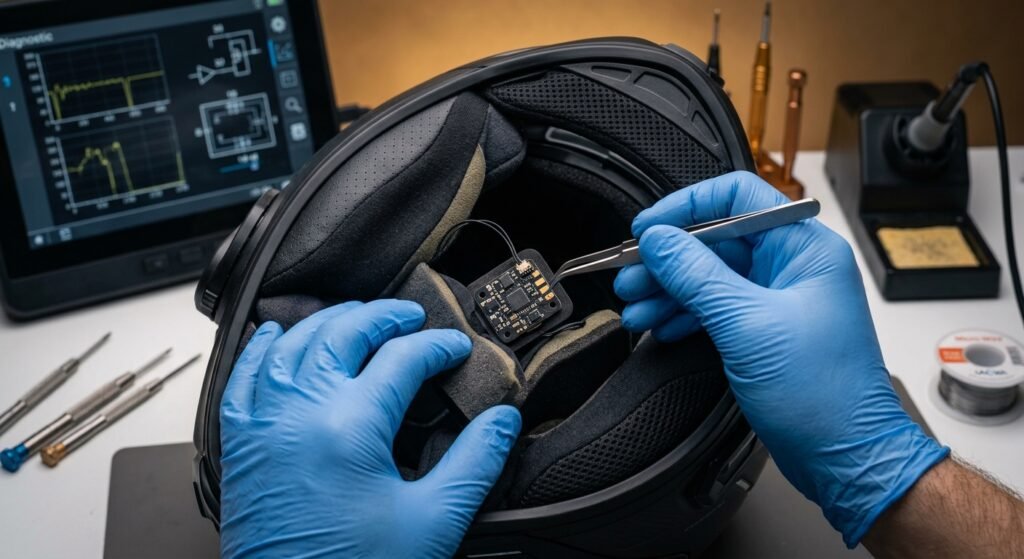
Warranty and support matter too. The Packtalk Pro offers a robust three-year warranty—ideal for riders who clock serious miles in all weather. Cardo’s own site confirms all these features. For group rides, review our Motorcycle Intercom Communication System guide.
The bottom line: Cardo Packtalk Pro is the only current Cardo with crash detection, setting the bar for both safety tech and group comms in a rugged, reliable intercom. Earlier models are missing these safety advances. For remote soloists or leaders guiding a group, this is a major leap forward.
Smart Helmets with Built-In Crash Alert – How Do They Compare?
All-in-one smart helmets, like the LIVALL MC1 PRO, bring crash sensors, Bluetooth intercom, and even action cameras into a single package. These “smart helmet with built in intercom” solutions are appealing if you want a fully integrated product with no extra install steps. Often, the crash sensor functionality works similarly: built-in IMU and fall-detect sensors trigger an SOS alert if a crash is registered.
However, there are key practical differences when weighing smart helmets:
- Group Communication Limits: Most smart helmets—like LIVALL MC1 PRO—support rider-to-rider intercom for smaller groups (typically 2 to 4 riders), less than modular mesh systems. See more in this LIVALL blog post.
- Phone Dependency: SOS and crash alerts rely on your paired smartphone having battery, being nearby, and maintaining cell signal. There’s no dedicated “on-unit” emergency messaging.
- Extra Features: Integrated helmets may add video recording, turn signals, and even crash sound detection. Some options support action camera compatibility if you prefer external recording flexibility.
- Upgrade Path: If technology changes or your helmet wears out, entire helmet replacement is required versus simply upgrading or repairing a modular system like Cardo’s.
On balance, a smart helmet’s main convenience is “out of the box” use—but you trade off easy group comms scalability, future upgrade flexibility, and possible app dependency quirks (e.g., notifications must be enabled, some phones delay alerts in background mode).
If you ride with more than just a partner or want maximum mesh flexibility for group rides, explore separate intercom options reviewed in our Best Motorcycle Intercom System 2026 comparison.
Choosing the Right Crash Detection Helmet Solution for Your Trip
For solo touring riders, choosing between a crash detection motorcycle helmet (with built-in intercom) and a modular system like Cardo Packtalk Pro comes down to:
| Feature | Cardo Packtalk Pro (Modular) | Smart Helmet (LIVALL MC1 PRO) |
|---|---|---|
| Crash Detection | Dedicated hardware IMU; works via app + cloud | Integrated sensor; works via phone app |
| SOS Process | Auto SOS to emergency contact (needs phone + signal) | Auto SOS to contact (needs phone + signal) |
| Group Communication | Dynamic Mesh up to 31 riders | Bluetooth intercom for 2-4 riders |
| Speaker Quality | 45mm JBL premium speakers | Standard helmet speakers |
| Upgrade Flexibility | Can move system between helmets | New helmet required for upgrades |
| Warranty/Support | 3-year warranty | Varies by helmet brand |
| Other Features | Auto On/Off, IP67 waterproof, voice control | integrated camera, lighting features |
Going modular offers more flexibility for existing helmets, extended group communication, and easier future upgrades. Going all-in-one is convenient and clean but typically less scalable or upgradable. Always review your warranty options and confirm features before you buy—especially for multi-day travel.
If you’re packing for a self-sufficient trip, consider adding a GPS satellite SOS tracker for backup in truly remote areas—or a smart battery charger to keep your important gadgets powered on tour.
FAQs: Practical Use, Setup, Limitations, and Peace of Mind
What if I crash where there’s no cell signal?
If your paired phone can’t get any signal, the crash detection alert won’t reach your emergency contact immediately. It will attempt to send as soon as you regain coverage. For extreme remoteness, consider adding a satellite tracker for backup SOS capabilities.
Does Cardo Packtalk accident detection drain my battery?
Cardo Packtalk Pro features Auto On/Off to preserve battery when not in use. With typical use, battery life is ample for long riding days, but always recharge before remote routes.
Can I use the crash detection motorcycle helmet system if I switch helmets?
Modular systems like Cardo Packtalk Pro can be moved between compatible helmets, while all-in-one smart helmets require you to buy a whole new helmet.
Are false alarms common with motorcycle helmet automatic crash alert technology?
Misinterpretations can occur (e.g., helmet dropped hard off bike), but improved algorithms and manual “false alarm” cancellation via phone reduce the risk. Always check and calibrate after installation.
How is this different from a standalone emergency phone app?
Phone-only apps rely solely on your phone sensors and may not detect helmet-specific head impacts. Hardware-based solutions like Cardo’s use dedicated sensors for more accurate and reliable crash detection.
Conclusion
Crash detection motorcycle helmet technology delivers a leap in personal safety for solo touring riders, transforming how quickly you can get help in an emergency. Whether you choose hardware-based modular systems like Cardo Packtalk Pro or an all-in-one smart helmet, the core value is automatic, proven SOS alerting that could save your life. Combine crash sensing with robust group comms and do your research: read reviews, confirm warranty, and don’t skimp on real-world test rides. For total security, pack a backup tracker and make crash detection part of your adventure gear plan. Invest in the right solution today—peace of mind on every mile starts with you.