

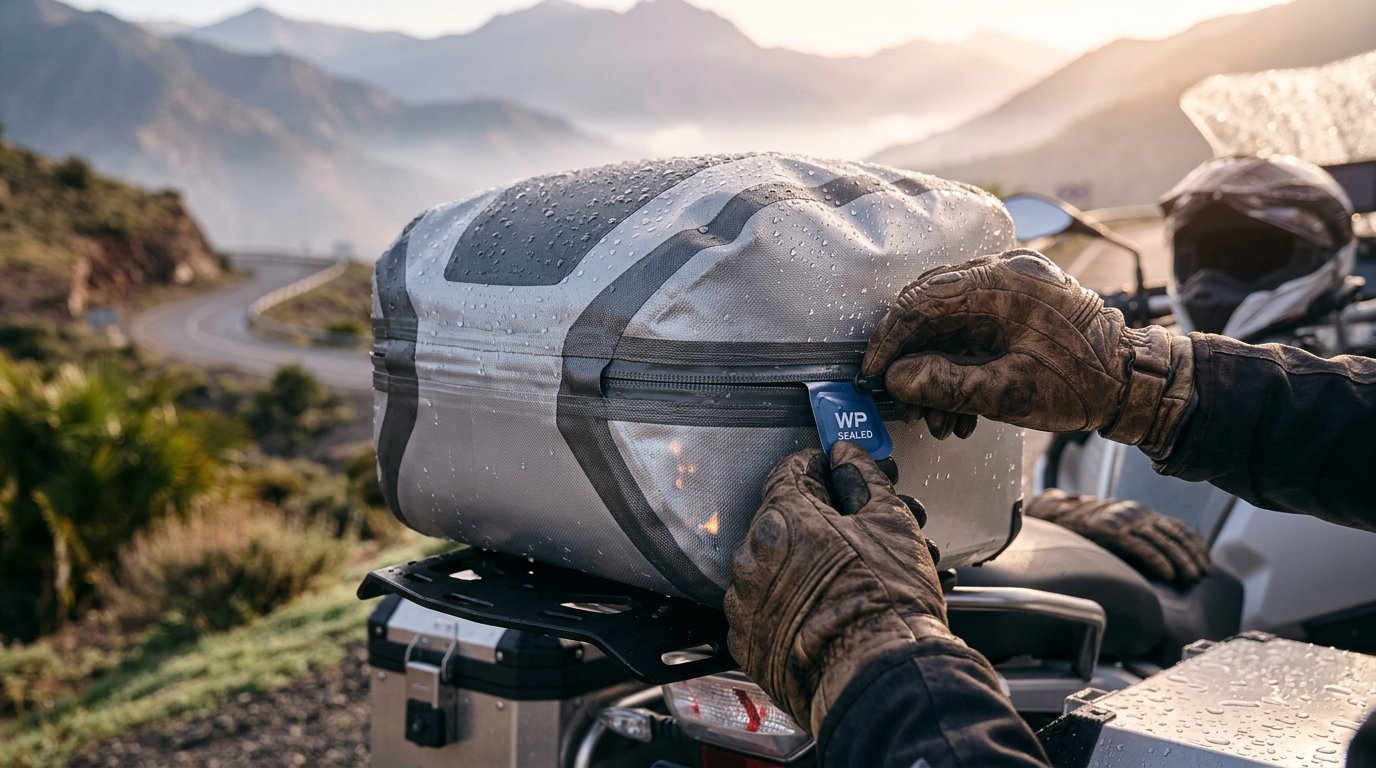
Laminated waterproof motorcycle luggage is fast becoming the go-to upgrade for riders moving on from bulky, leak-prone PVC panniers. If you’re tired of soggy gear and heavy bags that slow you down, read on for a realistic, no-nonsense guide to making the switch to lighter, more reliable laminated luggage for motorcycles.
Key Takeaways
- Modern laminated fabrics like X-Pac and Dyneema offer unmatched waterproofing, less weight, and greater long-term durability than traditional PVC motorcycle luggage.
- Welded seams and roll-top closures are critical; stitched bags—even with “waterproof” material—often leak under real-world touring conditions.
- Choose X-Pac for rigid, abrasion-resistant panniers and Dyneema when you want the lightest internal or secondary dry bags possible.
Table of Contents
Why Traditional Motorcycle Bags Fail in Wet & Rugged Conditions
Traditional PVC and stitched motorcycle luggage was long considered the standard, but for adventure or touring riders, the drawbacks have become hard to ignore. Old-school panniers and dry bags built from heavyweight PVC—or even coated nylon—can be heavy and awkward to position. Worse yet, these traditional bags often develop leaks where the fabric is punctured by stitching, making the “waterproof” claim fall short in practice. After just one wet or abrasive ride, many find water creeping in or seams beginning to fail.
PVC-based bags rarely match the performance of modern lightweight waterproof pannier fabric—the newer options not only save weight but also pack smaller and hold up to physical abuse far better. As documented in recent research, “RF- or heat-welded seams, unlike stitched bags with needle holes, are now common in premium waterproof motorcycle bags to achieve true leakproofing.” This technological leap is a game changer for long-distance and all-weather riders.
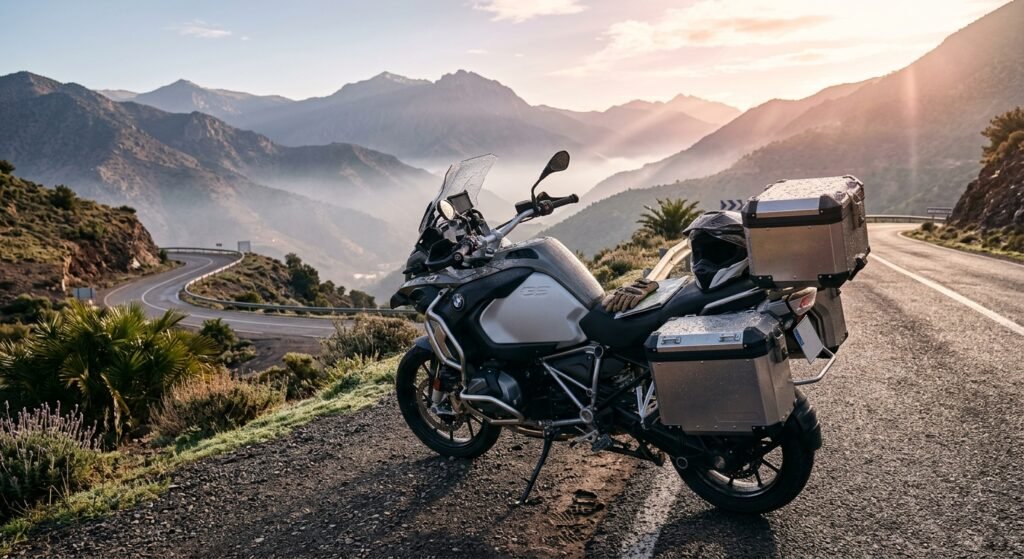
Laminated Waterproof Motorcycle Luggage: A Modern Solution
Laminated waterproof motorcycle luggage uses advanced fabrics that marry multiple technical layers into a single, unified textile. The most notable breakthroughs are X-Pac and Dyneema. X-Pac, a popular choice among adventure brands, combines a rugged face fabric, waterproof film, and a structural grid for rigidity—yielding panniers and bags that keep shape under a load, shed water, and resist abrasion. Dyneema, on the other hand, is an ultralight fiber renowned for its strength-to-weight ratio, ideal for riders focused on shaving every unnecessary gram.
Why does this matter on real rides? Laminated fabric luggage means less bulk, greater confidence in heavy rain, and less need for clumsy rain covers. According to research, “X‑Pac is a laminated, waterproof textile with added rigidity and abrasion resistance, while Dyneema is ultralight and ultra-strong but less rigid.” [1] Both fabrics are also better suited to modern, welded-seam construction, increasing overall longevity on punishing trips.
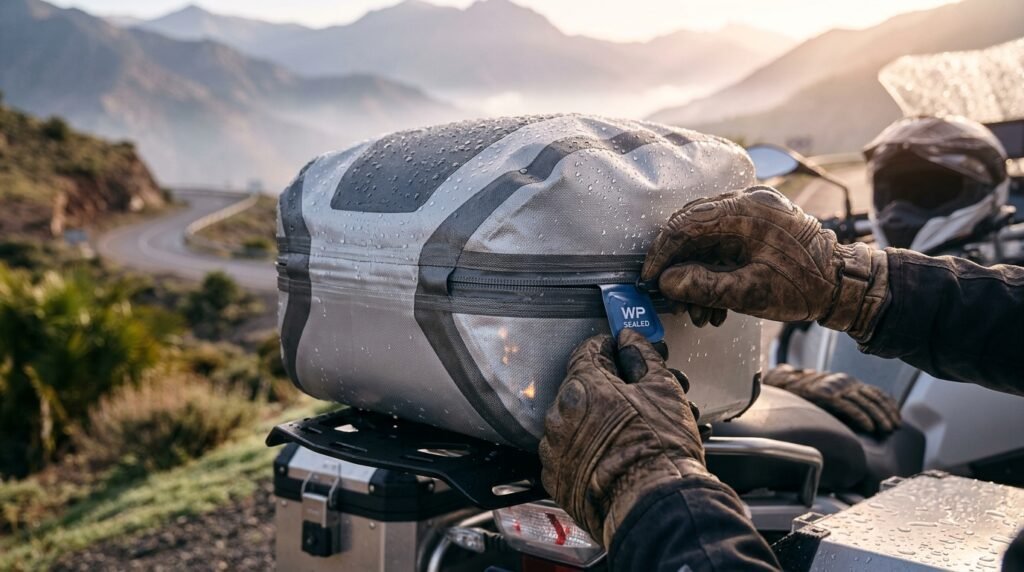
For the hands-on details of field use, many new X-Pac and Dyneema bags have roll-top closures, robust buckles, and even modular MOLLE panels for extra accessories. The result: lighter, drier, and less finicky luggage, especially when route conditions change from tarmac to trail. Check out our Adventure Motorcycle Camping Gear guide for more real-world packing solutions.
Head-to-Head: X-Pac vs Dyneema in Motorcycle Bags
Beneath the marketing, how do these fabrics perform directly against each other on motorcycles?
| Feature | X-Pac | Dyneema |
|---|---|---|
| Weight | Lightweight, but heavier than Dyneema (per thickness) | Lighter at equal thickness ([1]) |
| Rigidity | Excellent – holds shape when mounted externally | Less rigid – more flexible, better for inner bags |
| Abrasion Resistance | Very high. Ideal for panniers and exposed luggage | Decent, but less than X-Pac; can abrade over time ([2]) |
| Best Use Case | external panniers, roll-top dry bags, tank bags | internal dry sacks, pouch liners, secondary packing |
| Waterproofing | High, especially with welded seams | High, especially with taped seams and roll-tops |
In summary: If you need a x-pac dyneema motorcycle bag for mounting outside your panniers and surviving serious scrapes, go with X-Pac. For ultralight internal storage or under-seat compartments, Dyneema shines. As cited, “Dyneema is lighter at equal thicknesses, best for ultralight internal use; X-Pac offers more structure and abrasion resistance for external/contact bags.”
For a broader luggage system overview, see the Soft Panniers for Adventure Motorcycle guide.
What Makes Motorcycle Luggage Truly Waterproof? (Seams, Closures & Materials)
You can have the best fabric in the world, but true waterproofness depends on multiple factors: construction, closure, and even mounting style. Here’s what matters:
- Welded Seam Motorcycle Bag: Bags assembled with RF (radio frequency) or heat welding fuse the layers together, eliminating needle holes that stitched bags suffer from. Welded seams create a continuous waterproof barrier from panel to panel.
- Roll Top Motorcycle Dry Bag Material: Materials like X-Pac, Dyneema, or welded PVC are effective—but only if you use the closure correctly. The best roll-tops must be folded a minimum of three or four times and securely buckled. Skipping these steps can break the seal and let water in, even with a fully laminated bag.
According to research, “Many feature a roll‑top closure that must be folded three to four times and buckled to achieve a true seal.” [2] Practice closing and opening these bags before your trip. Even the best waterproof motorcycle luggage loses its edge if you rush packing at the campsite or roadside.
For additional protection against the weather, consider modular setups with bag organizers. See our Moto Pockets Stuff Bags guide for packing tips.
The Best Laminated Lightweight Waterproof Luggage Options for Adventure Riders
Let’s get specific. Here are proven ultralight waterproof luggage adventure bike options, each excelling in its category:
- Lomo Welded-PVC Soft Panniers: 30L per side, roll-top design, fully waterproof, minimalist. Best for riders on a budget who still demand reliable welded seams ([5]).
- Wolfman Rocky Mountain Expedition Panniers: RF-welded seams, 30–64 L capacity, trusted for long-distance adventure riders.
- UltraLiteSacks Roll-Top Dry Bags: Choose Dyneema CT5K for ultralight packing, or X-Pac UX10 if abrasion resistance is your top need. Both have taped seams and uncompromising roll-top closures ([2]).
- SW-MOTECH Drybags: 500D seam-welded PVC, roll-top closure, available in 8–70L versions. Convenient for modular and stackable setups ([6]).
- Nelson-Rigg SE-2005 Adventure Dry Bag: Heat-welded 500D PVC, rugged strap-and-D-ring mounting, 39L capacity. Great balance of price, size, and mounting ease.
For riders on challenging routes with frequent precipitation, this technical leap is hard to overstate. It’s now possible to run true expedition setups lighter than ever. For more insights, see our deep dive on Adventure Motorcycle Luggage.

How to Choose the Right Luggage for Your Bike and Riding Style
It’s not about hype—it’s about picking what fits your actual rides and packing style. Here’s a practical decision tree:
- If you want a bag mounted on the exterior, exposed to rocks or dirt, and need it to hold shape: Prioritize X-Pac, or the most abrasion-resistant laminated fabric you can find. Welded or heat-fused seams are non-negotiable.
- If your main concern is shaving grams for a hardcore offroad or long-distance trip, and the bag will be used mostly inside a larger pannier or duffel: Go for Dyneema for the internal liner or secondary dry bag.
- Choose welded seams & roll-top closures for all critical gear you need absolutely dry. Stitched bags are now mostly for economy use or low-risk scenarios.
- Consider mounting and modularity: Some adventure setups benefit from several smaller bags rather than giant duffels. Check if your luggage of choice is compatible with your racks or tail plate.
According to expert analysis, “Prioritize X‑Pac if you need a rigid, durable, fully waterproof exterior… and Dyneema if every gram counts and the bag will be used mostly inside a pack or as an internal liner.”
Need more strategies for packing efficiency and safety? Have a look at our motorcycle tour packing list recommendations and adventure motorcycle touring prep guide.
Frequently Asked Questions: Laminated Waterproof Luggage
Are all “waterproof” motorcycle bags really waterproof?
No. Many stitched PVC or nylon bags are only water-resistant in light rain or splashes. Modern laminated waterproof motorcycle luggage uses welded seams—this is critical for true waterproofing under heavy rain or river crossings.
What’s the difference between welded and stitched seams?
Welded seams use heat or radio frequency to fuse bag panels together—no stitching holes, no leakage. Stitched seams puncture the waterproof layer, allowing water to seep in over time.
How many times should I roll the closure on my dry bag?
At least three, ideally four full rolls, before buckling the bag shut. This ensures a watertight seal—anything less risks leaks even with a laminated dry bag.
How long do X-Pac or Dyneema bags last?
With proper care, several years of active use. X-Pac is generally more abrasion-resistant and can handle external abuse, while Dyneema may wear faster if exposed repeatedly to rough surfaces. Avoid dragging or scraping any bag unnecessarily.
How do I clean and maintain laminated waterproof motorcycle luggage?
Rinse off mud and dirt with clean water and mild soap. Avoid harsh detergents and never put them in a dryer. Store bags open and dry to prevent mold growth.
Conclusion
Modern laminated waterproof motorcycle luggage can transform your riding experience. The days of soaked clothes and cumbersome, heavy PVC bags are over. Choose the right fabric—X-Pac for external durability, Dyneema for ultralight packing—always pair with welded seams and a reliable roll-top closure. Make your next ride lighter, drier, and less stressful. If you’re serious about adventure touring, start upgrading your luggage system today.