
Table of Contents
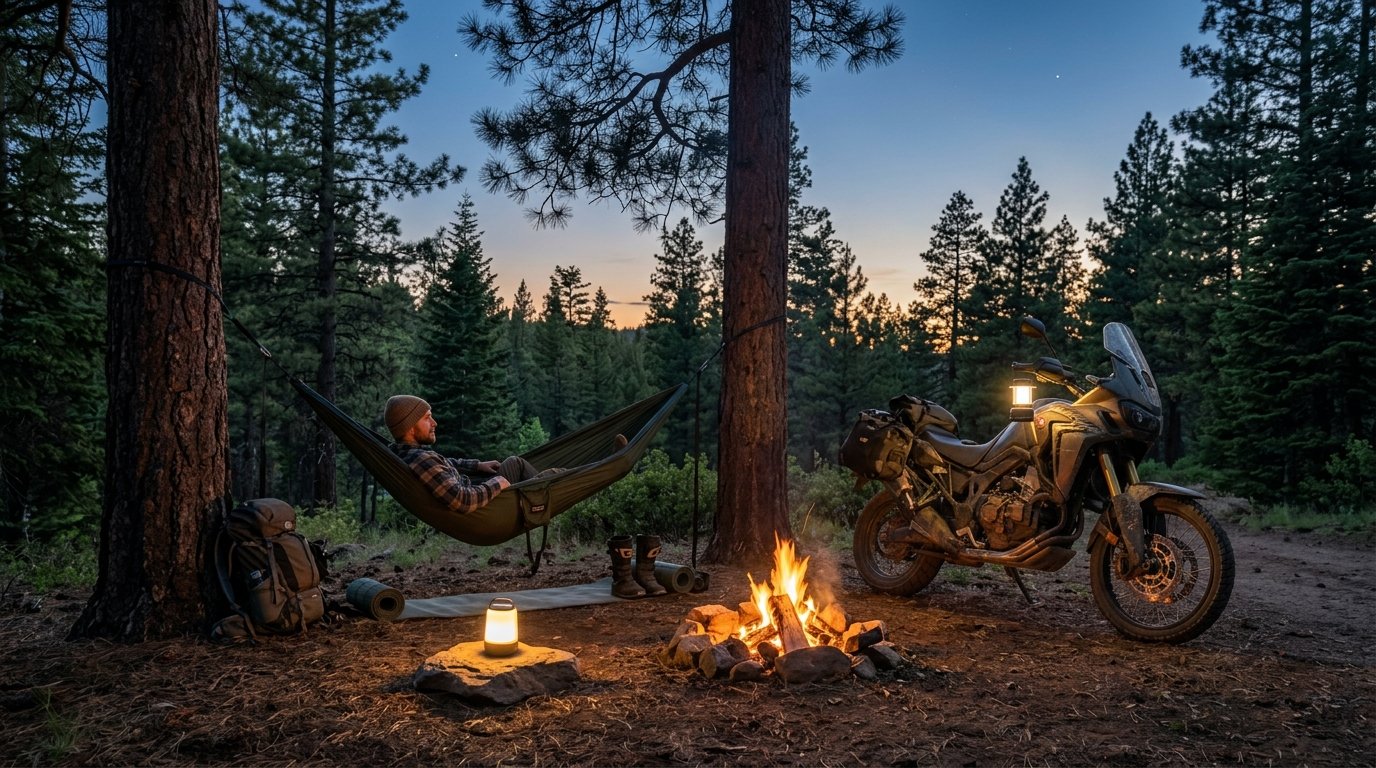
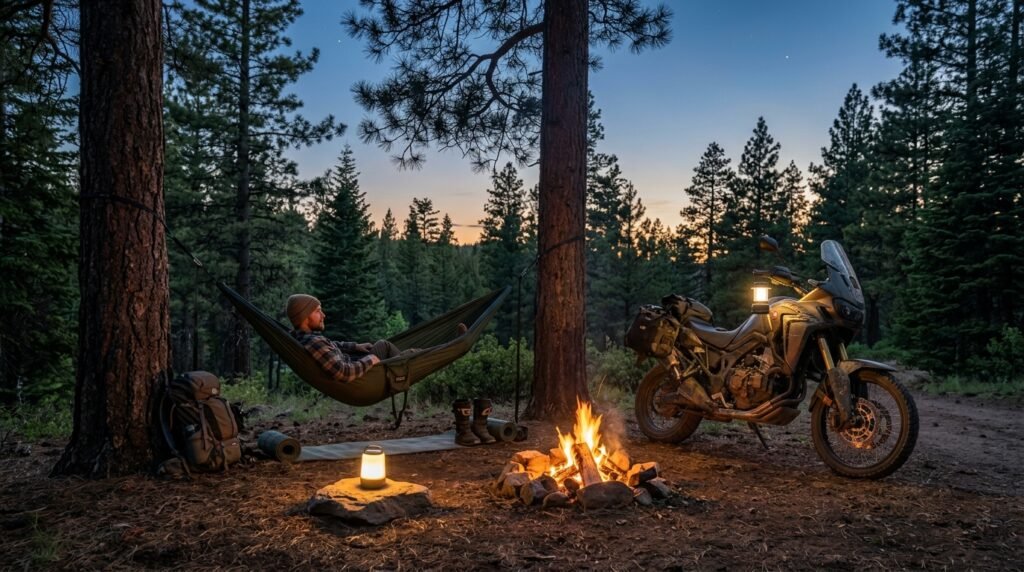
Motorcycle camping hammock setups are revolutionizing how ADV and dual sport riders camp, offering a compact, ultralight alternative to bulky tents that packs easily, sets up fast, and doesn’t compromise comfort for minimalism.
Key Takeaways
- Motorcycle camping hammocks minimize pack weight and bulk compared to tents, making them ideal for ultralight ADV trips.
- Many models weigh under half a kilogram and pack down smaller than a water bottle, perfect for limited luggage space on bikes.
- For wooded regions, a hammock offers fast setup, sleeping comfort, and weather protection—if you select the right features and pack the right accessories.
- Why Motorcycle Camping Hammocks Are the Ultimate Space Saver
- How to Choose a Lightweight Hammock for Motorcycle Camping
- Real-World Motorcycle Hammock Setups: What Works in the Wild
- Pros, Cons & Ideal Riding Scenarios for Hammock Camping
- The Best Lightweight Motorcycle Camping Hammocks in 2024 (Roundup/Recommendations)
- Essential Accessories & Packing Tips
- Conclusion
- Frequently Asked Questions
Why Motorcycle Camping Hammocks Are the Ultimate Space Saver
Many adventure and dual sport riders find that traditional tents add too much weight and bulk to their setup. With a motorcycle camping hammock, you eliminate the need for both a tent and a sleeping pad, saving valuable bag space and reducing setup time. Hammocks take up minimal room—many models fold into pouches barely larger than your fist—while tent poles and foam mats have awkward shapes and can be hard to strap on a bike securely.
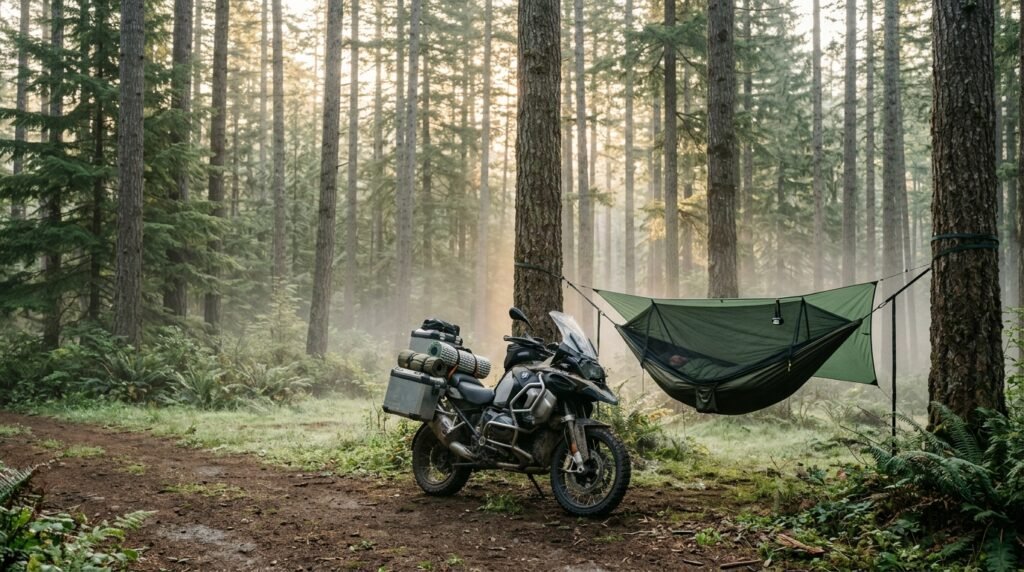
Whether you’re pushing into forested backcountry or sneaking camp in local woods, hammock camping for motorcycle trips lets you stay flexible. Models like the Travel Hammock Compact—at just 500g and 320cm—offer enough sleeping space without exceeding your ADV gear weight budget (source). Lightweight parachute nylon or mesh options not only breathe well but also dry fast, ideal after a rainstorm or humid night (source).
Key stats: Many motorcycle camping hammock models now weigh under half a kilogram and pack down to practically nothing, freeing your rear rack or panniers for food, fuel, or electronics (source).
How to Choose a Lightweight Hammock for Motorcycle Camping
Looking for the ideal ultralight hammock motorcycle camping system? Focus on these factors:
- Total system weight: Leading setups weigh under 400–500g—less than a pair of gloves. The Onewind Prism hammock, for example, weighs 240g for the bed, or about 400g total with straps (source).
- Packed size: Prioritize options that stuff easily into an 8×4 inch sack—small enough for a pannier or tail bag and drastically more compact than tent poles.
- Fabric and breathability: Parachute-nylon and 20D/30D monofilament meshes are strong, light, and dry quickly. Better breathability keeps you cool in muggy climates.
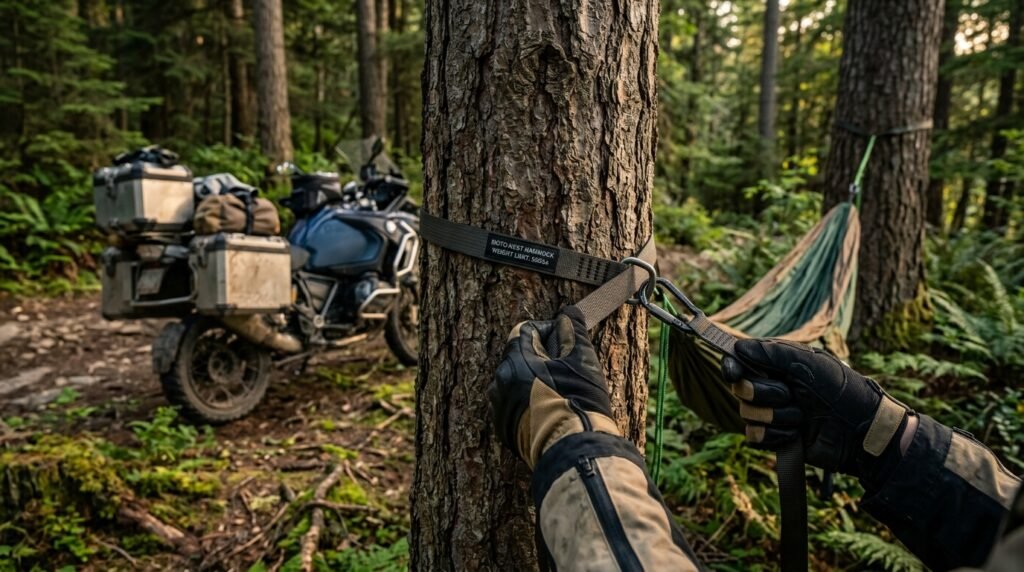
- Setup simplicity: Look for integrated suspension, fast-attach tree straps, and single-cord designs.
- Protection features: If you’ll camp in bug-heavy or wet areas, a mosquito net and rain fly are must-haves for a compact hammock ADV setup.
Finally, read field-use forums or video reviews. The difference between a hammock that claims “quick setup” and one that delivers can mean minutes more riding—or frustrating after-dark fiddling when you’re tired and hungry.
Real-World Motorcycle Hammock Setups: What Works in the Wild
What’s actually working for ADV and dual sport riders? Real user reports reveal key preferences:
- Onewind Prism Ultralight: Total setup under 400g, simple mesh bed and optional rainfly; riders praise the airflow and how quickly it dries after heavy rain.
- Travel Hammock Compact: Noted for its 320cm length and comfort for taller riders. Easy fit in standard panniers—common on multi-day trips where compact hammock ADV setups are essential (source).
- Leleka Pixy Ultralight: Super simple and can be set up in less than 2 minutes. Preferred by ADV riders for single-night wild camping (source).
- Budget Double Hammocks (like those at Lightweight Motorcycle Camping Gear): Hold up to 500lb, $24–$30, with basic tree straps; add-ons like mosquito net and rain fly are cheap, portable, and rider-reviewed as being surprisingly durable.
Accessories matter: Most field-tested motorcycle hammock setup lists include a bug net, quick-attach tree straps, compact tarp, and sometimes a light underquilt for cold. Many riders also carry a high-DEET mosquito repellent for true bug season.
Video reviews and rider blogs often show hammocks being set up in under 90 seconds. In humid regions, breathable mesh like Onewind’s Prism dries off before you pack up—ideal for remote ADV routes where you can’t wait for dew to evaporate.
- “A double-capacity motorcycle hammock that handles 500lb for only $24-$30, all featuring tree-strap kits, optional mosquito nets and rain-fly covers for protection, quick-setup designs.” (source)
Pros, Cons & Ideal Riding Scenarios for Hammock Camping
Hammock camping for motorcycle trips fits best where there are trees, mild-to-humid climates, and unpredictable overnight terrain. Here’s a realistic look at what’s great—and where you may hit obstacles:
| Factor | Hammock | Tent |
|---|---|---|
| Setup Time | 30-90 sec (with practice) | 5–10 min (ground+pad+tent) |
| Packed Size | 8×4 inches | 12–18 inches (poles) |
| Weight (system) | 400–500g | 1.5–2kg |
| Tree/Anchor Availability | Essential | Not needed |
| Ground Comfort | Perfect on rocky, sloped, wet | Needs level, dry ground |
| Cold-Weather Limit | Requires extra underquilt/insulation | Easier to insulate |
- Where hammocks shine: Forests, riparian corridors, mountain passes, rainy or humid conditions, “stealth” camping, and when you want to strike camp instantly to get back on the road.
- Common drawbacks: Treeless plains, urban settings, or windswept deserts—no trees means no sleep. Colder areas may require an underquilt or extra insulation for true comfort.
Expert rider tip: Always scout your routes for tree density if you plan to hammock. As backup, stow an emergency bivy or groundsheet for emergencies.
The Best Lightweight Motorcycle Camping Hammocks in 2024 (Roundup/Recommendations)
Here are top picks for ultralight hammock camping and compact hammock ADV setups this year. Each model listed focuses on minimal weight, packed size, and proven performance for motorcycle travel:
- Onewind Prism Hammock: 240g bed, ~400g system, see-through and super breathable mesh; 8×4 inch pack size; fast setup. Cons: Less insulation, best for warm/hot weather. (source)
- Travel Hammock Compact: 500g, 320cm length, parachute nylon, lots of color options; fits taller riders; easy to stuff or compress. Cons: Rainfly/mosquito net may be extra. (source)
- Leleka Pixy Hammock: Ultralight at ~400g, simple build, reliable for repeated setup/takedown, used by NZ adventure riders on multi-day trips. Cons: Limited U.S. availability. (source)
- Generic Double Hammocks (with tree straps): 500lb+ capacity, $24–$30, often sold with add-on tarps and nets, no-frills but sturdy; ideal for budget ADV. Cons: Basic design, ventilation varies. (source)
Want more advice on packing smarter for extended moto trips? Check out our comprehensive ultralight motorcycle camping gear guide.
Essential Accessories & Packing Tips
A fully functional motorcycle hammock setup for ultralight ADV trips should include:
- Tree straps: Flat, wide, adjustable—essential for fast, bark-friendly suspension and easy placement.
- Mosquito net: Absolutely necessary in summer or in areas with lots of bugs—some models have built-in or zip-on options.
- Ultralight tarp/rain fly: Weighs little, packs tiny, and keeps you dry during surprise downpours.
- Underquilt, insulated pad or liner (for cold): Prevents “cold back” even in summer at elevation.
- Packing strategy: Store your hammock, suspension, and fly in a single compression bag. Slot into panniers or even a small side pocket. Use waterproof dry bags for security during rain or river crossings.
For longer rides and versatility, mix in a portable camping stove and opt for compact tools like an electronic earmuffs or a heated vest on cold mornings. You can fit all essentials for a 3-night hammock trip—including insulation and cooking gear—into a mid-size tail bag or pannier.
“All featuring tree-strap kits, optional mosquito nets and rain-fly covers for protection; quick-setup designed for motorcycle travel” (source).
Need more next-level packing strategies?
See our moto luggage organizer tips for small bikes, or check out this motorcycle camping luggage setup guide for even tougher ADV environments.
Conclusion
Motorcycle camping hammocks are revolutionizing multi-day rides for ADV and dual-sport adventurers who need to minimize gear weight without giving up sleeping comfort or shelter. By choosing an ultralight hammock system with key accessories, you gain flexibility, speed, and freedom—provided you’re camping where trees are plentiful. For anyone looking to ditch tent bulk, real-world rider reviews and product stats confirm the motorcycle camping hammock should be at the top of your ultralight moto packing list. Try one on your next journey and experience a more agile, enjoyable camp routine.
Ready to upgrade your sleep setup? Start by picking a lightweight hammock and essential accessories, and plan your next ADV route through tree-lined countries. Grab our ADV camp checklist now and ride ready.
Frequently Asked Questions
Can I use a motorcycle camping hammock anywhere?
No. You need sturdy trees (or anchor points) about 10–14 feet apart. Open plains, deserts, or urban lots generally aren’t suitable unless you pack additional supports—which adds weight.
What if it gets cold at night?
You’ll need an underquilt, insulated sleeping pad, or a warm sleeping bag. Hammocks can feel much colder than tents due to airflow underneath your body. Advanced users often bring an ultralight quilt just in case.
Are hamocks really more comfortable than tents?
For many riders, yes. Hammocks eliminate bumpy, rocky or muddy ground, and provide a natural sway that helps some people sleep better. Tall or side-sleepers should look for longer hammocks or test before a multi-night trip.
Do I still need bug protection?
Absolutely. Even a light breeze won’t keep all insects away. Opt for a model with a built-in net or pack a separate mosquito mesh. Don’t forget spray repellent for setup/takedown time—see our review here.
How do I pack a hammock kit for longer motorcycle trips?
Store your hammock, straps, fly, and bug net in a single compression dry bag. That keeps everything together and fully waterproof. For long ADV routes, check out our motorcycle luggage organizer system.