

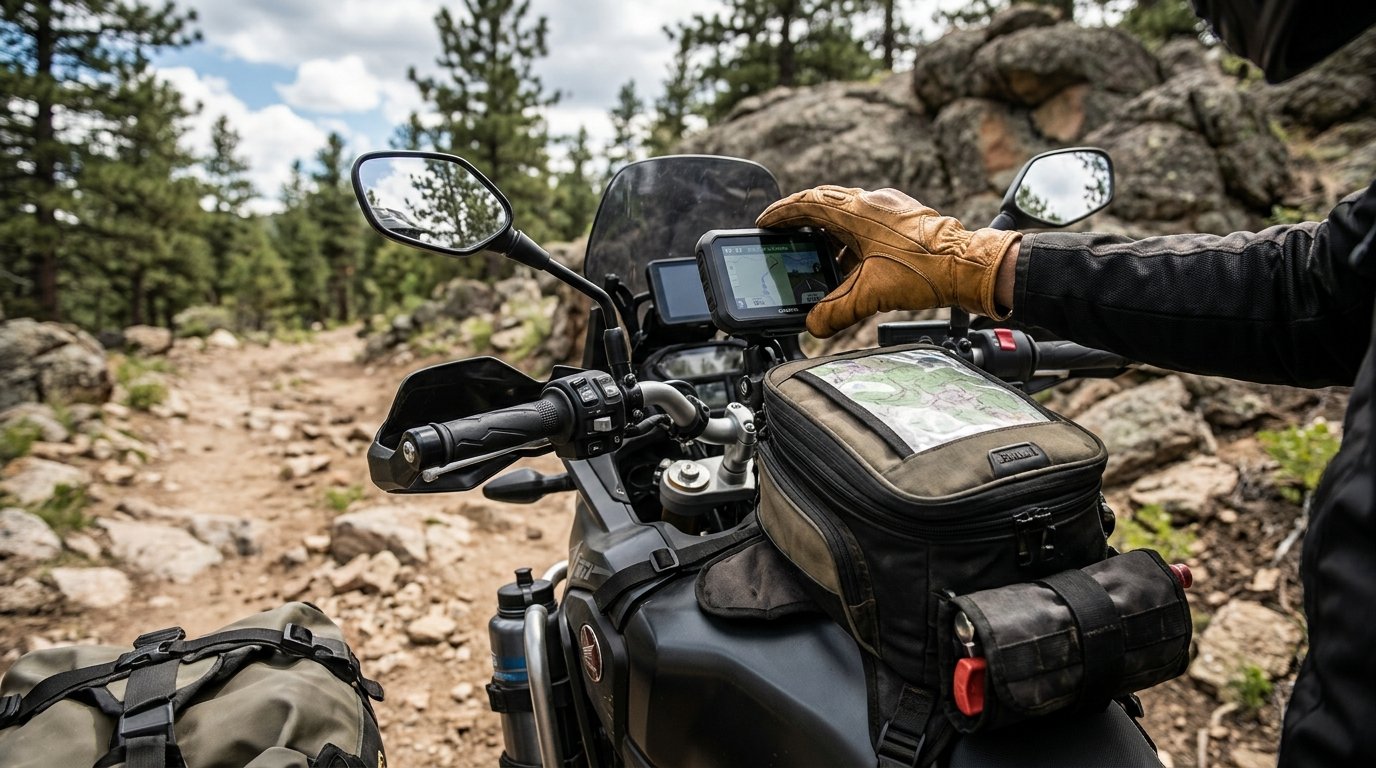
If you’re planning your first overlanding motorcycle expedition or looking to upgrade your existing setup, field-tested packing and gear strategies are crucial. Whether you’re a seasoned ADV rider or preparing for your first multi-day adventure, dialing in your gear, luggage choices, and on-the-ground systems will make the difference between a successful journey and hard lessons learned miles from help. This guide covers tried-and-true packing, modular gear selection, and realistic solutions for unsupported motorcycle overlands in real-world conditions.
Key Takeaways
- Weight distribution, self-sufficiency, and weather-ready packing are critical for remote motorcycle overland travel.
- A modular mix of protective gear, ultralight camping equipment, compact cooking gear, and repair tools covers nearly any terrain.
- Systems for quick access and field repairs can make or break a trip; personalization is mandatory based on season and destination.
Table of Contents
What is Overlanding on a Motorcycle?
Overlanding on a motorcycle means traveling unsupported across remote terrain with a strong focus on self-reliance. It’s different from standard road touring because it puts you far beyond cell service, paved roads, and convenience stores—demanding you carry everything to eat, sleep, ride, and repair on your own. Not only do you plan for adventure, but you also prepare for changing weather, mechanical breakdowns, and logistics like water, fuel, and shelter. True motorcycle overland travel challenges your ability to adapt, improvise, and endure, often in harsh or variable environments where resources are scarce and help can be days away.
Statistically, “Most overland motorcycling trips can be done with the minimum of camping gear, except when your ass is freezing off in the colder parts of the world.” [1]
Step-by-Step: Field-Tested Overlanding Motorcycle Setup
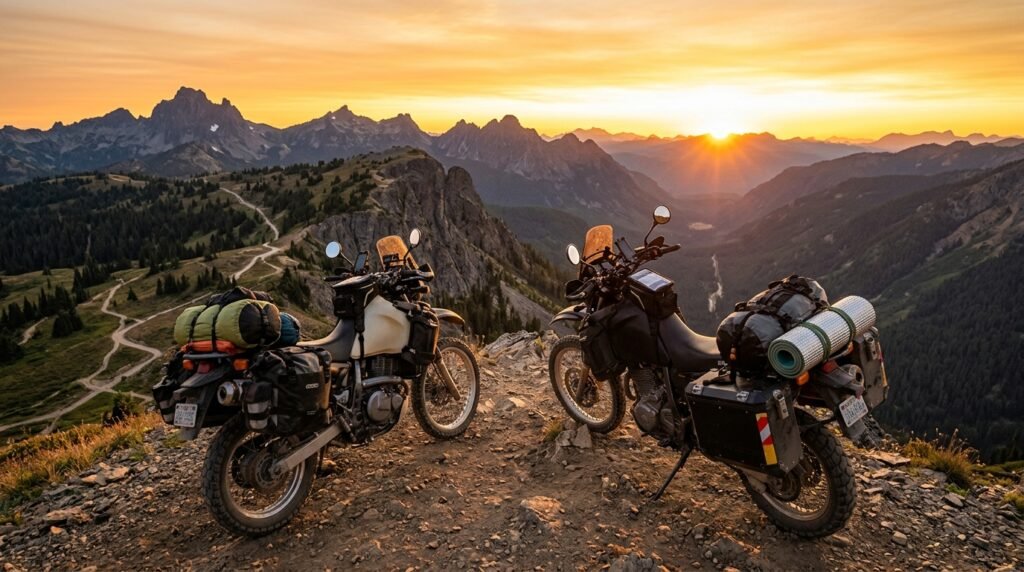
Outfitting your ADV bike for motorcycle overland travel means targeting reliability, comfort, and compactness. Here’s a proven system, honed by repeated field experience:
Step 1: Prioritize Protective and Weather-Ready Apparel
Start with a dual-sport helmet (removable sun visor, wide eye port for goggles) and a modular adventure jacket. Look for an internal sun shield, removable liner, and full ventilation. Overpants should be abrasion-resistant and waterproof. Use insulated mid-layers under your jacket for cold or mountain routes, and moisture-wicking base layers for sweat control in all seasons. Add a lightweight down jacket for cold evenings (packable down jacket for adventure travel). Don’t forget durable adventure boots, two pairs of gloves (one for warm and one insulated/waterproof), and a stashable rain shell for unpredictable storms.
For truly cold climates, a heated vest can be a gamechanger for warmth without adding bulk.
Step 2: Optimize Luggage for Stability, Access, and Modularity
Choose an ADV overland setup that matches your riding style and trip terrain. Hard case panniers are the go-to for theft resistance and wet weather if you ride lots of tarmac. soft panniers (40–50L per side, such as waterproof soft panniers for adventure motorcycles) are lighter for gnarly dirt, safer in a crash, and easier to lash or compress.
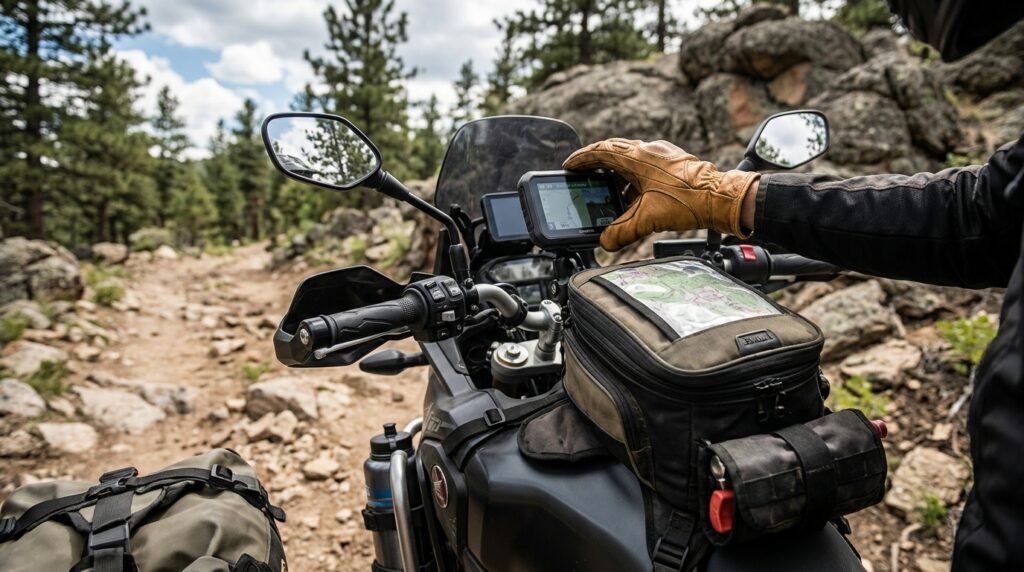
Pack heavy essentials low and forward—in panniers close to the bike’s centerline. Use a waterproof tank bag for fast-access items: wallet, phone, multitool, snacks, headlamp. A small tailpack or cargo net is perfect for camp shoes or extra fuel (spare fuel canisters for Himalayan 450).
- Hydration: Carry a 2-4L bladder plus a 1L collapsible backup.
- Fuel: On the most remote stretches, strap a 2L fuel bottle or small jerry can up high and to the rear so it won’t interfere with handling.
- Compression: Use straps or cinch-lock webbing to keep loads tight.
Step 3: Camping and Sleeping Systems for Comfort & Speed
A compact, weatherproof shelter is non-negotiable. Most overland riders rely on:
- Two-person, three-season tent (2kg or less, dual doors, side vestibules—for quick setup and minimal crawling at night)
- Alternative: A quality swag for fast, single-night use (ideal for mixed dirt and short stretches), or a dedicated hammock with bug net for wooded terrain
- Insulated air mattress (7–10cm thick, packs to 0.5L) and a compressible 3-season sleeping bag (+ silk liner for variable temperatures)
- Compact, rolling pillow or use a fleece hoodie in a stuff sack
For more hacks and detailed product picks, see our ultralight moto camping guide.
When packing, stow sleep gear inside a single dry bag so it stays waterproof and is easy to move on arrival.
Step 4: Compact Cooking, Food, and Water Purification
Go minimalist, especially if you spend most nights wild camping. A robust single-burner stove that runs on butane, propane, or even unleaded (like the Gas One GS-3400P dual-fuel stove) keeps your setup light. Pack a single 1.5L pot, collapsible cup, and minimalist utensils. Ration packs and instant oatmeal go a long way.
Always have a backup purification method—either a filter or water treatment tablets. If you’re in tick-countries or boggy terrain, strong mosquito repellent will make life bearable.
- Pro packing: Store your “kitchen” all in one dry bag or mesh pouch for speed
- Fire starting: Waterproof matches or a dual sparker, stored away from cooking gear
As one seasoned overlander put it, “Cooking equipment is pretty important for long-term and long-distance motorcycle travellers…stove, cooking equipment, a torch (with extra batteries), plates, cutlery and a towel” (source).
Step 5: Field Repair, Safety, and Emergency Preparedness
Your motorcycle expedition gear must address the most common failures: flat tires, lost fasteners, broken chains, or damaged controls. Carry:
- Patch kit, tire levers, CO2 or compact pump, spare tubes or tire plugs
- Wrenches sized for your bike, multitool, zip ties, clutch/brake levers, spare link, a few basic fuses and bulbs
Navigation is key—pack a GPS with offline maps or a rugged smartphone (see best navigation setups here), plus a paper map as backup. A satellite messenger or GPS satellite tracker is mission-critical for solo travel. Your first aid kit needs trauma supplies, not just bandages.
For an ultra-current checklist and more, see the Complete Motorcycle Trip Packing List.
Advanced Analysis & Common Pitfalls
Even experienced riders make preventable mistakes when prepping an overland motorcycle setup. Here are frequent issues, how they happen, and how to avoid them:
| Issue | Why It Happens | How to Prevent or Fix |
| Poor Weight Distribution | Panniers loaded with all the heavy items — especially high or far back on the bike — affect handling and increase risk of tip-overs. | Pack heavy gear low and forward. Use compression straps. Test balance before departure. Add or remove gear during test rides as needed. |
| Overpacking | Packing “just in case” leads to heavy, unwieldy bikes. Bulky, redundant gear wastes space and energy. | Lay everything out before packing. Ruthlessly remove duplicates. Run at least one dry-pack before hitting the trail. |
| Water/Fuel Shortages | Underestimating distance between refueling or sources, especially off-grid. | Cary extra collapsible containers. Know your range. Use apps and GPX files for accurate logistics (planning with GPX routes). |
| Unprotected Electronics | Rain, vibration, and impacts damage cameras, phones, and trackers packed without padding or in non-waterproof spots. | Always use waterproof cases or dry pouches. Mount electronics away from exhaust or exposed edges. Spare batteries are a must. |
| Unsupported Repairs | Lack of tire repair kit, basic spares, or tools turns a minor breakdown into a trip-ending event. | tire repair kits/patches, tubes, mini pump or CO2, spare levers, chain link, and multitool are mandatory. Reference the best tire repair kits for ADV bikes. |
| Camp Setup Headaches | Parking on a slope, tenting too close to hazards, or picking a leaky spot ruins rest and morale. | Always park on firm, level ground with side stand leaning away from tent footprint. Scout ahead; avoid overhanging limbs or flash flood areas. |
Remember, efficiency and simplicity beat maximalism—overcomplication hinders safety and comfort more than it helps.
Conclusion
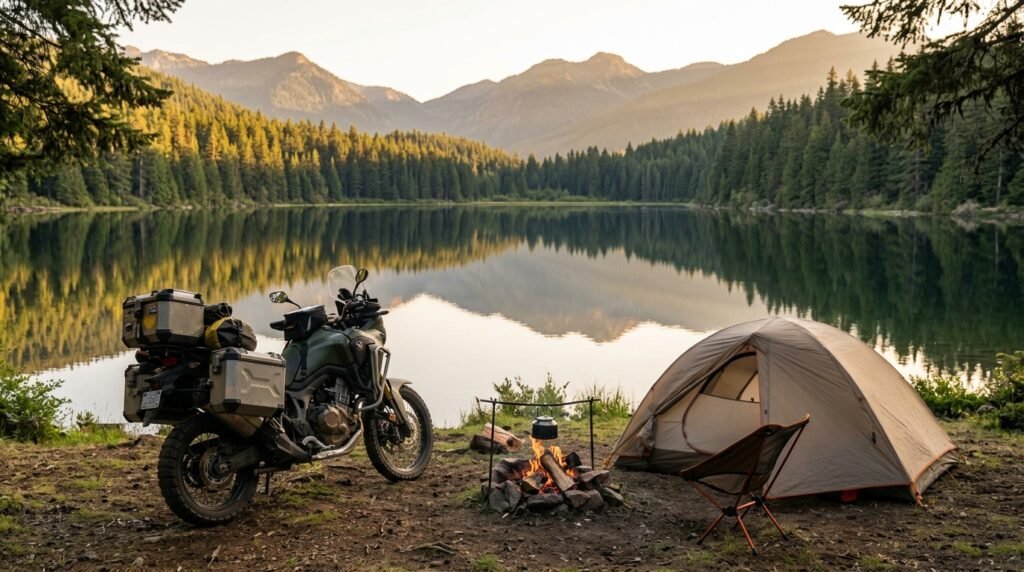
A self-sufficient, field-proven overlanding motorcycle setup means balancing durable riding gear, modular luggage, resilient camping systems, and field repair essentials. You don’t need the latest or most expensive equipment—just proven, packable solutions that have survived real expeditions. Use field-tested packing checklists for each ride, adapt for weather and terrain, and run test loads before hitting remote trails. Share your favorite tricks—or your hardest failures—with the next generation of ADV explorers. Ready to master your own overland adventure? Start planning your kit today, and check out further deep dives on ADV touring prep and gear upgrades.
FAQ: Overlanding Motorcycle Setups
What’s the ideal ADV bike size and weight for overland travel?
For most remote multi-day rides, mid-weight (350–500 lb) bikes with 200–400cc engines balance comfort, off-road capability, and manageable load capacity. Heavier bikes handle highway miles better, but are harder to recover on rough, technical tracks.
How should I organize tools and repair kits for fast access?
Keep tire repair kits, multitools, spare levers, and CO2 inflators in your tank bag or an external pannier pocket for quick recovery. Use color-coded cases or distinct pouches for tools versus first aid or electronics.
Can I overland in wet or extremely cold conditions without a support vehicle?
Yes, but you must pack ventilated waterproof layers, insulated gloves, and backup dry base layers. For deep cold, heated vest and gloves (see heated vest review) and a 3–4 season tent will be game changers.
What’s the fastest way to shave weight without sacrificing comfort?
Swap bulky synthetic sleeping bags for compressible down variants, use multifunctional kitchen gear, and leave behind any “just in case” clothes or tools unless necessary for your specific route or season.
Where can I find a downloadable overlanding motorcycle gear checklist?
Try the excellent Complete Motorcycle Trip Packing List for a printable, battle-tested gear reference you can tailor for each adventure.
—