
Motorcycle camping gear kit is the fastest way to get adventure-ready without wasting time or space. If you want a streamlined, grab-and-go system that covers comfort, efficiency, and safety for any moto camping trip, this guide delivers real solutions—no confusing piecemeal lists or forgotten essentials.
Key Takeaways
- A complete motorcycle camping gear kit saves hours of planning and avoids overpacking or forgetting essentials.
- Prioritize modular, space-efficient systems—most core kits fit into a 20–30 L dry bag or pannier.
- A focused checklist beats guesswork and gives you confidence on every trip.
Table of Contents
Why a Complete Motorcycle Camping Gear Kit Matters
Adventure motorcyclists crave simplicity, safety, and comfort on the road. But buying camping gear item by item can result in cluttered bags, missed essentials, or excess weight that strains your ride. A dedicated motorcycle camping gear kit takes the guesswork out—everything works together, packs efficiently, and doesn’t overload your panniers or rackless bags.
Research shows that keeping your motorcycle camping essentials to about 20–30 L of total volume leaves enough room for luxuries (like a camp chair or hammock) and prevents overpacking that can affect bike handling. By thinking in systems (shelter, sleep, kitchen, tools, lighting, comfort), you cover every camp need while staying lean—and you won’t risk setting off only to realize you’re missing a crucial piece of gear mid-trip.
Step-by-Step Guide: Build Your Space-Efficient Motorcycle Camping Kit
Follow these steps to assemble a practical, ADV-proven moto camping kit—tailored for riders who want efficiency and reliability without skipping comfort or safety.
Shelter & Sleep: Secure, Compact, and Fast
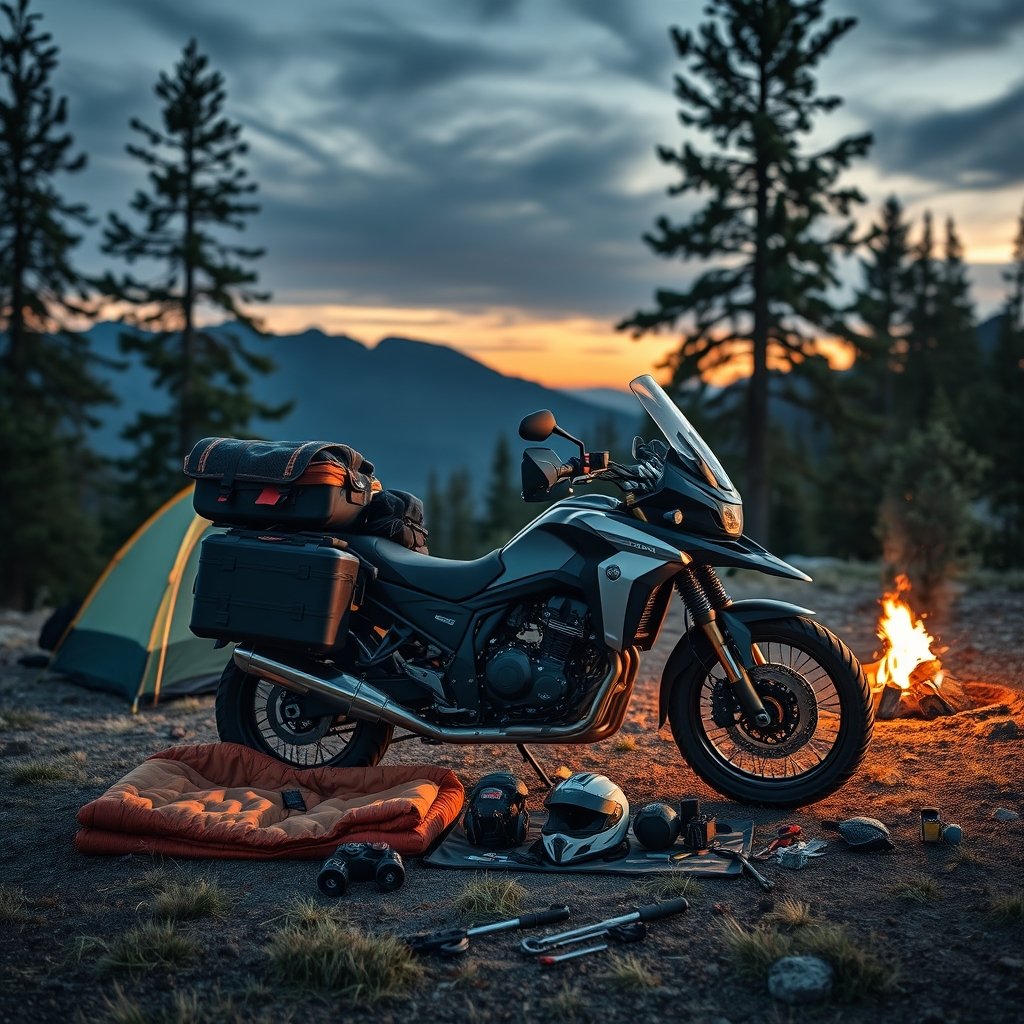
- Shelter: Choose a lightweight, compact two-person tent or tarp (like the Big Agnes Copper Spur UL2, Fly Creek HV UL 2, or NatureHike Bikepack series for budget builds). Minimalists can use a tarp or hammock if trees are available (ultralight hammock picks).
- Sleeping Kit: Carry an insulated synthetic or down quilt or sleeping bag rated for the lowest likely temp. Pad should be narrow and inflatable (check compact pad alternatives for shoulder season insulation). Add a small pillow (Nemo Fillo Elite, Trekology Ultralight) or use your camp puffy jacket in a stuff sack.
Kitchen & Hydration: Compact and Fast
- Cooking Stove: Use a micro-canister stove (MSR PocketRocket 2 or compact dual-fuel options), a 750 ml–1 L titanium or aluminum pot, nesting with a mug.
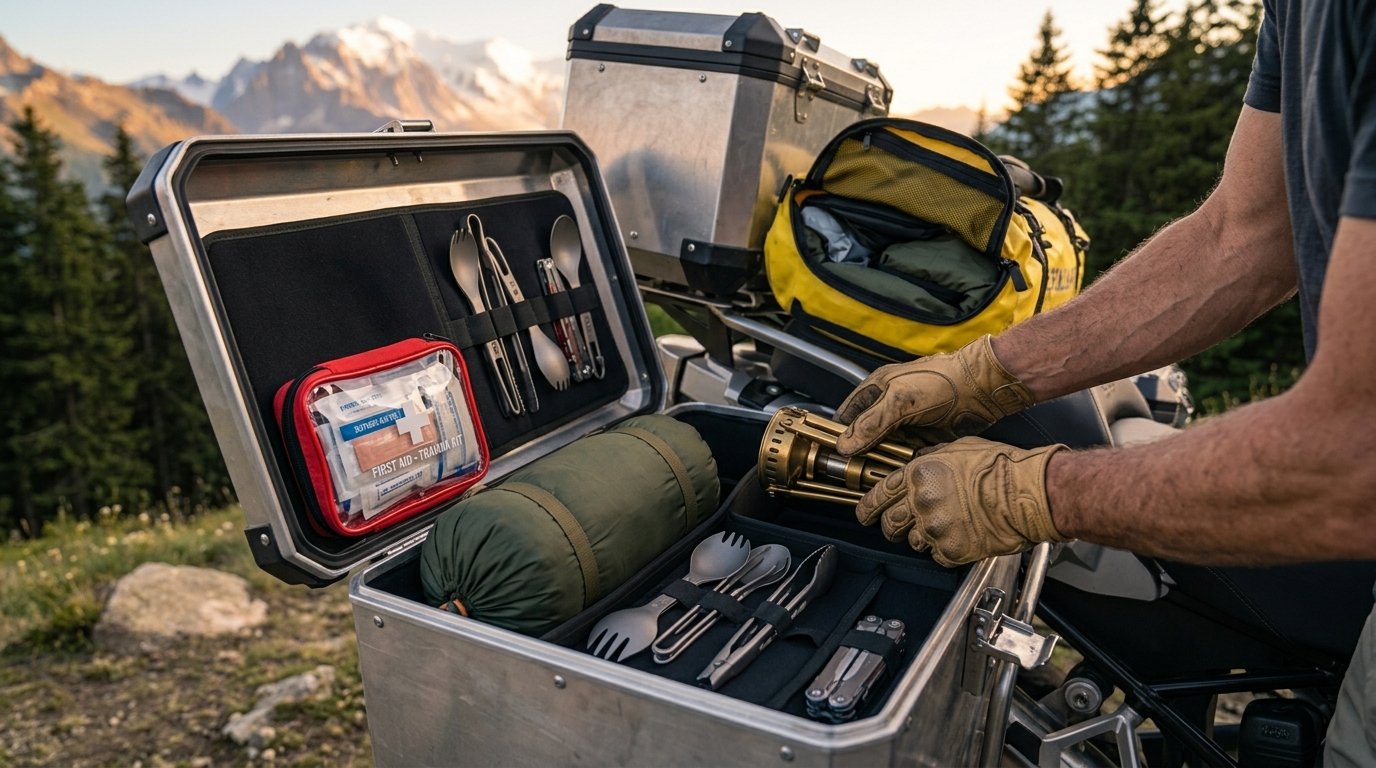
- Utensils: Go for a spork or short nested set (Human Gear GoBite, Sea to Summit AlphaLite).
- Water Solution: Hydration is often overlooked—pack a 2 L collapsible bladder or flexible bottle, and bring a compact water filter (LifeStraw, Sawyer Mini, or tablets). Check hydration for motorcycles for optimal setups.
Lighting, Power & Communication On the Road
- Headlamp: Compact headlamps (Petzl, Black Diamond) let you set up camp hands-free. Add a small LED lantern for tent or picnic table use.
- Power: Use a high-capacity USB power bank (Anker 335/PowerCore) and, if your bike can charge USB, a fused motorcycle USB hub. For long hauls, see if a solar charger fits your needs.
- Navigation & Safety: Reliable GPS unit and a satellite messenger (Garmin InReach Plus or Zoleo) for connectivity if riding beyond cell range (see our satellite tracker guide).
Tools & Safety: Must-Have Repair & First Aid
- Toolkit: Essential multitool (Leatherman Signal or Wave), small locking pliers, a basic wrench and driver set specific to your bike, and a folding knife.
- Tire Repair Set: Patch/plugs for tubeless or tire levers and patches for tubes (see our tubeless kit picks), plus a mini pump (Exped Widget or compact manual alternative).
- First Aid: Kit like Mosko Moto or Green Chile for Moto—modify for your needs and keep quick-access.
Luggage & Organization: Pack Light, Stay Dry
- Main Luggage: Modular racks and panniers (Kriega OS System, soft rackless sets like Mosko Moto Alpine 60), or classic waterproof dry bags. Packing cubes or purpose-specific pods help with quick access. See latest luggage reviews for updated picks.
- Comfort Extras: Quick-dry towel (Sea to Summit Airlite), bug spray (DEET spray or Thermacell/Backpacker), lightweight wipes, earplugs or slim electronic earmuffs for noise & hearing safety (full earmuff review).
Recommended: Download or Print the Moto Camping Checklist
- Shelter & Sleep: Tent/tarp, quilt/sleeping bag, pad, pillow.
- Kitchen: Stove, pot, utensils, water bladder & filter.
- Lighting & Power: Headlamp, lantern, power bank.
- Tools & Safety: Multi-tool, mini-pump, tire repair kit, first aid.
- Luggage & Storage: Panniers, duffel, dry bags, packing cubes.
- Comfort & Extras: Towel, bug spray, wipes, earplugs.
- Navigation & Communication: GPS unit, satellite messenger.
Download a printable ADV motorcycle camping checklist here or use it as your digital prep sheet.
Advanced Analysis & Common Pitfalls
Even the best riders and planners make mistakes with their motorcycle camping gear kit systems. Here are the most common problems—plus how to avoid them.
| Pitfall | Why it Happens | How to Avoid |
|---|---|---|
| Overpacking “Just In Case” Items | Packing gear for rare scenarios leads to wasted space & extra weight. | Strictly stick to the checklist; swap/upgrade only after field testing. |
| Poor Waterproofing | Soft gear & clothing can get soaked from one water crossing or storm. | Invest in waterproof luggage or add compression dry bags inside panniers. See our waterproof luggage guide. |
| Cheap/Failing Gear Ruins Camp | Low-quality tents, pads, or stoves may break or perform poorly in wind/rain. | Choose proven models with reviews from motorcycle campers. Price isn’t everything, but avoid untested ultracheap options. |
| Missing Maintenance Tools | A stranded bike or flat at sunset can be a trip-ender. | Build your kit around your actual bike: check which tools, tube sizes, and parts are unique to you. Print the tool list. |
| Power Outages for Navigation/Comms | Small batteries run out faster in the cold, leaving you with dead GPS/phone. | Carry a >20,000 mAh power bank and charge at every opportunity. Over time, add solar or bike-powered charging for multi-night trips. |
- Larger tents may seem like a comfort upgrade but add too much bulk for most solo motos—stick with 2-person designs or compact hammocks unless riding 2-up or carrying a trailer (see trailer setups here).
- Some packs or duffels lack quick access—repacking for every item quickly gets frustrating. Use organizers or motorcycle-specific luggage with side or top entry.
- Bringing nonessential gadgets or duplicate tools overloads the bike. Trust the kit, and adjust only after real back-to-back rides.
Conclusion
A well-built motorcycle camping gear kit transforms the whole experience—saving time on packing, keeping your bike nimble, and letting you focus on the ride and the view. Remember to:
- Commit to modular, tested gear that forms a functional system.
- Refine your kit for every trip using field notes and the checklist.
- Adjust only when you actually need a new comfort, not just because you saw it online.
A motorcycle camping gear kit is your shortcut to more confident, enjoyable adventure rides. Want reliable packing every time? Download your printable ADV checklist now and head out with only what really works.
Frequently Asked Questions
What is the most space-efficient tent for a motorcycle camping kit?
Two-person ultralight tents like the Big Agnes Copper Spur UL2 or Naturehike Bikepacking tent are proven, pack small, and provide much better weather protection than solo bivvy sacks for most riders.
How do I keep my gear dry while motorcycle camping?
Use waterproof panniers or duffels backed up with compression dry bags inside for clothes or electronics. Always seal bags fully and pack your tent last for easier access if you set up in rain.
What tools should every motorcycle camping gear kit include?
At minimum: a multi-tool, folding knife, compact wrench/driver kit for your bike, comprehensive tire repair (plugs or irons and patches), pump, and a personalized first aid kit.
Is a camp chair worth it for moto camping?
If you have room and ride comfort is a priority, compact chairs like the Helinox Chair Zero or similar ultralight models fit most packing systems. Optional, but adds comfort for longer trips.
How do I plan for meals and water?
Stick with fast-cooking freeze-dried or simple meals, and carry a micro-stove and one or two small pots. Have a 2-liter collapsible water bladder and a compact filter—never rely on having clean water at every camp stop.