

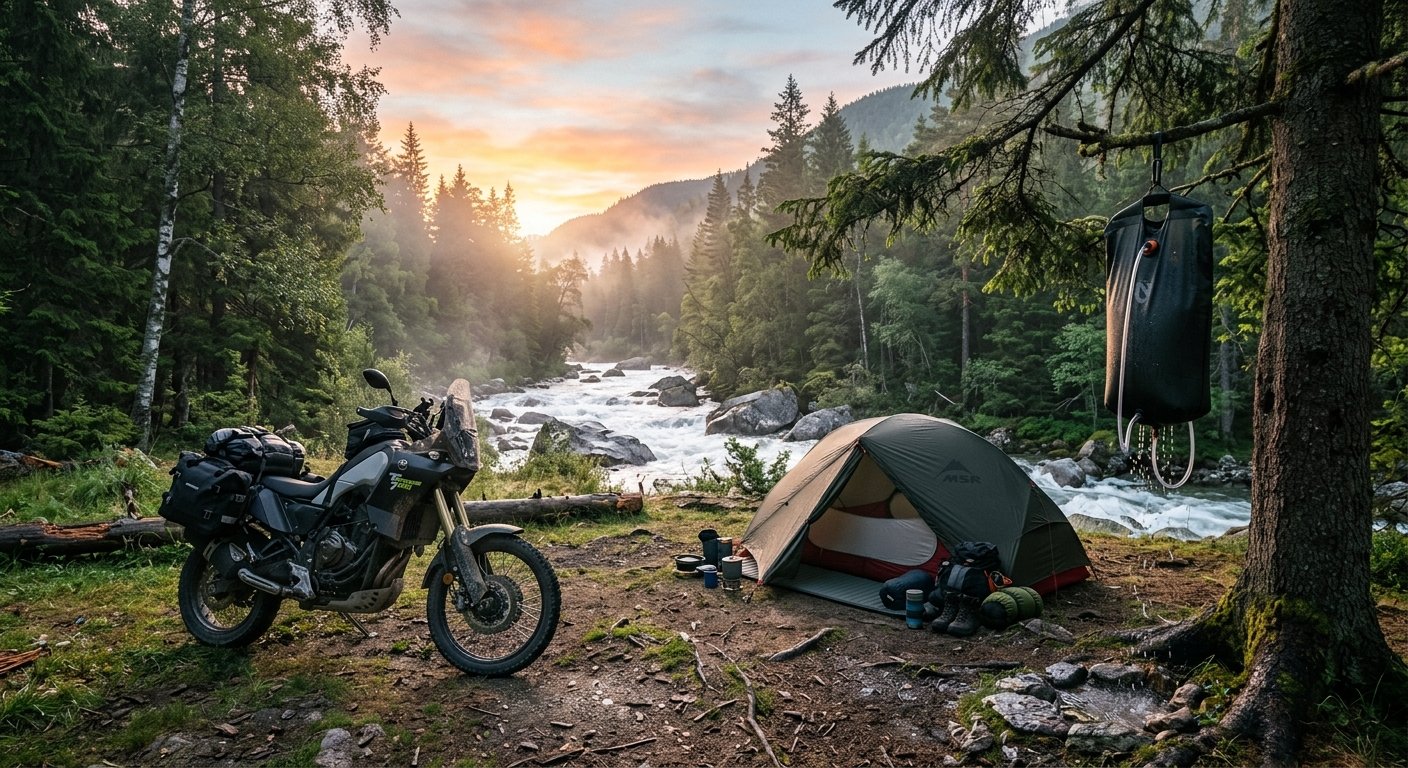
Motorcycle camping shower is not a luxury—it’s a practical essential for any adventure rider who wants to stay clean and comfortable after long days off-grid. When your space is tight, your ride is rough, and amenities vanish past the trailhead, knowing how to pick and use a rugged, compact portable shower can transform your whole trip.
Key Takeaways
- Choose a motorcycle camping shower that balances compact size with real-world cleaning power and off-grid usability.
- Solar and packable pressure showers offer maximum versatility for ADV camps with no water or power hookups.
- Creative mounting and water-saving hacks help you extend resources and minimize your impact in wild places.
Table of Contents
Why You Need a Motorcycle Camping Shower
Motorcycle camping comes with unique challenges that set it apart from other forms of outdoor adventure. Unlike car or RV campers, motorcyclists have limited space for gear, no built-in amenities, and little margin for packing bulky items. Showers aren’t just about comfort—riding gear gets sweaty, trail dust piles up, and stream rinses aren’t always an option when you’re adventuring far from facilities.
Space is your most precious commodity. As cited by tro.bike, “Space is limited when traveling by motorcycle—compact, lightweight gear is essential.” With this in mind, a dedicated motorcycle camping shower designed for rugged conditions and rapid deployment makes it possible to wash off the grit and recharge, wherever you pitch your tent.
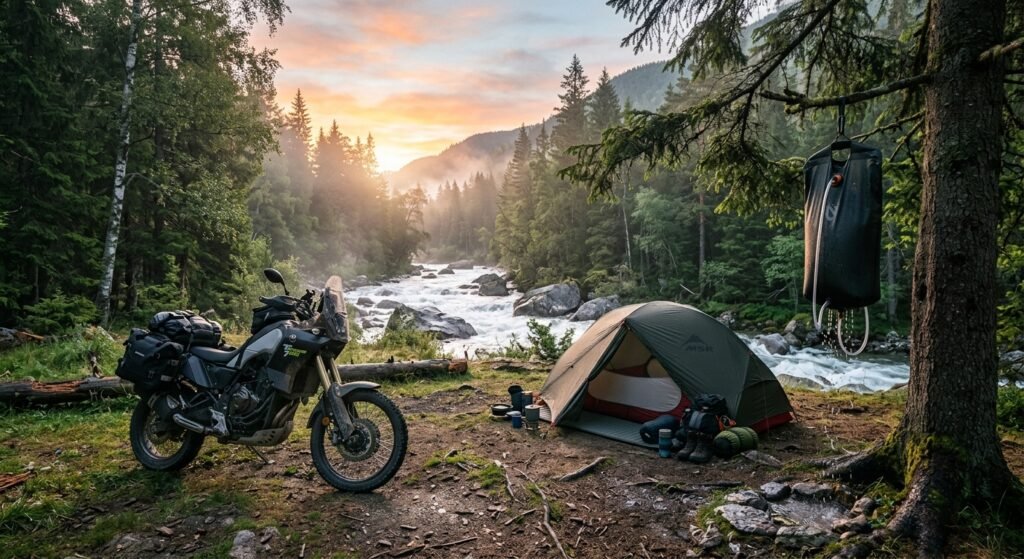
What Makes a Good Portable Shower for Motorcycle Camping?
A portable shower for motorcycle camping must hit a specific set of criteria. It needs to be compact—able to fit in a small stuff sack or pannier. It should tolerate rough handling, pack dirt, UV, and not leak at the seams. Most importantly, it must work off-grid, meaning it can heat water via sunlight or with a compact burner—no electricity or big tanks required.
To illustrate, the Sea-to-Summit Pocket Shower folds into a 3 by 6-inch pouch and weighs just 4.3 oz (about as light as a can of soda), but gives you an honest 8-minute rinse in the wild. The less gear and the quicker the setup, the better. Look for designs with easy-fill wide mouths, true waterproofing, and strong tie-points to hang from your bike or a tree. Some, like compact pump showers, even offer actual water pressure for a more comfortable experience.
Solar heating is the simplest option—just fill and leave in the sun. However, pump models work when the sun won’t cooperate. Pressure and battery-powered models add convenience but increase weight and complexity, so balance is key for ADV riders. A true compact camp shower motorcycle kit should let you get in, clean up, and roll out in minutes.
Top-Rated Motorcycle Camping Showers in 2024
Let’s break down the best motorcycle camping shower options for 2024—analyze their pros, cons, and where they fit in a real-world packing scenario.
Sea-to-Summit Pocket Shower
- Compactness: Folds into a pouch just 3 by 6 inches
- Weight: Only 4.3 oz (122g)
- Use: Gives an 8-minute rinse with a simple twist showerhead; hang via 20’ cord; can be solar warmed
- Pros: Ultra-light, fast to set up, simple, surprisingly durable for its weight class
- Cons: 10L capacity means conservation is key for a full wash, works best when suspended
Check current price and details.
Kermode SunShower 20L
- Capacity: Holds 20L, offers multiple showers or thorough rinses
- Heating: Solar—heats water up to around 140°F in strong sun
- Packing: Measures 46 x 11 x 8 inches when filled, but packs flat/rolls up small
- Weight: 15.4 lbs full; much lighter empty
- Pros: More water for group/dirty jobs, built tough for off-road
- Cons: Bulky when filled, depends on sunlight for hot water
See features at Kermode Overland.
Kakadu Outback Shower
- Hot Water: On-demand heating via compact propane burner and lithium-ion battery pump
- Convenience: Works regardless of sunlight/weather
- Packing: Slightly heavier and requires small propane canister
- Pros: Instant hot showers off-grid; flexible water-source options
- Cons: More moving parts, more weight, requires propane and battery charging
Read why it’s ideal for minimalist but comfort-focused moto-campers at Kakadu USA.
NEMO Helio Pressure Shower
- Operation: 2.9-gallon (11L) pressurized system using a foot pump for steady spray
- Packing: Packs to the size of a large shoe; weighs about 2 lbs empty
- Pros: Great spray pressure, easy floor use, doesn’t require hanging
- Cons: Heavier than gravity/sack models, requires manual pumping
Simple Solar Shower Bags (Rhino USA, Advanced Elements, etc.)
- Capacity: 5 gallons/20L, heated directly by the sun
- Packing: Rolls to a tiny cylinder for easy strap-on or stuff-sack storage
- Pros: Super affordable, no electricity or propane needed, found in most outdoor stores
- Cons: No pressure—just a gravity trickle; requires strong sun for hot water
Don’t overlook these for pure value: see real user reports here.
All these solar shower motorcycle camping options are tried and proven with ADV and lightweight moto travel in mind. For more ultralight camping picks, check this ultralight gear roundup.
How to Pack and Use a Camp Shower on Your Motorcycle
Packing a compact camp shower motorcycle kit is about maximizing your available bike space and using multi-purpose mounting options. Here’s how to do it:
- Pick the smallest shower that meets your needs—aim for one that can ride inside your pannier, tail pack, or strap to a rear rack in a dry bag.
- When possible, fill your shower at gas stations, public taps, or reliable wild water sources before leaving civilization.
- Securely strap or stuff-pack your empty shower; after use, dry it out and store it rolled to prevent leaks or mildew.
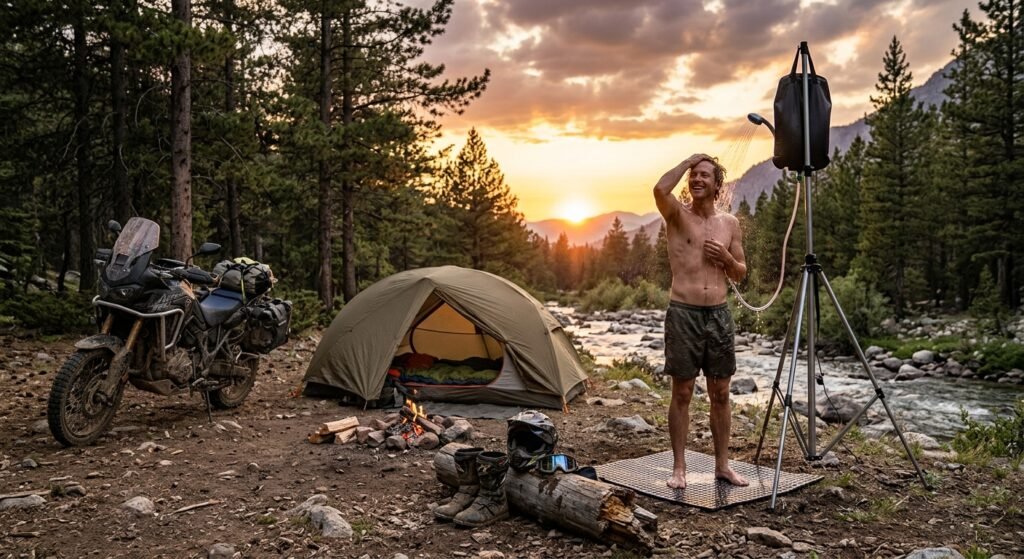
- To use: let the solar bag warm in the sun while you set up camp; gravity and foot-pump showers can be hung from your bike, a sturdy tree limb, or a portable tripod.
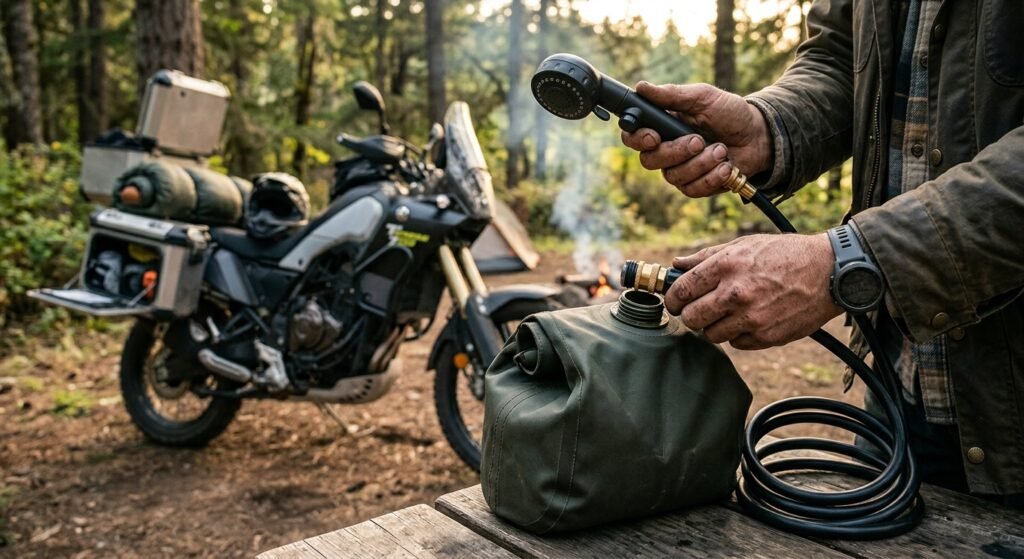
For those running minimalist, solar units roll up into a teeny tiny space: “heat water, fill bag, have shower, roll up and carry-on.” [Source] Don’t forget to account for both empty and full volume when packing. If you pair your shower system with a compact camping stove, you can even heat a liter or two of water for a warm rinse on cold days.
For packing integration with larger kits, check our full motorcycle camping luggage guide.
Final Tips for Staying Clean on Remote Motorcycle Adventures
Even with a top-notch portable shower for motorcycle camping, you’ll hit stretches where water is limited or you need to be even more discreet. Here are a few smart hygiene strategies:
- Carry a pack of unscented wet wipes for fast wipe-downs between showers (always pack them out—never bury or burn).
- If you can, supplement your kit with a collapsible rinse bottle or a “bidet” adapter for ultra-efficient cleaning in places where showers aren’t possible.
- Work soap into a wet bandana for a quick glove/face rinse—requires just a few ounces of water.
- Always practice leave-no-trace: use biodegradable soap far from natural water sources and avoid creating muddy puddles near high-traffic wild spots.
- Water-conscious performance is key—maximize small capacity showers by wetting down, lathering up, then rinsing efficiently rather than running the whole volume at once (see source).
Looking for more pack-saving tricks? Our ADV camping checklist has extra space and water-saving ideas. If you regularly venture into serious bug territory, pair your shower kit with a trusty mosquito repellent for post-shower comfort.
Advanced Analysis & Common Pitfalls
Not every motorcycle camping shower is perfect—here’s what to realistically watch out for, and how the top models stack up on the metrics that matter.
| Shower | Capacity | Packed Size | Weight (empty) | Heated Water? | Common Pitfalls |
|---|---|---|---|---|---|
| Sea-to-Summit Pocket Shower | 10L | 3×6″ pouch | 4.3 oz | Solar only | Low pressure, needs height to work well |
| Kermode SunShower 20L | 20L | Packs flat, 46″ long filled | 15.4 lbs full | Solar | Heavy when full, no use in shade/cold |
| Kakadu Outback Shower | Varies | Compact burner/battery kit | Heavier | Propane powered | Needs fuel/battery, more gear to track |
| NEMO Helio Pressure | 2.9 gal (11L) | Large shoe | 2 lbs | Manually heated | Manual pumping, awkward packing |
| Solar Shower Bags | 20L | Rolls to small cylinder | Super light | Solar | No pressure, weak valve durability |
Pitfalls and realities:
- Solar heating depends on sunlight—clouds or rain can mean cold showers. Always have a backup heating plan or tolerate brisk rinses when weather fails.
- Ultra-compact showers offer less water per fill—need to learn to “get wet, soap, rinse” with minimal waste.
- Pump and propane models add convenience but are heavier and have more to break; not ideal for ultralight or solo minimalists.
- Gravity bag valves wear out with time and rough roads—check for spares or buy from brands with solid reputation. (See top-rated models)
Want to avoid overpacking? Review the ultimate motorcycle packing list for more multi-purpose gear tips.
Conclusion
A good motorcycle camping shower is the ADV rider’s secret weapon for staying sharp, clean, and in high morale, even during the muddiest or hottest days off-grid. Focus on compact, durable designs that match your ride style and choose the setup that makes sense for your terrain, weather, and group size. With a motorcycle camping shower dialed in, you turn campsite grit into a refreshing luxury that’s small enough to fit in your pack. Ready to transform your adventure? Test a true compact setup on your next ride and feel the difference.
Ride prepared—explore more packable camp essentials in our adventure motorcycle camping gear guide.
FAQ
What’s the best way to heat water with a motorcycle camping shower in cold weather?
If solar heat isn’t enough, warm up a small batch of water on your camp stove, then mix it with cool water in your shower bag. Don’t try to use boiling water—it can damage the bag and scald you. Propane or battery-powered pump showers like the Kakadu Outback offer real hot water even on gray days.
How much water do I really need for a wilderness camp shower?
You can do a quick rinse with as little as 2-4 liters, but a true rinse/wash/rinse cycle needs about 8–10L. Practice getting fully sudsed up before switching on your shower—do all lathering off-water for maximum savings.
Can I drink water from my camp shower?
Only if you use a shower bag labeled “food-safe” and fill with clean, potable water. Avoid using soap or other chemicals in bags you plan to repurpose for drinking. Rinse thoroughly between uses.
Are portable showers allowed everywhere I camp?
It depends. Most wild camping and dispersed sites are fine, but some protected parks may ban soap use even with biodegradable brands. Always follow local regulations and practice leave-no-trace by using a shower at least 200 feet from natural water sources.
How do I keep microplastics and residue out of the wild?
Use unscented, biodegradable soap, wash far from streams/lakes, and filter rinse water through the ground rather than dumping. All disposable wipes must be packed out—never buried or burned. This helps protect sensitive areas for the next rider.